

UAE geography plays a pivotal role in explaining why this nation has become a strategic trade hub between three continents.
Located in a prime position on the shores of the Gulf, with its characteristic desert terrain and long coastline, the United Arab Emirates possesses natural features that shape its entire economic and social life. For Vietnamese individuals considering living or investing there, understanding the natural conditions and the division of the seven emirates helps in choosing a suitable location.
Detailed article on the the UAE.
Message
Overview of UAE geography
The geographical features of the UAE are highlighted by its strategic location and the desert terrain characteristic of the Middle East. The nation is situated in the southeast of the Arabian Peninsula, on the shores of the Gulf, with a total area of approximately 83,600 km².
The majority of the territory is arid desert, interspersed with oases and mountainous regions in the east. The long coastline along the Gulf and the Gulf of Oman provides a major advantage for maritime trade and port development.
Its unique geographical position between Asia, Europe, and Africa turns the land into a bridge for international trade. This advantage has been fully exploited, helping the nation become a leading regional hub for cargo, aviation, and finance. Understanding this strategic location is key to grasping the nation’s economic role.
Considering a residency programme? The Prosperous Living Investment team assesses your profile free of charge and advises on the pathway that fits your goals.
Location and boundaries
The land is strategically located on the Arabian Peninsula, serving as a vital gateway for the Gulf region. This is a geographical factor that brings tremendous advantages for development.
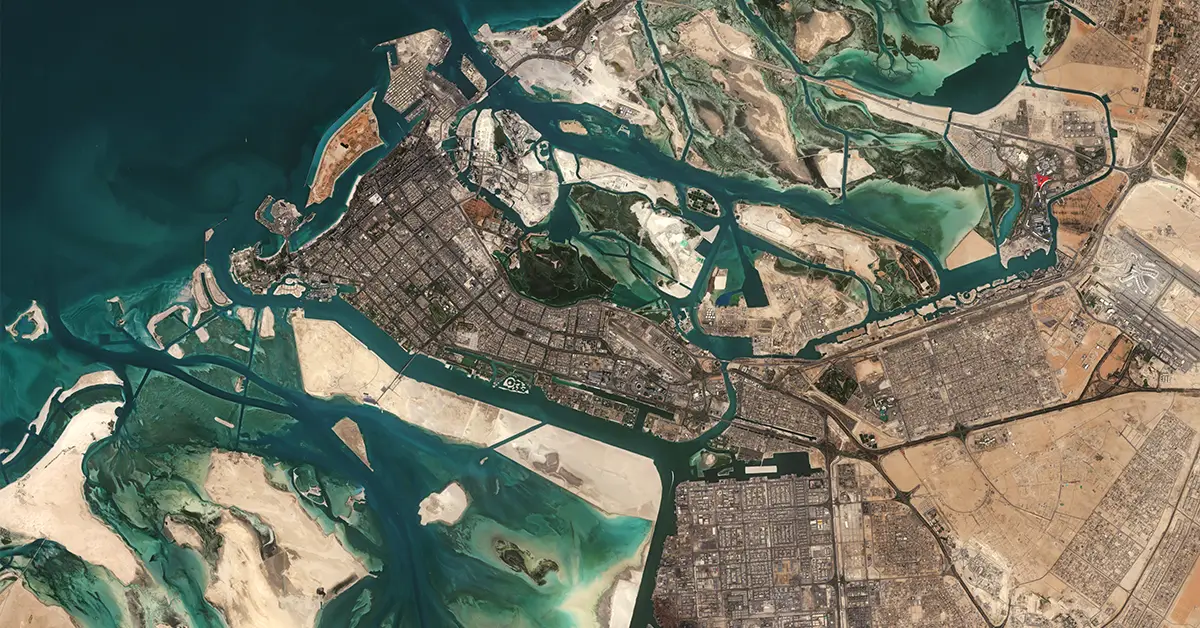
To the west and south, the nation borders Saudi Arabia, while to the southeast it borders Oman. To the north is the Gulf, where most urban areas and coastal economic activities are concentrated. To the east, it partially borders the Gulf of Oman, opening up to the Indian Ocean.
Its position controlling the Strait of Hormuz, the world’s vital oil shipping route, brings special geopolitical importance. The long coastline and central position between continents are the foundation for the development of the maritime, aviation, and logistics industries. This is an invaluable natural advantage that few nations possess.
Terrain and landscape
Topographical diversity is a notable feature when discussing UAE geography. Although it is mostly desert, the land still possesses rich and contrasting natural landscapes.
Desert region
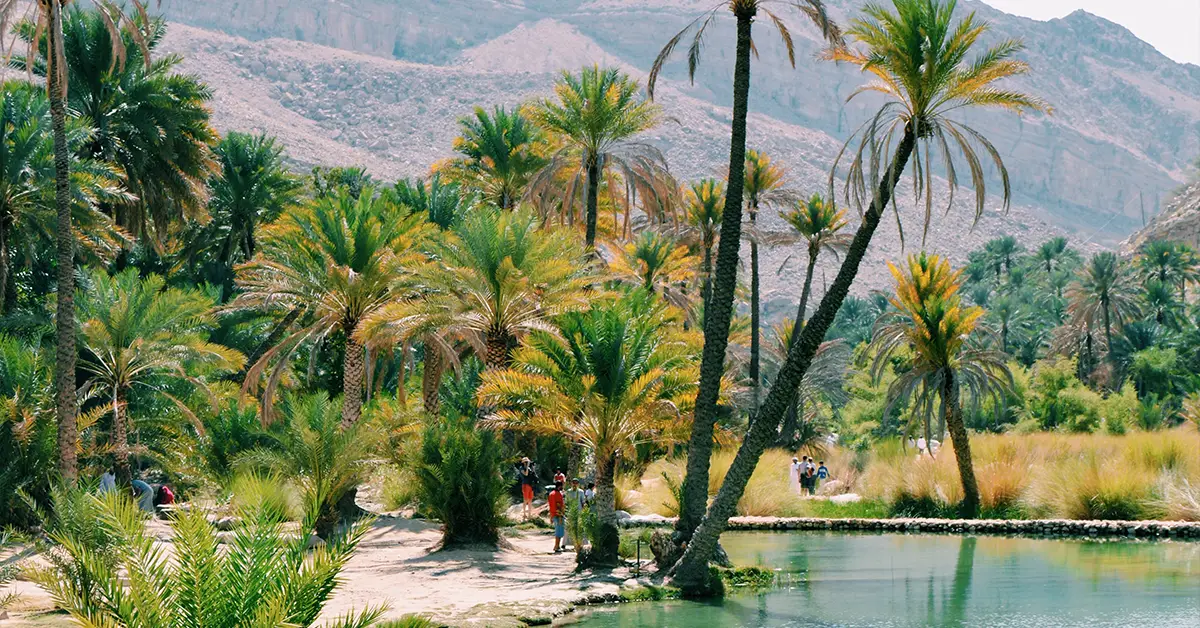
Desert covers the majority of the territory, with endless sand dunes, especially the vast Rub al Khali desert in the south. This is one of the largest sand deserts in the world, with extremely harsh living conditions.
Interspersed between the deserts are oases, which have been points of settlement and agriculture since ancient times. The city of Al Ain is a prime example of a lush oasis, known as the nation’s garden city.
Mountainous and coastal regions
In the east, the Hajar Mountains create a majestic mountain landscape, contrasting completely with the desert. This area has a cooler climate and is an attractive eco-tourism destination.
The long coastline along the Gulf is where major cities and beautiful beaches are concentrated. The coastal area with warm, shallow water is also home to coral reefs and rich marine ecosystems, while serving as the foundation for the development of the marine tourism industry.
Desert climate
Climate is an important factor of UAE geography, directly affecting daily life and the choice of when to live or travel there. The nation has a typical tropical desert climate, which is hot and dry.
Summer lasts from approximately May to September, with temperatures often exceeding 40°C, accompanied by high humidity in coastal areas. This is a period of intense heat, causing most activities to take place in air-conditioned spaces.
Winter from approximately November to March is much more pleasant, with mild temperatures and clear blue skies. This is the peak season for tourism and outdoor activities. Rainfall is very low and erratic, occurring mainly in winter. For Vietnamese people accustomed to a humid tropical climate, adapting to the dry heat of the desert is something to note when living there.
The seven emirates
A unique feature of UAE geography is its structure consisting of seven emirates, each with its own characteristics and role. This division reflects both the history and geography of the nation.
Abu Dhabi is the largest emirate by area, occupying the majority of the territory, and is also the capital and the center of politics and oil. Dubai ranks second and is the busiest commercial, financial, and tourism hub, globally famous for its iconic structures.
The remaining five emirates include Sharjah, Ajman, Umm Al-Quwain, Fujairah, and Ras Al Khaimah, each with its own identity. Sharjah is known as a cultural center, while Fujairah is located on the shores of the Gulf of Oman with mountain and sea landscapes. The diversity among the emirates creates a rich picture, offering many choices regarding living environments and investment opportunities. To better understand the governance structure, readers should read more about UAE politics.
Resources and environment
Natural resources, especially oil and gas, are the foundation for the land’s prosperity. Huge oil reserves, concentrated mainly in Abu Dhabi, have completely changed the nation’s destiny.
Besides oil and gas, the nation faces major challenges regarding freshwater sources due to the arid climate. Most domestic water is supplied from seawater desalination plants, a costly but essential technological solution.
In recent years, the nation has promoted investment in renewable energy and environmental protection to aim for sustainable development. According to information from The UAE Government, the nation has set a goal of carbon neutrality and is investing heavily in clean energy projects. Large-scale solar energy projects and green initiatives are being implemented, demonstrating a vision that goes beyond dependence on oil. This is a strategic direction for the land’s future.
Ecosystems and nature conservation
Besides the desert, the land possesses unique ecosystems that need to be preserved. Despite the harsh climatic conditions, the nature here is much more diverse than many imagine.
The coastal area with warm, shallow water is home to coral reefs, mangroves, and many marine species. Protected areas have been established to safeguard these ecosystems, while also serving research and responsible eco-tourism.
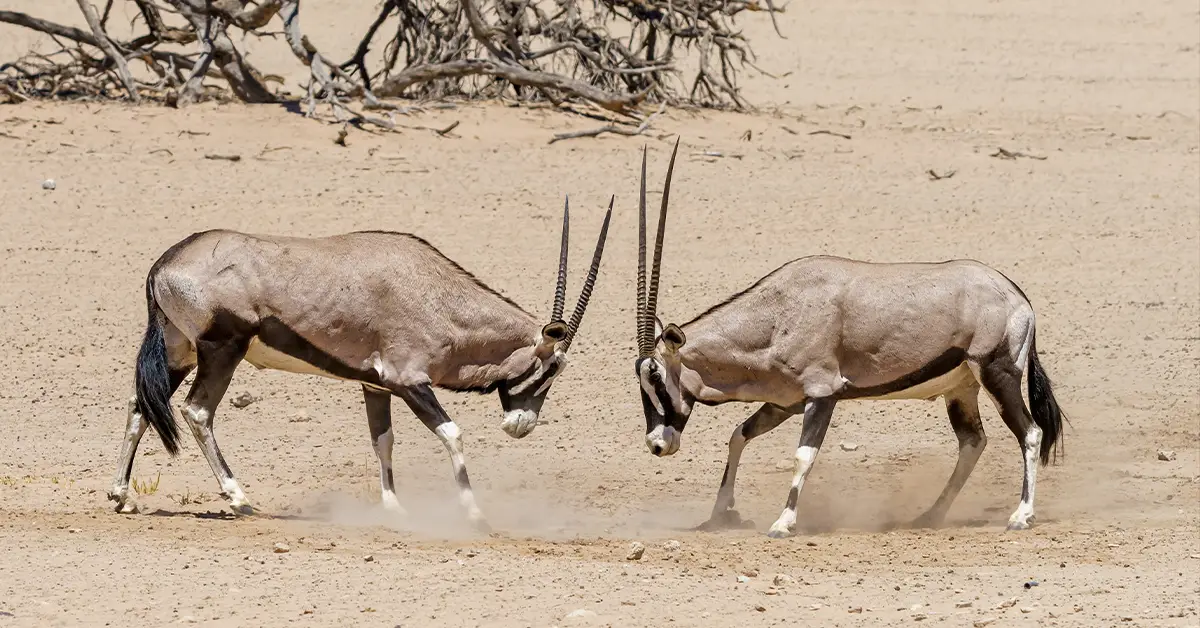
On land, some characteristic desert animals such as the Arabian oryx, which were once at risk of extinction, have been successfully conserved through breeding programmes. The nation is increasingly focusing on balancing rapid development with the protection of the natural environment, demonstrating an awareness of sustainable development for future generations.
Urban landscape and modern planning
Another prominent feature of human geography is the modern planned urban landscape. Within a few decades, small coastal towns have transformed into world-class metropolises.
Dubai and Abu Dhabi are testaments to ambitious urban planning, with skyscrapers, artificial islands, and modern transport infrastructure. This development has taken place at an astonishing speed, completely transforming the face of the land.
Urban planning aimed at smart and sustainable city models is a prominent trend today. Future city projects integrating technology and clean energy are being implemented. For foreigners, modern and convenient urban infrastructure is one of the attractive factors when considering living there.
Conclusion: Strategic location shapes destiny
The geography of the UAE, with its strategic position between three continents, distinctive desert terrain, hot and arid climate, and structure of seven emirates, has shaped the nation’s entire destiny and development. Its location as a gateway to the Gulf and its abundant oil resources are invaluable natural advantages.
For Vietnamese individuals considering living or investing in the UAE, understanding the geographical characteristics and the differences between the emirates helps in selecting a location that suits their needs. Dubai and Abu Dhabi are the two most popular choices due to their development and large international communities.
For a comprehensive overview, you should learn more about the history of the UAE and tourism in the UAE, thereby grasping the close connection between natural conditions and the development of this land of great potential.
Accompanying you on your journey in residency investment
The Prosperous Living Investment team advises on pathways, assesses profiles and manages investments transparently for every residency, citizenship and international property objective.
Free profile assessmentWhere life gets prosperous