

The United States Certificate of Naturalization

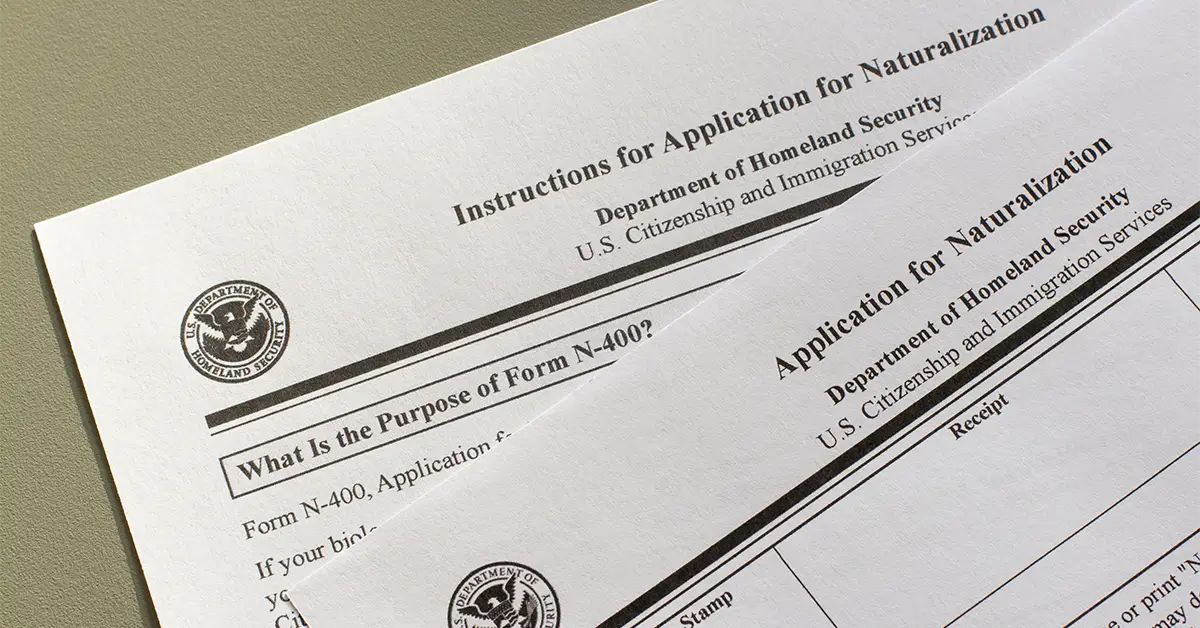
The United States Certificate of Naturalization is the official document issued byUnited States Citizenship and Immigration Services (USCIS)to foreign nationals who have completed theUnited States naturalisationprocess. It is one of the most important legal documents a United States citizen holds — both proof of citizenship and the basis for a whole series of civil, financial and international formalities. Understanding the role, structure and safekeeping of this document correctly helps naturalised citizens avoid unnecessary risks in future.
Message
What the United States Certificate of Naturalization is
The United States Certificate of Naturalization is the document issued by USCIS to foreign nationals who formally become United States citizens through the naturalisation process. It is presented to the new citizen immediately after the Oath of Allegiance ceremony — the final step, marking the formal moment of citizenship.
The Certificate of Naturalization holds the citizen’s key identifying information, comprising: full legal name, country of birth, date of birth, the date United States citizenship was granted, a photograph, a signature, and a unique Certificate Number issued by USCIS. The document is printed on special paper with an embossed seal and anti-counterfeiting features, and bears the signature of the Director of USCIS or an authorised representative.
Unlike the United States passport, which has an expiry date and must be renewed periodically, the United States Certificate of Naturalization NEVER expires. Once issued, the document is valid for life and needs no renewal, reissue or replacement — unless it is lost, stolen or damaged.
Considering a residency programme? The Prosperous Living Investment team assesses your profile free of charge and advises on the pathway that fits your goals.
Distinguishing the Certificate of Naturalization from the Certificate of Citizenship
This is one of the most easily confused points in the United States citizenship document system. Both documents are proof of United States citizenship, but they are issued to different people and reflect different routes to citizenship.
The Certificate of Naturalization
- Issued to foreign nationals who have completed the naturalisation process under Form N-400 and the oath ceremony.
- Who it is for: lawful permanent residents who have met the residence conditions (usually 5 years, or 3 years for the spouse of a United States citizen), the good moral character requirement, and passed the English and civics tests.
- It reflects an active choice to become a United States citizen.
The Certificate of Citizenship
- Issued to those born outside the United States who acquired United States citizenship at birth through a United States citizen parent, or by other routes such as adoption.
- Typical recipients: children born abroad to a United States citizen, and children adopted by United States citizens who meet the conditions of the Child Citizenship Act.
- It reflects automatic citizenship — not an individual choice but the result of a blood or legal relationship.
To apply for a Certificate of Citizenship, applicants must file Form N-600 (Application for Certificate of Citizenship) — NOT Form N-400. These two forms are entirely different and serve distinct purposes.
Its role and uses
The United States Certificate of Naturalization serves as legal proof for a great many important formalities in a United States citizen’s life.
Applying for a United States passport
This is the most common use immediately after receiving the certificate. The United States Department of State requires newly naturalised citizens to present the original or a certified copy of the Certificate of Naturalization when applying for a first passport. New citizens are usually encouraged to apply for a passport within a few weeks of the oath ceremony so as to have full international travel documentation.
Registering to vote
United States citizens have the right and responsibility to take part in elections at federal, state and local level. The Certificate of Naturalization is accepted as proof of citizenship at voter registration offices throughout the United States.
Updating records with the Social Security Administration (SSA)
After naturalising, citizens should update their status with the SSA to change from “noncitizen” to “citizen”. This matters for receiving retirement benefits, disability benefits, Medicare and other social security entitlements in future.
Verifying the right to work and applying for sensitive positions
The Certificate of Naturalization is accepted by employers as a List A document evidencing the right to work on Form I-9 — with no other document needed. In addition, certain sensitive positions — particularly in the federal government, the military, or roles requiring Security Clearance — require formal proof of United States citizenship.
Sponsoring family members
United States citizens may sponsor family members in wider family categories than permanent residents — comprising spouse, parents, children and siblings. When filingForm I-130, the petition for an alien relative, naturalised citizens must present the Certificate of Naturalization as proof of their standing to sponsor.
Education and financial aid
Some federal student loans, scholarships and educational financial aid programmes require United States citizenship. The Certificate of Naturalization is used as proof of eligibility on the FAFSA and other aid applications.
Passing citizenship to children
For parents who naturalise after their children are born, the certificate may be used to prove the children’s entitlement to United States citizenship under the Acquisition of Citizenship or Derivation of Citizenship rules.
The Certificate Number
Each certificate has a unique number issued by USCIS, usually printed in the top right corner of the document. This number has an important role:
- Unique identifier:used to look up records in the USCIS database.
- Required on applications:for a passport, voter registration, Social Security Administration records, and further USCIS applications.
- Security:this number is tied to personal identity — it should NOT be shared publicly on social media or through insecure channels.
Naturalised citizens should note the Certificate Number and store it safely, separately from the original document — so that where the original is lost, the reference number can still be provided when applying for a replacement.
Keeping and storing the Certificate of Naturalization
Because the Certificate of Naturalization does not expire and is the core legal document of United States citizenship, keeping it properly is extremely important:
- Store it somewhere safe:ideally a fireproof safe or a locked legal document box at home.
- Do NOT laminate it:USCIS does not accept laminated documents because lamination invalidates the embossed seal and the anti-counterfeiting features. Lamination is treated as damaging the document and a replacement will have to be sought.
- Do NOT cut, write on or alter it:any change to the document invalidates it legally.
- Make certified backup copies:after receiving the certificate, citizens may go to a notary public to certify 2-3 copies and store them in different places.
- Do NOT carry the original around routinely:the original should be presented only where a formality requires it in person. Day to day, a certified copy or the Certificate Number is usually enough for reference.
Replacing the Certificate of Naturalization (Form N-565)
Where the Certificate of Naturalization is lost, stolen or damaged, or where the information needs updating (a change of name, or correction of a USCIS error), naturalised citizens file Form N-565 (Application for Replacement Naturalization/Citizenship Document) to obtain a replacement.
When Form N-565 is needed
The common situations calling for Form N-565 comprise:
- The Certificate of Naturalization is lost or stolen.
- The document is damaged by fire or flood, torn, or has been laminated.
- A legal name change is needed after naturalisation (marriage, divorce, or a change of name through the courts).
- USCIS printed incorrect information on the certificate (a USCIS error — the fee may be waived).
- A Special Certificate of Naturalization is needed at the request of a foreign government to recognise United States citizenship.
The Form N-565 filing process
The process for applying for a replacement certificate comprises the following basic steps:
- Complete Form N-565:applicants may file online through a USCIS account or send the paper form to the corresponding lockbox. The form asks for personal details, the reason for the replacement, and details of the original certificate where remembered.
- Assemble the supporting documents:proof of identity (a copy of a driving licence, passport or state ID); proof of citizenship (a copy of the old certificate where available, a United States passport, or other official documents); a police report (where the certificate was lost or stolen); and a legal name change certificate (where the name has changed).
- Pay the fee:check the latest fee schedule on theUSCIS Filing Feespage before filing. Since 01/01/2026, USCIS has applied an annual fee adjustment mechanism indexed to inflation under Public Law 119-21. Applicants use Form G-1450 for a credit card or a business cheque when filing on paper.
- File the application:send it to the corresponding lockbox listed on the USCIS Form N-565 Direct Filing Addresses page. Using a tracked delivery service and keeping a copy of the whole file is recommended.
- Track it and receive the new certificate:once the application is received, USCIS sends Form I-797C Receipt Notice. Processing usually takes several months — applicants should file as soon as they discover the certificate is lost or damaged, to avoid affecting other legal formalities.
A special case — a USCIS error
Where the certificate carries incorrect information through a USCIS error (for example a misspelt name, wrong date of birth or wrong country of birth), applicants may have the replacement fee waived. On Form N-565 this section must be clearly marked and evidence of the correct information attached (birth certificate, old passport).
Important points about the Certificate of Naturalization
Several particular points naturalised citizens often overlook:
First, the Certificate of Naturalization is NOT an international travel document. Although the certificate is legal proof of United States citizenship, naturalised citizens must still hold a valid United States passport to travel internationally by air or sea or across a land border. A passport should be applied for within a few weeks of receiving the certificate.
Second, after naturalising, citizens may still retain personal rights in other countries — including Vietnam — depending on that country’s nationality law. Vietnam currently recognises dual nationality in certain special cases, but not generally. Vietnamese citizens who have naturalised in the United States should consult the Vietnamese Embassy or a lawyer to understand their Vietnamese nationality position clearly.
Third, naturalised citizens must maintain good moral character and not take part in serious unlawful activity. Although United States citizenship through naturalisation is generally permanent, USCIS may bring denaturalisation proceedings in cases of fraud in the N-400 application, serious violations (such as war crimes, terrorism or serious criminal offences), or membership of a prohibited organisation.
Finally, the Certificate of Naturalization is only ONE of the proofs of United States citizenship. The others comprise a United States passport, a military identity card (for service members), and certain other federal government documents. For many formalities, a United States passport is usually more convenient because it carries a valid photograph and integrates well with electronic identification systems.
Summary
The United States Certificate of Naturalization is a document of deep symbolic and legal significance — marking the end of the immigration journey and the start of a new chapter as a United States citizen with full rights and responsibilities. Unlike other immigration documents with expiry dates and renewals, this certificate is valid for life and is a fixed milestone in a citizen’s legal record.
For Vietnamese people who have naturalised in the United States or are preparing to, understanding the certificate’s role, knowing how to keep it properly, and being ready for the possibility of needing a replacement in future are basic pieces of knowledge to have firmly in hand.
Most importantly, new citizens should make use of the rights of citizenship immediately after receiving the certificate — applying for a United States passport, registering to vote, updating Social Security Administration records, and planning family sponsorship where needed — so that the new chapter of life in the United States begins with all the legal tools in place.
Accompanying you on your journey in residency investment
The Prosperous Living Investment team advises on pathways, assesses profiles and manages investments transparently for every residency, citizenship and international property objective.
Free profile assessmentWhere life gets prosperous