
United States
California billionaire tax heads to the November ballot as Governor Newsom rejects compromise
A proposed one-off 5% wealth tax on roughly 200 California billionaires has qualified for the November 2026 ballot;…


Against a backdrop of dramatic shifts in US immigration policy under President Donald Trump, the increase in the H-1B visa fee to US$100,000 per year has sparked heated debate around the world.
Announced on 19 September 2025, the decision is not only part of the “America First” strategy but also marks a major change in the approach to foreign labour, particularly those working in advanced technology.
For millions of young professionals from countries such as India, China and Vietnam, the H-1B visa was once the “golden key” to entering the dynamic US economy. Now, with this enormous fee, the question is: is the dream of working in Silicon Valley or the financial centres of New York still realistic?
Detailed article on the The H-1B visa.
The H-1B visa, also known as the specialty occupation work visa, is one of the most popular US immigration programmes. It allows US companies to recruit foreign talent in fields such as software programming, medical engineering and scientific research, where the domestic workforce sometimes cannot meet demand.
Each year the United States issues around 85,000 H-1B visas through a random lottery, attracting hundreds of thousands of applications from around the world. Before 2025, the application fee was only around US$2,805 plus a number of surcharges, making the programme an attractive option for technology giants such as Amazon, Microsoft and Meta.
With the new decision, however, everything has changed dramatically.
Considering a residency programme? The Prosperous Living Investment team assesses your profile free of charge and advises on the pathway that fits your goals.
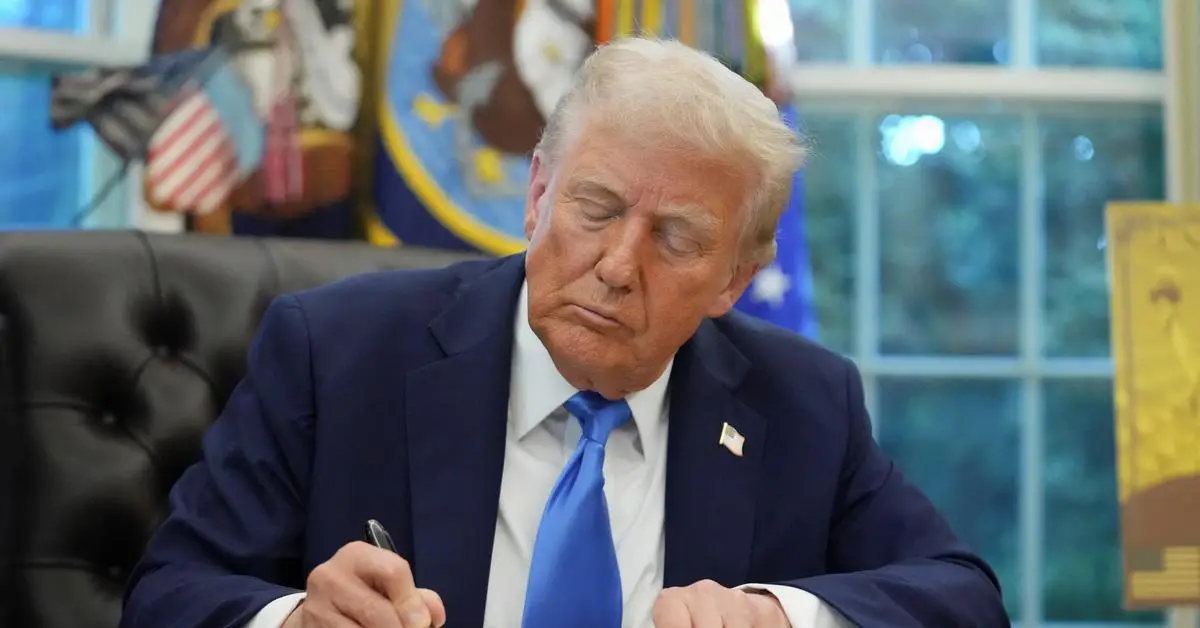
On 19 September 2025, President Trump signed an executive order in the Oval Office of the White House, alongside Commerce Secretary Howard Lutnick, formally applying the new fee to the H-1B visa.
Under the order, US companies must pay US$100,000 per year for each H-1B visa application for a foreign employee. The decision took effect on 21 September 2025, but the White House quickly clarified that it applies only to new applications and does not affect those who already hold a visa or who entered the programme in 2025.
The White House has explained the reasoning behind the move as protecting jobs for American workers. Mr Trump argued that the H-1B programme has been abused, with some companies using it to hire cheap labour instead of training domestic workers.
“We have to put the interests of American citizens first,” he said at the signing ceremony. Data from the first half of 2025 shows that Amazon received more than 12,000 H-1B visas, while Microsoft and Meta each received more than 5,000, mainly from India and China. This reinforces Mr Trump’s view that the programme is “taking opportunities away from Americans.”
The decision was not, however, entirely unexpected. During the 2024 election campaign, Mr Trump promised to “overhaul” the immigration system, including raising fees to prevent “abuse.”
This follows earlier measures such as tightening border controls and prioritising American workers in hiring. Even so, it caused initial confusion, with technology companies advising foreign employees who were travelling to return to the United States quickly to avoid risk.
The US$100,000 fee is not only an enormous figure but also a heavy financial burden on businesses that depend on international talent. Technology giants such as Google, Apple and Tesla, which recruit thousands of H-1B professionals each year, may have to spend hundreds of millions of dollars more.
This could lead to cuts in foreign recruitment, a preference for domestic staff, or even the relocation of part of their operations to other countries such as Canada or India, where immigration costs are lower.
For foreign workers, the change may disrupt the dream of working in the United States. Many young professionals from Vietnam or India who have invested time and money in studying and preparing their applications now face a much higher barrier.
India’s Ministry of External Affairs has expressed concern about the “humanitarian consequences” for migrant families, while immigration lawyers predict that the number of H-1B visa applications could fall by 30-50% in 2026.
Not everything is bleak, however: those who already hold a visa can still extend it without paying the new fee, and large companies may continue to support their staff by sharing the cost.
On the other hand, the decision may bring indirect benefits to the US economy by encouraging the training of domestic workers. Universities and vocational programmes may receive further investment to fill the skills gap, creating a stronger American workforce over the long term.
The reaction from the US business community was swift and strong. Technology associations such as TechNet and the Information Technology Industry Council spoke out against the measure, arguing that the new fee will weaken America’s competitiveness globally. “H-1B is not the problem, it is the solution to the talent shortage” said a representative from Meta. Companies such as Amazon sent urgent notices to foreign employees advising them to avoid leaving the United States until clearer guidance is issued.
The migrant community, particularly from Asia, has voiced concern on social media and online forums. Many have shared stories of the difficult journey to obtaining an H-1B visa, and now the new fee may prevent the younger generation from pursuing the American dream. Some voices, however, support Mr Trump, arguing that this is a fair way to protect local jobs.
Looking ahead, the H-1B fee may face legal challenges from immigration advocacy groups, which could lead to changes in the near future. At the same time, Mr Trump has proposed a new “gold card” programme allowing wealthy individuals to invest US$1 million to obtain a visa quickly, as an alternative to highly skilled labour.
If you are considering an H-1B visa, follow updates from USCIS and consult an immigration lawyer to plan ahead. For businesses, diversifying their talent pool across other countries or investing in in-house training is essential. While this change creates challenges, it also reminds us that US immigration has always been a journey requiring persistence and adaptability.
Mr Trump’s decision to raise the H-1B visa fee is not merely a policy but a signal of the direction the United States is taking in balancing the protection of local workers with the attraction of global talent. In today’s connected world, changes such as these will affect millions of lives, and understanding them clearly is the key to seizing opportunity.
A proposed one-off 5% wealth tax on roughly 200 California billionaires has qualified for the November 2026 ballot;…

US employment sponsorship via an employment-based green card can take 3 to more than 15 years. An analysis…
President Trump signed an executive order on 19 May 2026 requiring US banks to screen for signs of…
The Prosperous Living Investment team advises on pathways, assesses profiles and manages investments transparently for every residency, citizenship and international property objective.
Free profile assessmentWhere life gets prosperous
We use analytics cookies (Google Analytics) to understand how this site is used. They stay off until you agree. Privacy policy.