

United States
California billionaire tax heads to the November ballot as Governor Newsom rejects compromise
A proposed one-off 5% wealth tax on roughly 200 California billionaires has qualified for the November 2026 ballot;…



The United States government is rapidly expanding the use of artificial intelligence (AI) in immigration and visa processing. Although public discussion focuses primarily on efficiency and enforcement, these developments bring concrete and immediate consequences for employers sponsoring foreign talent and investors under United States immigration pathways, including EB-5, E-2, L-1, H-1B, O-1 and employment-based green cards.
AI-driven systems such as StateChat, ImmigrationOS and Evidence Classifier from US Citizenship and Immigration Services (USCIS) are changing how immigration agencies review applications, assess credibility, detect inconsistencies and prioritise files. As a result, employers and investors can assume that applications submitted are increasingly scrutinised not only by human adjudicators but also by automated tools trained to detect anomalies across massive datasets.
The Department of State’s StateChat generative AI platform is designed to help consular staff and officers quickly interpret internal policy guidance, draft communications and analyse cables. Now deployed widely across the agency, this tool accelerates decisions and reduces reliance on personal judgement.
For employers and investors, this may mean that:
Well-documented, policy-aligned filings are becoming more important, particularly for treaty investor visas, multinational executive transfers and investor-backed enterprises.
Considering a residency programme? The Prosperous Living Investment team assesses your profile free of charge and advises on the pathway that fits your goals.
U.S. Immigration and Customs Enforcement’s (ICE) ImmigrationOS platform aggregates data from multiple government and commercial sources to identify visa overstays, compliance gaps and enforcement priorities. Although positioned as a high-risk individual-focused tool, its broad scope has consequences beyond enforcement action.
For employers, ImmigrationOS underscores the importance of:
For investors, particularly EB-5 and E-2 applicants:
The USCIS Evidence Classifier uses machine learning to automatically classify and tag documents submitted with petitions. While intended to increase efficiency, it also standardises how evidence is presented to adjudicating officers.
For applicants, this may mean that:
High-volume employers or investors submitting thick document packages should review document organisation, naming conventions and explanatory exhibits for precision.
As AI becomes deeply embedded in immigration adjudication, the practical impact is clear:
AI can accelerate review, but it also reduces tolerance for ambiguity. Employers and investors who approach immigration strategy with rigor, documentation discipline and forward-looking compliance planning are best positioned to navigate this evolving landscape.
The future of U.S. immigration adjudication is not just digital – it is algorithmic. Understanding that shift is now a business and investment requirement.
A proposed one-off 5% wealth tax on roughly 200 California billionaires has qualified for the November 2026 ballot;…

US employment sponsorship via an employment-based green card can take 3 to more than 15 years. An analysis…
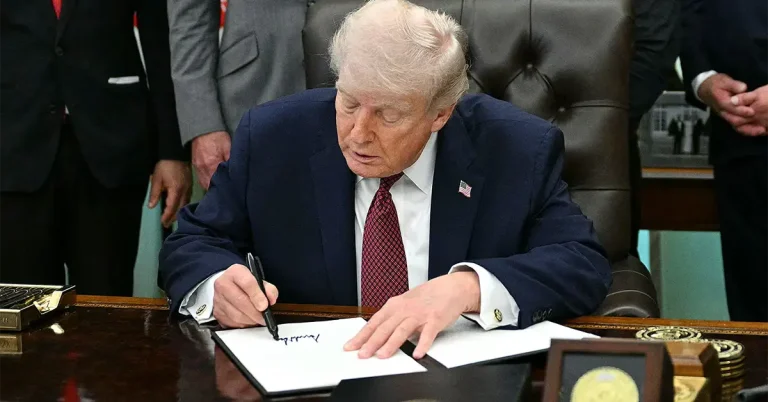
President Trump signed an executive order on 19 May 2026 requiring US banks to screen for signs of…
The Prosperous Living Investment team advises on pathways, assesses profiles and manages investments transparently for every residency, citizenship and international property objective.
Free profile assessmentWhere life gets prosperous
We use analytics cookies (Google Analytics) to understand how this site is used. They stay off until you agree. Privacy policy.