

Canada
Canada suspends citizenship by descent certificates issued under Bill C-3
IRCC has suspended some citizenship-by-descent certificates issued under Bill C-3 and requested their return, over concerns about the…



Immigration, Refugees and Citizenship Canada (IRCC) has updated processing times for temporary residence applications, including study permits, work permits and visitor visas.
The immigration department’s latest processing time update reveals several key trends: visitor visas are largely stable (with some notable improvements), while work permits have generally slowed and become more volatile.
The biggest positive change is the fall in India’s visitor visa times from 99 to 83 days, while applications submitted from Nigeria and within Canada saw slight increases in waiting times.
The sharpest slowdowns are concentrated in work permit (and applications for the Super Visa), with Super Visa applications submitted from the United States seeing processing times double in just two weeks.
By contrast, Study Permit are the most stable application type overall—showing a slight decrease, rather than any major change in processing.
This article compares temporary residence processing times as at 14/01 (the date IRCC last updated processing times) with waiting times today.
The largest reduction in processing times has come for applicants from India, who can now receive a visitor visa 16 days faster than before.
| Submitted from | Current processing time | Processing time as at 14/01 |
|---|---|---|
| Canada | 21 days | 17 days |
| India | 83 days | 99 days |
| Pakistan | 56 days | 57 days |
| Nigeria | 40 days | 36 days |
| United States | 25 days | 27 days |
The service standard for visitor visas is 14 days for applications submitted outside Canada. No service standard is published for applications submitted from within Canada.
Considering a residency programme? The Prosperous Living Investment team assesses your profile free of charge and advises on the pathway that fits your goals.
While largely stable (with some slight increases), work permit applicants from Pakistan and the United States have seen notable increases in waiting times:
| Submitted from | Current processing time | Processing time as at 14/01 |
|---|---|---|
| Canada | 241 days | 220 days |
| India | 8 weeks | 9 weeks |
| Pakistan | 20 weeks | 13 weeks |
| Nigeria | 9 weeks | 11 weeks |
| United States | 10 weeks | 7 weeks |
The service standard is 120 days for applications submitted within Canada (both initial permits and extensions). For applications submitted outside Canada the standard is 60 days, apart from International Experience Canada (IEC)permits, which have a 56-day standard.
Study Permit remain the most stable of all the temporary residence categories, with only a slight one-week increase for applicants from selected countries.
| Submitted from | Current processing time | Processing time as at 14/01 |
|---|---|---|
| Canada | 7 weeks | 7 weeks |
| India | 4 weeks | 3 weeks |
| Pakistan | 5 weeks | 5 weeks |
| Nigeria | 7 weeks | 6 weeks |
| United States | 7 weeks | 6 weeks |
The service standard is 120 days for applications submitted within Canada (both initial permits and extensions), and 60 days for applications submitted from outside Canada.
While some Super Visa applicants have seen moderate reductions in processing times, by far the biggest change is for applications submitted from the United States, which have seen processing times double, possibly owing to increased application volumes.
| Submitted from | Current processing time | Processing time as at 14/01 |
|---|---|---|
| India | 214 days | 206 days |
| Pakistan | 126 days | 133 days |
| Nigeria | 38 days | 41 days |
| United States | 187 days | 93 days |
The service standard for Super Visa applications is 112 days. These applications can only be submitted outside Canada.
IRCC processing times are estimates for new applications submitted today, indicating how long it may take to receive a final decision.
Processing begins when IRCC receives the application (arrival in the mailroom for paper applications, the submission timestamp for online or in-person applications) and ends when a decision is issued. Times can vary depending on factors such as the complexity of the case, how easily the information can be reviewed, and how quickly the applicant responds to requests.
Processing estimates are based on historical performance and current inventories. These estimates take two forms:
Forward-looking times apply only to the following application types:
Service standards are IRCC’s internal target for finalising around 80% of applications within a given timeframe. Some cases (around 20%) take longer owing to complexity, and not all application types have a service standard; unlike processing times, they are not updated frequently.
IRCC has suspended some citizenship-by-descent certificates issued under Bill C-3 and requested their return, over concerns about the…
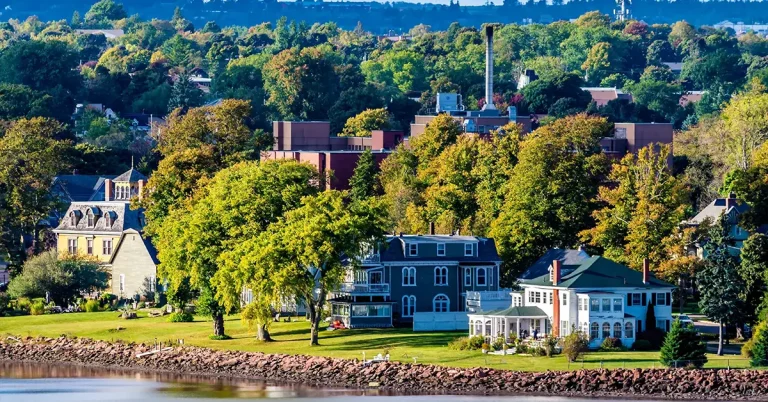
On 21 May 2026, Prince Edward Island issued 114 PNP invitations through the Labour Impact and Express Entry…

Alberta issued 1,051 AAIP invitations between 1 and 13 May 2026 across four draws, prioritising healthcare, technology and…
The Prosperous Living Investment team advises on pathways, assesses profiles and manages investments transparently for every residency, citizenship and international property objective.
Free profile assessmentWhere life gets prosperous
We use analytics cookies (Google Analytics) to understand how this site is used. They stay off until you agree. Privacy policy.