

Ottawa’s culture is shaped by three core factors: its standing as national capital, English–French bilingualism and the increasing ethnic diversity brought by waves of immigration. Lying on the boundary between English-speaking Ontario and French-speaking Quebec, Ottawa is one of Canada’s most notable bilingual cities and home to seven national museums, dozens of major festivals and many distinctive multicultural communities.
This article gives a panorama of cultural life in Canada’s capital – from its characteristic bilingualism, the notable festivals held throughout the year, the museum system and the performing arts, to the multicultural neighbourhoods and rich food scene. This is foundational information for anyone interested in living, studying or settling in Ottawa.
Message
Bilingualism and cultural identity
English–French bilingualism is Ottawa’s most important cultural characteristic. The city lies right on the boundary between English-speaking Ontario and French-speaking Quebec, and crossing a single bridge takes you into an entirely different linguistic space.
On census figures, around 37% of Ottawa’s residents can communicate in both English and French – the highest proportion of any major Canadian city. This position makes Ottawa the centre of national bilingual life, with public signage, government documents, television programmes and administrative services all provided in both languages.
The University of Ottawa is the world’s largest bilingual university, allowing students to study in either English or French across most programmes. Alongside it, the city has the English-language Carleton University and the Cégep de l’Outaouais across the Ottawa River teaching in French, creating a distinctive multilingual education ecosystem.
Bilingual identity is not confined to language. Ottawa’s cultural life reflects the meeting of English and French traditions: French-style cafés in Lower Town, Irish-English pubs in the ByWard Market, arts festivals with bilingual programmes and even family cooking that often combines both of the West’s great culinary traditions.
Considering a residency programme? The Prosperous Living Investment team assesses your profile free of charge and advises on the pathway that fits your goals.
Festivals and events throughout the year
Ottawa is regarded as one of the liveliest festival cities in North America, with more than 60 festivals held each year. According toCanadian Heritage, Canada’s capital welcomes more than seven million visits a year to cultural events, making festivals an indispensable part of city life.
Winterlude – the winter festival
Winterlude is Ottawa’s oldest and largest winter festival, held continuously since 1979 over the first three weekends of February. The festival draws more than 600,000 visits a year, turning Canada’s capital into a true winter wonderland.
The centrepiece of Winterlude is the Rideau Canal Skateway – the world’s longest naturally frozen skating rink at 7.8 km. In addition, the festival features an international ice sculpture competition in Confederation Park, the huge Snowflake Kingdom snow park in Gatineau, ice hockey tournaments and countless outdoor food and music activities. Most Winterlude activities are free.
The Canadian Tulip Festival
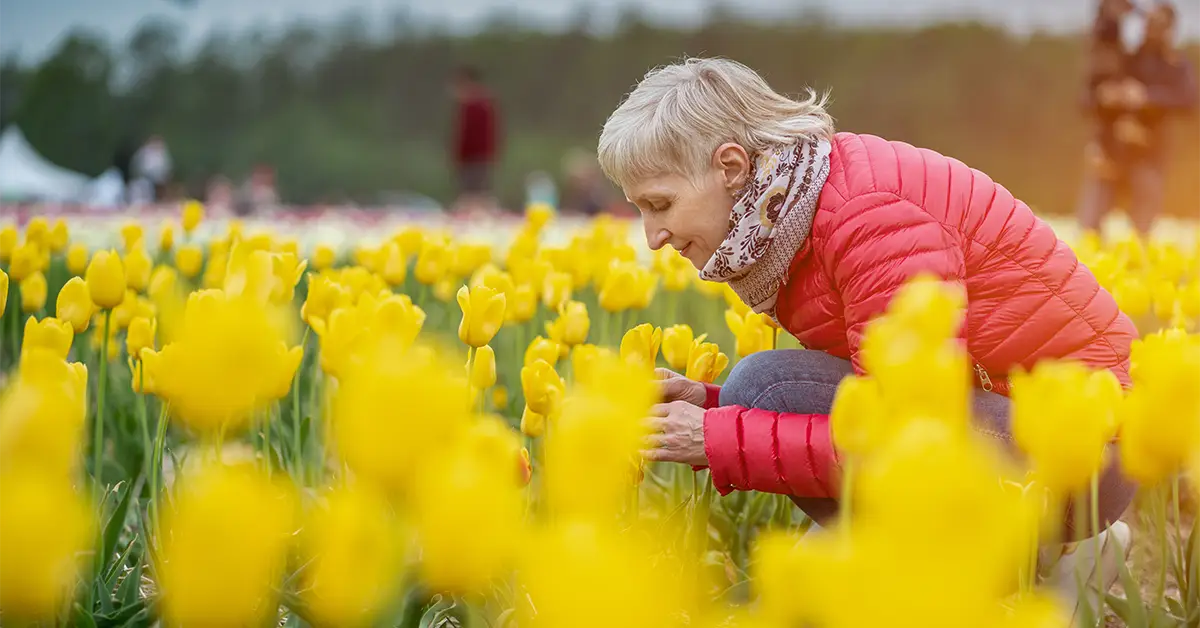
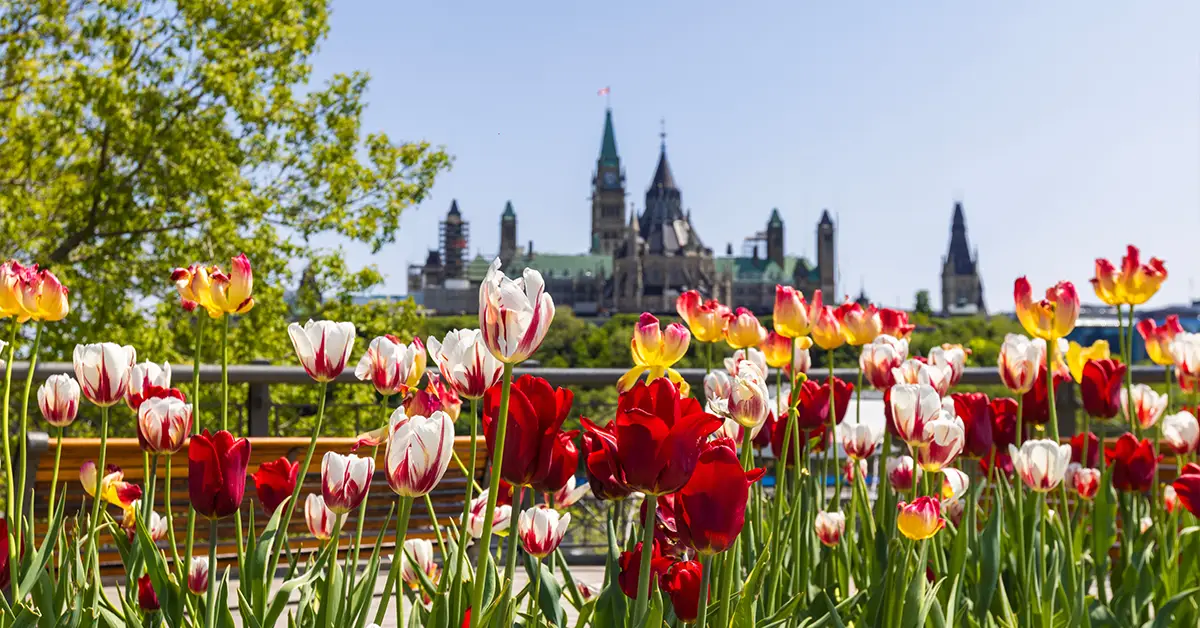
The Canadian Tulip Festival is the world’s largest tulip festival, held each May at Commissioners Park by Dow’s Lake. The festival has a special historical origin: in 1945, Princess Juliana of the Netherlands gave Canada 100,000 tulip bulbs in thanks for sheltering the Dutch Royal Family and liberating her country in the Second World War.
Since then, the Netherlands has continued to send around 20,000 tulip bulbs each year. Together with contributions from the Canadian government and businesses, the festival now displays more than 300,000 tulips across 26 flowerbeds. According to the festival’sofficial site, it is a living symbol of the long friendship between the two countries.
Canada Day
On 01/07 each year, Parliament Hill becomes the centre of the country’s largest Canada Day celebrations. The event attracts more than a million attendees with music programmes, arts performances, a military parade and a spectacular fireworks display over the city.
Other music and arts festivals
Beyond the three largest festivals, Ottawa has many other important music and arts events:
- RBC Bluesfest– one of Canada’s largest outdoor music festivals, held in July, bringing together international rock, blues and pop artists
- Ottawa International Jazz Festival– an international jazz festival held in late June and early July
- Ottawa Dragon Boat Festival– a dragon boat racing festival at Dow’s Lake, attracting teams from across North America
- Ottawa Fringe Festival– an independent arts festival with hundreds of theatre performances
- Ottawa Folk Festival– a traditional folk music festival
- Nuit Blanche Ottawa+Gatineau– a contemporary art night, turning the city into an open-air gallery for one night
The national museum system
One of the most striking features of Ottawa’s culture is the concentration of national museums. As the capital, the city holds the largest collections representing Canada’s history, art and knowledge.
The major museums in the capital region
- The National Gallery of Canada: located near Parliament Hill, this is Canada’s largest art museum. Its highlights are the modern glass architecture designed by Moshe Safdie and its collections of Indigenous art, the Group of Seven, contemporary art and European old masters.
- The Canadian Museum of History: on the north bank of the Ottawa River in Gatineau, this is Canada’s most visited museum. Its collection focuses on the history and culture of Indigenous peoples and the journey of the nation’s formation.
- The Canadian War Museum: displays Canadian military history from the colonial period to modern peacekeeping operations.
- The Canadian Museum of Nature: housed in the Victoria Memorial Museum Building with its magnificent Gothic architecture, displaying natural history, fossils and biodiversity.
- The Canada Aviation and Space Museum: displays hundreds of historic aircraft, from wartime aeroplanes to modern space programmes.
- The Canada Science and Technology Museum: devoted to interactive science and engineering discovery, particularly suited to families with children.
- The Canada Agriculture and Food Museum: the only working farm museum in a major North American city, presenting the history of Canadian agriculture.
Other specialist museums
Alongside the national museums, Ottawa has many distinctive smaller museums such as the Bytown Museum (the city’s oldest museum, beside the Rideau Canal), the Currency Museum (the Bank of Canada’s money museum), the Diefenbunker – a Cold War underground bunker museum, and the Billings Estate Museum – a 19th-century historic house.
The performing arts
Ottawa has a diverse performing arts ecosystem, with many national cultural institutions based here.
National Arts Centre (NAC)
The National Arts Centre (NAC) is Ottawa’s most important cultural centre and Canada’s only national performing arts institution operating bilingually. Opened in 1969 to mark Canada’s centenary, the NAC has four main performance halls and is home to the NAC Orchestra – one of Canada’s leading symphony orchestras.
The NAC stages thousands of performances a year, including classical concerts, opera, ballet, English and French theatre, Indigenous arts programmes and contemporary performance.
Independent arts companies
Beyond the NAC, Ottawa has many independent arts companies such as the Odyssey Theatre, the Great Canadian Theatre Company, the Ottawa Symphony Orchestra, the Ottawa Chamber Music Society and many small community theatres. The city is also home to the Canada Dance Festival – the country’s largest contemporary dance festival.
The multicultural neighbourhoods
Ottawa’s ethnic diversity is clearly evident in neighbourhoods with strong cultural identities of their own. This is the result of many waves of immigration over more than a century, from the European communities of the early 20th century to the Asian and Middle Eastern communities from the 1970s onwards.
ByWard Market
The ByWard Market is Canada’s oldest market, established in 1826 at the same time as the Rideau Canal. In the north-east of the city centre, this area is now Ottawa’s liveliest cultural and food centre with hundreds of restaurants, cafés, art shops and an outdoor farmers’ market. The ByWard Market is also home to the Middle Eastern restaurants famous for shawarma and baklava – reflecting Ottawa’s large Lebanese community.
Lower Town
Immediately north of the ByWard Market is Lower Town – the neighbourhood where English and French cultures meet most distinctly. English and French are used interchangeably in everyday conversation. This is also an area with many historic buildings, old churches and French-style cafés.
Chinatown
Ottawa’s Chinatown runs along Somerset Street West, marked by the Chinatown Gateway arch. The East Asian community here grew strongly from the 1970s, with waves of immigration from China and Vietnam. Chinatown is now Ottawa’s Asian food centre, with dim sum restaurants, Vietnamese phở, steamed buns, bubble tea and Asian food shops. The Chinatown Night Market festival, held each summer, attracts tens of thousands of visitors.
Little Italy (Preston Street)
A few blocks west of Chinatown, Little Italy is concentrated along Preston Street – home to a long-established Italian-Canadian community. The area is famous for its family-run Italian restaurants, gelaterias, espresso shops and Italian festivals such as Italian Week, held each June.
Vanier
Vanier in east Ottawa is one of the city’s most multicultural neighbourhoods. The area has a rich French-Canadian heritage, and is also home to many immigrant communities from Africa, Haiti, Vietnam and the Caribbean. Vanier has multicultural community centres and hosts many ethnic festivals during the year.
Other multicultural areas
- St. Laurent Boulevardis the centre of the Lebanese and Middle Eastern community, with restaurants, specialist markets and cultural centres.
- Nepean and South Ottawahave strongly growing African (Somali, Eritrean, Ethiopian) and South Asian (Indian, Pakistani, Sri Lankan) communities.
- HintonburgandWestboroare emerging arts and creative districts with many galleries, craft beer bars and independent restaurants.
Food
Ottawa’s food scene directly reflects the city’s cultural diversity. There is no single unified “Ottawa cuisine” as in Montreal or Quebec City, but rather a multi-ethnic culinary picture, with each neighbourhood offering its own experience.
The notable local specialities include BeaverTails – the beaver-tail-shaped pastry invented in Ottawa in 1978 that quickly became an iconic Canadian dessert. Ottawa shawarma is also rated among the best in North America, thanks to the large Lebanese community that settled there from the 1970s. Alongside these, traditional French-Canadian dishes such as poutine, tourtière and tarte au sucre remain widely available at restaurants in Lower Town and Gatineau.
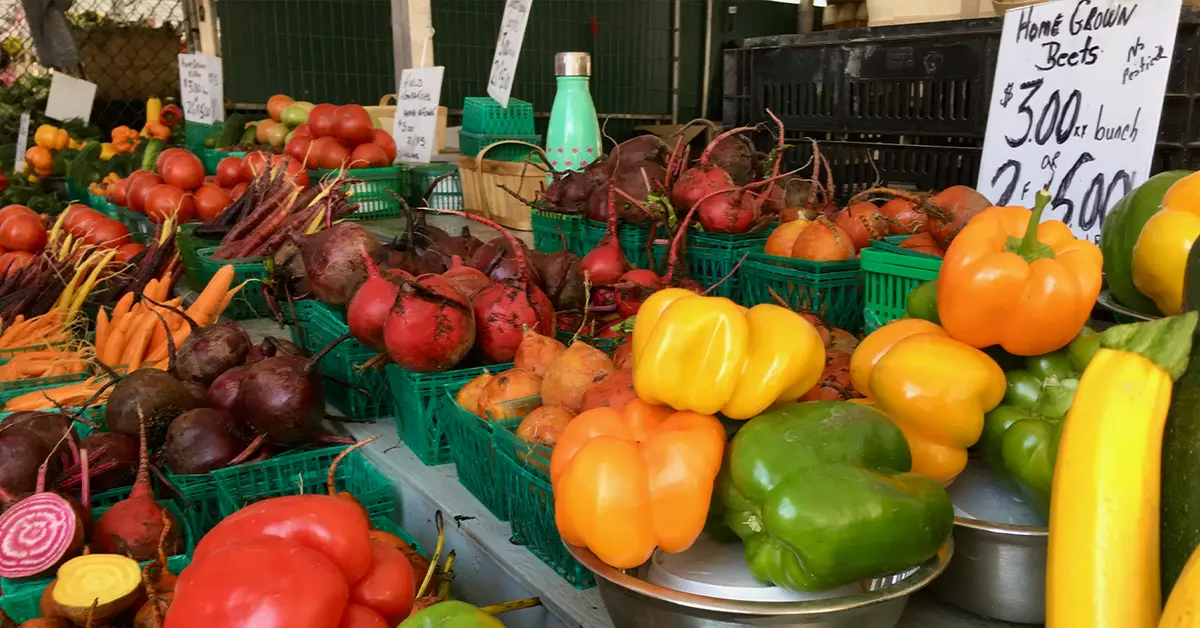
The ByWard Market farmers’ market supplies fresh produce from local farms in the Ottawa Valley, with apples, maple syrup, seasonal vegetables and distinctive artisanal products.
Indigenous heritage and culture
Algonquin Indigenous culture is an inseparable part of Ottawa’s identity. The city’s name derives from “Odawa” – an Indigenous people renowned for trade – and the Ottawa River is named Kitchissippi in Algonquin, meaning “Great River”.
Today, the First Nation communities in the region include Kitigan Zibi Anishinabeg and the Algonquins of Pikwakanagan. Indigenous cultural festivals are held regularly at the National Arts Centre, the Canadian Museum of History and at community events. The Summer Solstice Indigenous Festival, held on 21/06 – National Indigenous Peoples Day – is a major festival celebrating Indigenous culture in Ottawa with music, traditional dance, food and crafts.
The Canadian Museum of History has a Grand Hall holding the world’s largest collection of totem poles – testament to the central role of Indigenous culture in Canadian identity.
Conclusion
Ottawa’s culture is a distinctive crystallisation of its status as capital, English–French bilingualism, Algonquin Indigenous heritage and the rich ethnic diversity brought by many waves of immigration. The city has seven national museums, more than 60 festivals a year with emblematic events such as Winterlude, the Canadian Tulip Festival and Canada Day, together with distinctive multicultural neighbourhoods such as the ByWard Market, Chinatown, Little Italy and Vanier.
It is this cultural intermingling that creates the high quality of life, the welcoming environment for immigrants and the natural opportunities for integration for those choosing Ottawa as a long-term home. For Vietnamese readers interested inCanadian citizenshipor consideringsettling in Canada, Ottawa is a notable choice thanks to its bilingual environment, the long-established Vietnamese community in Chinatown and Somerset, and a rare concentration of national cultural and educational institutions.
Readers may also consult the overview article on the city ofOttawaor the settlement programmes in the province ofOntarioto explore the opportunities of coming to Canada’s capital.
Accompanying you on your journey in residency investment
The Prosperous Living Investment team advises on pathways, assesses profiles and manages investments transparently for every residency, citizenship and international property objective.
Free profile assessmentWhere life gets prosperous