


Grenadian culture is a distinctive meeting of West African heritage, French–British colonial influence, and Kalinago Indigenous memory, creating a characteristically Caribbean identity that could not be mistaken for any other island in the region. Known by the nickname “Spice Isle” for its role as the world’s second largest nutmeg producer, Grenada has a lively cultural life with calypso and soca music, the spectacular Spicemas festival, rich food and a close-knit community tradition.
For families consideringGrenadathrough theGrenada citizenship by investment, understanding the local culture is essential to integrating successfully. This article explores the key aspects of Grenadian culture: from the historical foundations that formed its identity through to music, festivals, food, the arts and contemporary community life in this Caribbean spice island.
Message
Historical foundations and multicultural influences
Grenadian culture is the product of four main historical currents. Kalinago and Arawak ancestors left their mark in Indigenous place names, fishing techniques and traditional agriculture. French influence (1649-1763) survives in geographical names, some Creole terms, and the Catholic tradition. British influence (1763-1974) shaped political institutions, education and the official language.
But the most important current is the African legacy. Most Grenadians are descendants of slaves forcibly brought to the island from West Africa — Nigeria, Ghana, Benin, Congo — in the 17th–19th centuries. Their musical traditions, dance, spiritual practices and community rites survived slavery and blended with European and Indigenous elements to create the distinctive Afro-Caribbean culture of Grenada today.
The third wave of immigration was from India, arriving from 1838 as indentured servants after slavery was abolished. They contributed significantly through curry, roti and Hindu religious traditions. Lebanese and Syrian communities arriving in the late 19th century brought Middle Eastern culture and trading skills.
This blending creates a striking characteristic: Grenada has a strongly unified identity while remaining richly diverse, with elements from many cultures recreated and fused over many generations.
Considering a residency programme? The Prosperous Living Investment team assesses your profile free of charge and advises on the pathway that fits your goals.
Music and dance in Grenadian culture
Music is the soul of Grenadian culture. The main genres reflect this process of cultural exchange and play a key role in social life.
Calypsois the oldest and most emblematic genre. Originating in Trinidad in the late 19th century but quickly taken up in Grenada, calypso is storytelling song with sharp social commentary. Grenada’s famous calypsonians over the decades have used music to criticise politics, reflect daily life and record historical events. The annual Calypso Monarch competition during Spicemas is the most important musical event, where artists compete for the title of “calypso king”.
Socais the more modern and livelier variant of calypso, the name standing for “soul of calypso”. Born in Trinidad in the 1970s, soca has a faster, more danceable rhythm, and has become the mainstay music of carnival festivals. Grenada has a lively soca artist community with annual Power Soca Monarch and Groovy Soca Monarch competitions.
Steelpan (steel drum)is an instrument of Trinidadian origin but very popular in Grenada. Grenadian steel bands take part in the annual Panorama competition — one of the most distinctive musical events in the Caribbean. Up to 100 players may perform together in a large steel band, creating a unique metallic sound.
Reggae and dancehallfrom Jamaica are also widely popular. Grenadian young people particularly favour modern dancehall.
Big Drum and Quadrilleare ancient folk traditions, particularly strong on the island of Carriacou. Big Drum is a ceremonial musical rite combining African drum rhythms with family and ancestral stories. Quadrille is a group dance of European origin that has been Grenadianised over many generations.
The traditional instruments include the boula, the cuatro (a four-stringed instrument), the chac-chac (a percussion instrument made from a dried gourd) and home-made saxophones. Street music takes place everywhere, from the weekend fish fries in Gouyave to the beach bars along Grand Anse.
Spicemas — the biggest carnival festival
Spicemasis the largest carnival festival and Grenada’s supreme cultural event. Unlike most Caribbean carnivals held before Lent (February-March), Spicemas takes place in mid-August, running around 10-14 days with its climax on the Monday and Tuesday of the second week of the month. The festival marks the anniversary of the abolition of slavery, making it one of the most historically meaningful festivals in the region.
The main Spicemas events are:
- Panorama: the major steelpan band competition, held on the Saturday before Carnival
- Dimanche Gras (Great Sunday): the night of the Calypso Monarch competition and the crowning of the King and Queen of the Bands
- J’Ouvert: the street parade at dawn on Monday, with participants covered in powder, oil, paint or mud, dancing to soca in a primal, liberating atmosphere
- Carnival Monday — Pretty Mas/Fancy Mas: a parade of magnificent costumes with feathers, beads and elaborate designs
- Carnival Tuesday — Traditional Mas: traditional costumes with historical meaning, including Jab Jab
- Jab Jab: a distinctive Spicemas tradition in which participants dress as devils blackened with oil and charcoal, wearing horned caps, parading to honour African heritage and resistance to slavery. It originated in slaves mimicking their masters’ Mardi Gras celebrations
The carnival costumes are genuine works of art — many Grenadian designers spend a whole year preparing the magnificent costumes for the King and Queen of the Bands. This is a significant creative industry, combining craft, tailoring skill and storytelling through design.
Spicemas attracts tens of thousands of foreign visitors each year, particularly from the Grenadian diaspora in Britain, the United States and Canada. It is the biggest revenue-generating event of the year for Grenada’s tourism industry. As a member of theCaribbean Community (CARICOM), Grenada also takes an active part in regional cultural co-operation programmes such as CARIFESTA — the Caribbean arts festival held in rotation between member countries.
Grenadian cuisine — the flavours of the spice island
Grenadian cuisine reflects its multicultural heritage and its position as the world’s “Spice Isle”. Traditional dishes are rich with natural spices — particularly nutmeg, cinnamon, cloves and ginger — combined with local ingredients such as breadfruit, yam, dasheen, cassava, fish, goat, salted pork and seafood.
Oil Downis Grenada’s national dish, regarded as an indispensable culinary emblem. It is a complex stew of breadfruit, salted meat, pig tail, chicken or crab, callaloo spinach, string beans and yam, all stewed in coconut milk with nutmeg, curry, pepper and spices. The name “oil down” refers to the cooking process: the liquid gradually evaporates, leaving coconut oil at the bottom of the pot. It is a communal dish, usually cooked in a large pot at family events and festivals.
The other notable dishes are:
- Callaloo soup: callaloo spinach soup with crab, garlic, onion and nutmeg
- Roti: Indian flatbread wrapped around a filling of chicken, lamb or goat curry — a legacy of the Indian-descended community
- Crab back: cooked crab meat stuffed back into the shell, baked and eaten with fried bakes
- Fish fry: fresh fish fried or grilled, eaten at weekend fish fries, most famously the Gouyave Fish Fridays
- Pelau: rice cooked with meat and beans with spices and coconut milk
- Cou-cou: traditional cornmeal pudding, eaten with saltfish
- Nutmeg ice cream and spice cake: emblematic desserts, made with fresh nutmeg
On drinks,rum Grenadais a famous export. Rum distilleries such as River Antoine (the oldest water-powered distillery in the Western Hemisphere, since 1785) and Clarke’s Court produce high-quality rum.Sorrel drink(hibiscus drink) andpeanut punchare traditional festive drinks.
Grenada Chocolate Company, founded in 1999, is an award-winning international bean-to-bar chocolate brand, made from cocoa grown on the island. It is evidence of traditional agriculture being reinvented along high value-added lines.
Festivals and cultural events throughout the year
Beyond Spicemas, Grenada has a rich festival calendar:
- Carriacou Maroon and String Band Music Festival(April, Carriacou): a festival celebrating traditional music and African heritage, combining communal cooking and ancestral rites
- Pure Grenada Music Festival(April): a contemporary music event bringing together international and Caribbean artists
- Carriacou Regatta Festival(late July – early August): the oldest traditional boat racing festival in the Caribbean, celebrating Carriacou’s boatbuilding trade
- Independence Day(7/2): marking independence with parades, cultural performances and national ceremonies
- Thanksgiving(25/10): unique to Grenada, marking the United States military intervention of 1983 and the return of democracy
- Emancipation Day(1/8): marking the abolition of slavery in 1834
Christian festivals such as Christmas and Easter are also observed with solemnity and distinctive customs. Christmas Eve features the custom of “parang” — a band that goes from house to house singing Caribbean Christmas songs and is offered rum and cake by the household.
Visual arts, literature and crafts
Grenadian visual art has a rich tradition with local painters and sculptors focusing on island life, natural landscapes, folklore and history. The artist Canute Caliste (1914-2005) from Carriacou is regarded as Grenada’s most famous “naïve art” painter, with vivid depictions of island scenes displayed in many international museums.
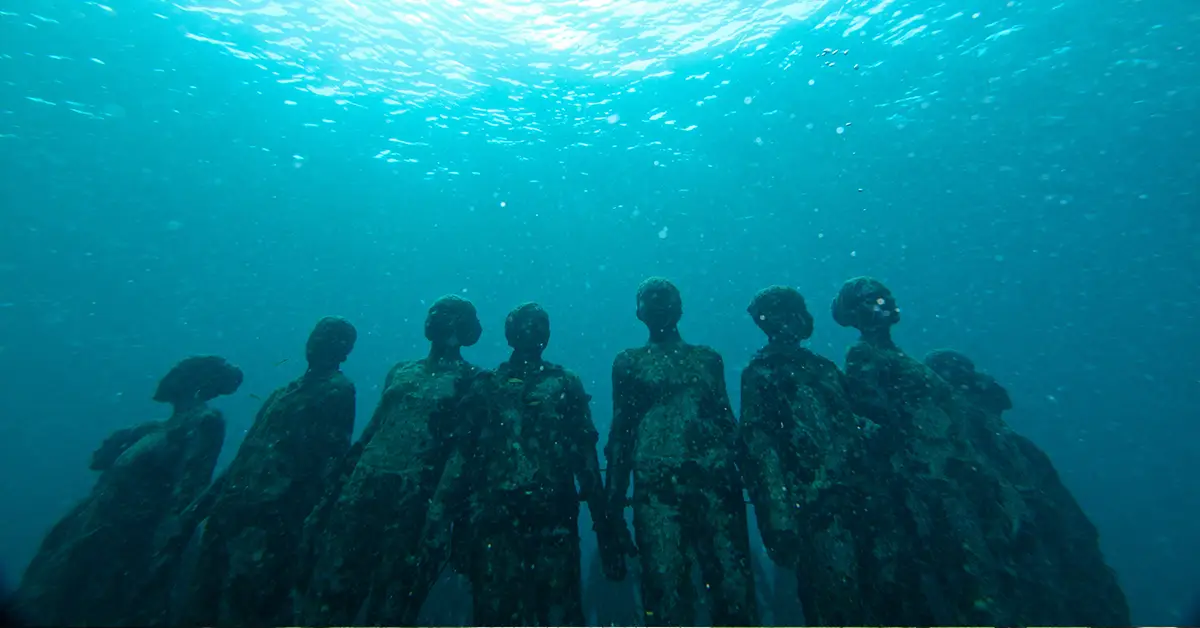
Molinere Underwater Sculpture Park, founded in 2006 by Jason deCaires Taylor, is the world’s first underwater sculpture park. The ecological concrete sculptures gradually become artificial reefs, at once art and ecological heritage.
Grenadian literature, though small in scale, has notable authors.Merle Collinsis an internationally known Grenadian writer, poet and scholar, with works on the history of the 1979 Revolution, Caribbean women’s lives and African heritage.Paule Marshall, born in New York to Grenadian parents, is an American-Caribbean author recognised in academic circles. Grenadian Creole English is also a source of inspiration for many contemporary writers.
Grenadian crafts include basket weaving, pottery, wood carving and jewellery made from shells and coconut husks. Grenada is also known for its spice products — spice sachets, fragrant oils, and handmade nutmeg and cinnamon soaps. The Saint George’s spice market is a must-visit for tourists.
Family, community and lifestyle
Family and community are at the centre of Grenadian life. The extended family structure remains common, with grandparents, aunts and uncles playing an important role in raising children. The “godparent” culture is very strong — each child usually has a godmother and godfather besides their own parents, creating a broad network of community responsibility.
The church is the social centre in most communities, particularly in rural areas. Sunday is regarded as a sacred day for attending service, family lunch and visiting relatives. Community rites such as weddings, baptisms, funerals and “nine night” (the ninth night after a death) sustain strong social bonds across the generations.
Grenadian hospitality is very highly regarded by international visitors. The concept of the “lime” — informal gathering with friends and neighbours — is an indispensable part of daily life. Grenadians also have a relaxed lifestyle running on “island time” — flexible, elastic time, prioritising relationships over efficiency.
Sport in Grenadian culture
Cricket is the most traditional sport, a legacy of the period of British rule. Grenada contributes to the West Indies Cricket Team — the joint team of the English-speaking Caribbean countries in international competition. For many Grenadians, cricket is not merely a sport but a community culture, with village matches held at weekends.
Football is increasingly popular, particularly among young people. Grenada’s national team has taken part in World Cup qualifiers and the CONCACAF Gold Cup.
Most proudly of all, Grenada producedKirani James— the athlete who won Olympic gold in the men’s 400 metres at London 2012, silver at Rio 2016 and bronze at Tokyo 2020. James is a national hero and an inspiration to a generation of young Grenadian athletes.
Beach volleyball, diving and surfing are also popular thanks to the ideal geography. The Kirani James Athletic Stadium in Saint George’s — named after the legend — is the island’s main sports centre.
Conclusion — Grenadian culture in contemporary society
Grenadian culture is a story of a subtle blending of West African, French, British, Indian and Middle Eastern heritage, shaped by a history of slavery, independence and revolution. From colourful calypso and soca music, the spectacular Spicemas festival and richly spiced oil down, to the visual arts and strong family traditions — all combine into a national identity that is unified yet richly diverse.
For families considering moving to or investing in Grenada, the local culture is both an attraction and something that must be understood in order to integrate successfully. Grenadian hospitality, a friendly English-speaking environment, a strong sense of community and a lively festival culture are all factors that make adaptation easy for international newcomers. However, respecting traditional customs — particularly during Traditional Mas and Jab Jab — is essential when taking part in local society.
Accompanying you on your journey in residency investment
The Prosperous Living Investment team advises on pathways, assesses profiles and manages investments transparently for every residency, citizenship and international property objective.
Free profile assessmentWhere life gets prosperous