
Ireland
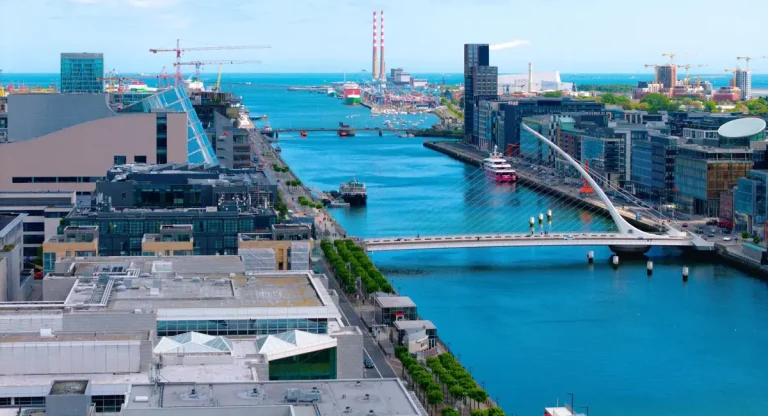
Ireland ends visa-free travel for Saint Kitts and Nevis, Saint Lucia and Nicaragua from 15 June 2026
From 15 June 2026, citizens of Saint Kitts and Nevis, Saint Lucia and Nicaragua will need a visa…



The year 2025 is forecast to see approximately 142,000 millionaires leave their home countries, taking with them a total of more than US$800 billion. This is not a random trend, but a strategic response to mounting geopolitical risks, particularly fears of a third world war.
Why are the super-rich migrating?
According to , geopolitical risk is the primary “push” factor driving millionaires to seek new “safe havens”. Hotspots such as the conflict in Ukraine, escalating tensions in the Middle East, and concerns over the Taiwan Strait have created an atmosphere of instability that wealthy individuals cannot ignore.Beyond the risk of war, other factors are also driving this migration. Tax policy changes, particularly the UK’s decision to abolish the “non-dom” regime, have prompted 16,500 millionaires to leave Britain, taking with them US$91.8 billion. This represents the largest capital outflow from any country in 2025.
The United Arab Emirates (UAE)
Considering a residency programme? The Prosperous Living Investment team assesses your profile free of charge and advises on the pathway that fits your goals.
In addition to the UK, China lost 7,800 millionaires (US$55.9 billion) due to capital control concerns, geopolitical risks, and economic instability. India lost 3,500 millionaires (US$26.2 billion), despite remaining a fast-growing market.
South Korea lost 2,400 millionaires (US$15.2 billion), reflecting concerns over potential conflict with North Korea and intense economic competition. Brazil lost 1,200 millionaires (US$8.4 billion), while the Russian Federation lost 1,500 millionaires (US$14.7 billion) as a consequence of the Ukraine conflict.
A key emerging trend is “residence diversification” — holding multiple nationalities or permanent residence cards in different countries. This enables wealthy individuals to maintain flexibility, protect their assets from geopolitical risks, and ensure freedom of movement in the event of a crisis.
Programmes such as residence by investment citizenship by investment (CBI) and residence by investment (RBI) are becoming more popular than ever. These programmes allow high-net-worth individuals (HNWIs) to obtain residence rights or citizenship through investments in real estate, government bonds, or local businesses.
This wealth migration has far-reaching impacts. Countries receiving large capital inflows, such as the UAE and the US, benefit from increased property investment, job creation, and boosted economic development. Conversely, countries experiencing capital outflows face challenges regarding public finances, declining income tax revenues, and a slowdown in development projects.
However, this migration also highlights inequalities in the ability to adapt to global risks. Wealthy individuals can “buy” security by moving their assets, while ordinary people bear the consequences of geopolitical instability.
As fears of World War III persist, migration capital flows are expected to continue rising in the coming years. Countries wishing to attract global wealth will need to improve political stability, simplify residency by investment procedures, and create an attractive business environment.
The migration of the super-rich is not merely a reaction to geopolitical risk, but a sign of profound changes in how the world is organised. It shows that in an increasingly volatile world, mobility and flexibility have become the most precious assets.
The year 2025 will be a milestone in the history of global wealth migration. With 142,000 millionaires projected to leave their home countries, and “safe havens” such as the UAE, the US, and Switzerland becoming increasingly attractive, we are witnessing a restructuring of the global wealth map. This is a trend that cannot be ignored, not only for the wealthy, but also for governments, investors, and those concerned with the future of the global economy.
From 15 June 2026, citizens of Saint Kitts and Nevis, Saint Lucia and Nicaragua will need a visa…

Latvia's parliament has passed an immigration law removing the real estate and bank deposit routes from the Golden…

Sales by Egypt's leading developers eased slightly in Q1 2026 as the property market entered a correction phase,…
The Prosperous Living Investment team advises on pathways, assesses profiles and manages investments transparently for every residency, citizenship and international property objective.
Free profile assessmentWhere life gets prosperous
We use analytics cookies (Google Analytics) to understand how this site is used. They stay off until you agree. Privacy policy.