


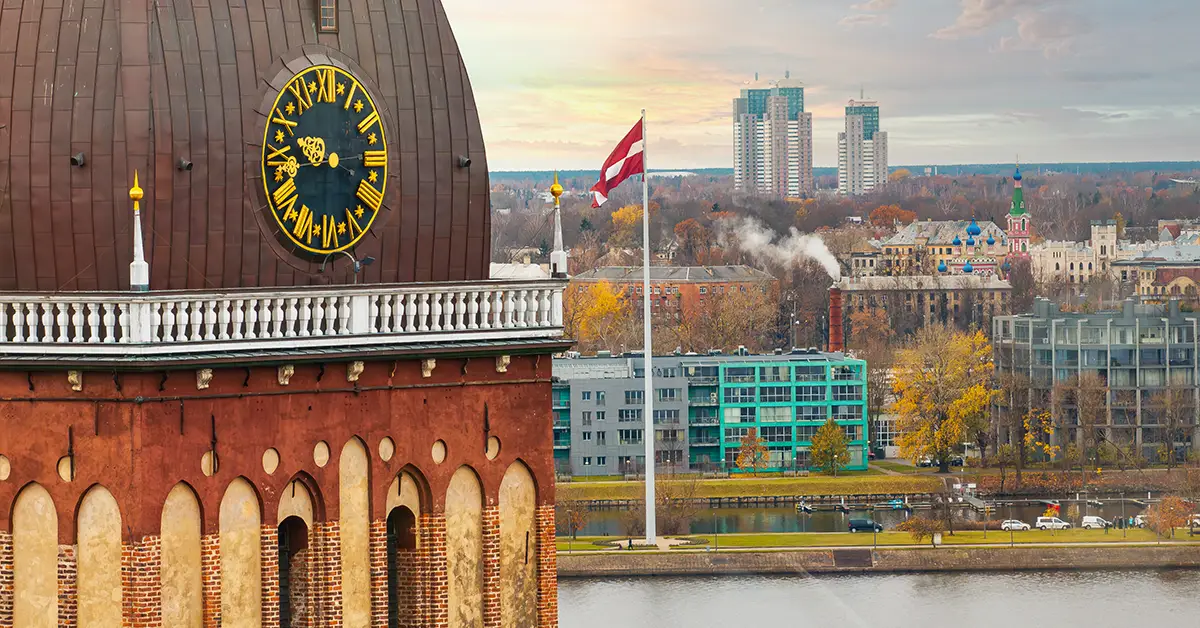
Latvia’s international relations rest on four main pillars: deep integration into the European Union, collective security within the NATO framework, close cooperation with the Baltic and Nordic countries, and a strategic transatlantic relationship with the United States. The countryLatviareached a historic milestone in 2025 when it was elected to the United Nations Security Council for the 2026 – 2027 term — the first time in the nation’s history.
This article systematically analyses Latvia’s international relations across six main dimensions: an overview of foreign policy, European Union integration, NATO membership and defence spending of 5% of GDP, Baltic – Nordic cooperation, relations with Russia – Belarus – Ukraine, and global partners and its role in international organisations.
Message
Overview of Latvia’s foreign policy
Latvia’s international relations are shaped by the Ministry of Foreign Affairs (Ārlietu ministrija), currently headed by Minister Baiba Braže — appointed in November 2023 after Edgars Rinkēvičs became President. According to the 2025 – 2026 Annual Report on Foreign Policy presented to the Saeima on 14/01/2026, Latvian foreign policy focuses on three strategic directions: strengthening national security and the rules-based international order; promoting economic growth and EU competitiveness; and protecting citizens’ interests while harnessing the potential of the diaspora.
President Edgars Rinkēvičs plays an important role in shaping Latvia’s international relations, drawing on 12 years as Foreign Minister before taking office as President in July 2023. Foreign affairs are coordinated between the Office of the President, the Saeima, the Prime Minister and the relevant ministries, ensuring long-term policy consistency even when governments change. The Saeima holds an annual debate on foreign policy — held on 30/01/2026 for 2025 – 2026.
Latvia has diplomatic relations with 158 countries and maintains 44 diplomatic and consular missions abroad. Its network of embassies reflects policy priorities: a focus on EU countries, North America, strategic Asian partners (Japan, South Korea, China, India) and several Middle Eastern countries. Riga hosts 37 foreign embassies and 11 representative offices of international organisations.
A historic achievement in Latvia’s international relations was its election to the UN Security Council for the 2026 – 2027 term, held at the UN General Assembly in 2025. This is the first time Latvia has served as a non-permanent member of the UN Security Council since joining the organisation in 1991.
Winning by an overwhelming majority reflects the diplomatic standing Latvia has built over more than three decades of international integration. Latvia’s top priorities on the Security Council include: defending Ukraine’s territorial integrity, strengthening international law, cybersecurity, and combating sexual violence in conflict.
The diaspora is an important strategic asset for Latvia’s international relations. More than one in five Latvian citizens live abroad temporarily or permanently (mainly in the UK, Germany, Ireland, the US, Canada and Australia), while about 10,000 people return home each year. The Ministry of Foreign Affairs has rolled out a data-driven diaspora policy, including the 2024 study “Diaspora Investment in Latvia”. Latvian embassies in countries with Latvian communities play a dual role — serving both as diplomatic missions and as hubs for cultural and consular support to the diaspora, a hallmark of modern Latvian international relations.
Considering a residency programme? The Prosperous Living Investment team assesses your profile free of charge and advises on the pathway that fits your goals.
European Union integration in Latvia’s international relations
EU integration is the most important pillar of Latvia’s international relations. Latvia officially joined the European Union on 01/05/2004, following a referendum on 20/09/2003 in which 67% of voters were in favour. This was a turning point that reshaped the country’s entire economic, political and security orientation, taking Latvia fully out of the former Soviet orbit and making it an inseparable part of the West.
EU integration in Latvia’s international relations has unfolded in several layers. Latvia joined the Schengen Area on 21/12/2007, allowing free movement with 25 EU and non-EU countries without border controls. Latvia became the 18th member of the eurozone on 01/01/2014, giving up its own currency, the lats, for the single currency. In 2015, Latvia held the rotating Presidency of the Council of the EU for the first six months of the year — its first and most important presidency in the history of Latvia’s relations with the EU.
Latvia holds 9 of the 720 seats in the European Parliament (Eiropas Parlaments) for the 2024 – 2029 term. Latvian MEPs are spread across the main political groups: the European People’s Party (EPP), Renew Europe, the Socialists and Democrats (S&D) and the European Conservatives and Reformists (ECR). Riga is the seat of the Body of European Regulators for Electronic Communications (BEREC) — one of the few EU agencies located in the Central and Eastern European member states.
For 2025 – 2026, Latvia’s top priorities within the EU framework include: security and defence, economic cohesion, the Common Agricultural Policy (CAP) and funding for the Rail Baltica project. Latvia supports increasing the EU defence budget and advancing strategic autonomy amid shifting transatlantic relations. Latvia has also applied for EUR 3.497 billion in funding from the Security Action for Europe (SAFE) instrument — a new EU financial tool.
Latvia’s international relations within the EU are not only about receiving funds and regulations but also about actively helping shape policy. Latvia has sought to lead initiatives on cybersecurity, countering disinformation and strengthening digital defence — an area where the country has an advantage thanks to the NATO StratCom COE based in Riga. Latvia is also one of the strongest advocates of sanctions on Russia and support for Ukraine in discussions in Brussels.
NATO membership and 5% of GDP defence spending in Latvia’s international relations
Latvia joined NATO on 29/03/2004 — the same day as six other Central and Eastern European countries in the largest enlargement in the Alliance’s history. NATO membership is one of the most important milestones in Latvia’s international relations, guaranteeing national security through the principle of collective defence (Article 5 of the Washington Treaty). Latvia hosted the 2006 NATO Summit in Riga — the largest international diplomatic event in the history of Latvia’s international relations.
NATO’s multinational military presence in Latvia was established after the 2016 Warsaw Summit with the deployment of the enhanced Forward Presence (eFP) led by Canada. The eFP battlegroup in Latvia currently has about 2,500 troops from Canada, Albania, the Czech Republic, Denmark, Italy, Iceland, North Macedonia, Montenegro, Poland, Slovakia, Slovenia, Spain and the US. In 2024, it was upgraded to a Multinational Brigade with stronger defensive capabilities.
The NATO Strategic Communications Centre of Excellence (NATO StratCom COE) in Riga is one of the most important contributions of Latvia’s international relations to the NATO alliance. Founded in 2014 after the Crimea crisis, the centre analyses and counters disinformation from strategic adversaries, particularly Russia. Latvia also participates in other NATO Centres of Excellence, such as the Cyber Defence Centre in Tallinn (Estonia) and the Energy Security Centre in Vilnius (Lithuania).
Latvia’s defence spending has surged in recent years, far exceeding NATO’s former 2% of GDP commitment. In 2024, defence spending reached more than 3% of GDP — third in NATO after Poland and the United States. At the NATO Summit in The Hague in June 2025, members reached a historic agreement to raise spending to 5% of GDP — an unprecedented leap in the Alliance’s history. Latvia is among the strongest supporters of this commitment.
The Latvian armed forces (Nacionālie Bruņotie Spēki) are undergoing significant modernisation in 2024 – 2027. In 2024, Latvia reinstated compulsory military service (Valsts aizsardzības dienests — State Defence Service) after nearly two decades of a fully volunteer army. Under this programme, all male Latvian citizens aged 18 – 27 must complete 11 months of military service. The domestic defence industry has also grown strongly, notably through the Drone Coalition co-led by Latvia and the UK — producing millions of UAVs for Ukraine and the Latvian armed forces.
At the NATO Summits in Vilnius in July 2023 and Washington in July 2024, Latvia signed a 10-year Bilateral Security Agreement with Ukraine, committing military support of at least 0.25% of GDP per year. The steady presence of NATO’s Baltic Air Policing at Lielvārde air base — rotating among member states — symbolises the multinational commitment to protecting Baltic airspace since 2004.
Baltic and Nordic cooperation in Latvia’s international relations
Cooperation with its two Baltic neighbours — Estonia and Lithuania — is a core part of Latvia’s international relations. The highest formal mechanism is the Baltic Council of Ministers, established in 1994 to coordinate policy among the three governments. In 2025, Latvia held the rotating BCM Presidency, leading initiatives on infrastructure connectivity, energy synchronisation and support for Ukraine. The Baltic Assembly — an inter-parliamentary mechanism — also meets regularly.
The NB8 (Nordic-Baltic Eight) framework is a broader cooperation mechanism in Latvia’s international relations, bringing together the three Baltic states and five Nordic countries (Denmark, Finland, Iceland, Norway, Sweden), established in 2007. NB8 coordinates closely on Baltic regional security, support for Ukraine, countering hybrid threats and protecting critical undersea infrastructure.
In 2025, Denmark coordinated NB8 with priorities in security, defence and energy. NB8 countries have contributed about USD 500 million to NATO’s PURL mechanism supporting Ukraine — Latvia contributed EUR 7.2 million.
Rail Baltica is the largest infrastructure initiative in the history of the Baltic states and an important symbol of Latvia’s international relations with Estonia, Lithuania and Poland. It is an 870 km high-speed railway linking Tallinn – Pärnu – Riga – Panevėžys – Kaunas – Vilnius – Warsaw, using the 1,435 mm European standard gauge instead of the former Soviet 1,520 mm gauge.
The total estimated cost is about EUR 15.3 billion, largely funded by the EU through the Connecting Europe Facility (CEF). The main line is expected to open in 2030 – 2032, allowing top speeds of 240 km/h for passengers and 120 km/h for freight.
Another historic achievement was the synchronisation of the three Baltic states’ power grids with the Continental European Grid, completed in February 2025. Previously, the Baltic grid remained connected to the BRELL system (Belarus – Russia – Estonia – Latvia – Lithuania) dating from the Soviet era — a serious strategic weakness. Disconnecting from BRELL and synchronising with the EU grid via Poland ended the last energy dependence on Russia, significantly improving the energy security of the three Baltic states.
Latvia’s Nordic multilateral cooperation also includes participation in the Council of the Baltic Sea States (CBSS) and the Nordic Investment Bank (NIB). The CBSS is a political forum of 11 Baltic Sea states focusing on environmental, economic and civil security cooperation.
The NIB provides long-term investment capital for infrastructure and energy projects in the region, with Latvia among its important beneficiaries. Cooperation on protecting undersea cables in the Baltic has become urgent following a series of cable incidents in 2024 – 2025, suspected to be linked to Russia’s “shadow fleet”.
Relations with Russia, Belarus and Ukraine in Latvia’s international relations
Relations with Russia are the most complex and sensitive issue in modern Latvian international relations. After Russia launched its full-scale invasion of Ukraine on 24/02/2022, Latvia adopted its toughest diplomatic and economic measures to date. In January 2023, Latvia withdrew its Ambassador from Moscow and expelled the Russian Ambassador from Riga, downgrading diplomatic relations to the level of Chargé d’Affaires. Latvia closed the Russian Consulates in Daugavpils and Liepāja.
Other restrictive measures include: suspending tourist visas for Russian citizens, restricting residence permits, and closing the Terehova and Grebņeva border crossings with Russia for various periods. In 2025, 841 Russian citizens who failed the A2 Latvian language exam were ordered to leave the country. Latvia has also built a 173 km border fence with Russia and Belarus, including walls, sensor systems and fortifications to prevent illegal crossings.
Relations with Belarus have also deteriorated sharply after Belarus supported Russia’s invasion of Ukraine and cracked down on the domestic opposition. Latvia was one of the first EU countries to impose personal sanctions on the Lukashenko regime, recognise opposition leader Sviatlana Tsikhanouskaya, and grant asylum to thousands of exiled Belarusian activists — a move characteristic of the values-based orientation of Latvia’s international relations. The border fence with Belarus was built to counter the wave of illegal migration weaponised by the Lukashenko regime since 2021.
Supporting Ukraine is the most important pillar of Latvia’s international relations in the post-2022 era. According to official data from the Latvian Ministry of Foreign Affairs as of 20/02/2026, Latvia’s total aid to Ukraine since the start of the war has reached EUR 1.08 billion — equivalent to 0.6% of GDP, one of the highest ratios in the world. In 2025 alone, Latvia provided EUR 123.88 million in military aid (0.3% of GDP), including PATRIA armoured vehicles, training for Ukrainian soldiers, drones made in Latvia, and contributions to the NATO PURL, CAP and Renovator mechanisms.
Latvia and Ukraine signed a 10-year Agreement on Long-Term Support and Security Commitments in April 2024, under which Latvia committed to maintaining at least 0.25% of GDP in annual military aid to Ukraine. Latvia also strongly supports Ukraine’s path to EU and NATO membership and is one of the leading countries in efforts to establish the Special Tribunal for the Crime of Aggression in The Hague. Together with the UK, Latvia co-leads the Drone Coalition, which supplied Ukraine with 1 million UAVs in 2024.
Relations with global partners in Latvia’s international relations
The United States is the most important strategic partner outside the EU and NATO in Latvia’s international relations. The bilateral relationship rests on a special legal foundation — the US is one of the few countries that never recognised the Soviet annexation of Latvia (1940 – 1991).
The 1940 Welles Declaration by the US Department of State on non-recognition of the annexation of the Baltic states became the legal basis for Latvia’s restoration of independence in 1991. The US is the 14th-largest source of FDI in Latvia, concentrated in IT, the defence industry and services — reflecting the depth of Latvia’s relations with Washington.
Latvia maintains important partners in the Asia-Pacific to diversify its economic and diplomatic ties. The Latvian Embassy in Beijing handles relations with China and several countries in the region; the Embassy in Tokyo covers Japan and part of Southeast Asia.
Relations with Japan, South Korea and Taiwan are particularly well developed in digital security, countering disinformation and technology. Latvia is one of the EU countries with a firm stance on China and withdrew from China’s “16+1” (later 17+1) cooperation mechanism with Central and Eastern European countries in 2022.
In Southeast Asia, Latvia has no resident embassy but maintains diplomatic relations with countries in the region through non-resident embassies. Vietnam – Latvia relations were established in 1992 and have developed steadily, with two-way trade of about USD 200 – 300 million per year. Latvia supports the EU – Vietnam Free Trade Agreement (EVFTA) and the Investment Protection Agreement (EVIPA) as an important legal basis for economic cooperation within Latvia’s international relations with the ASEAN region.
Latvia is an active member of international organisations beyond the EU and NATO, broadening the reach of its international relations globally. Latvia joined the United Nations on 17/09/1991 after restoring independence, joined the Organization for Security and Co-operation in Europe (OSCE) in 1991, the Council of Europe in 1995, the World Trade Organization (WTO) in 1999 and the Organisation for Economic Co-operation and Development (OECD) on 01/07/2016. Its biggest recent success is its election to the UN Security Council for the 2026 – 2027 term.
Latvia takes part in many EU and UN civilian and military missions. In the past, Latvian forces have served in Iraq, Afghanistan, Mali, the Central African Republic, Bosnia – Herzegovina, Kosovo and Lebanon. Currently, Latvia participates in EU missions in Moldova (EUMM), Armenia (EUMA), Iraq (EUAM Iraq), Ukraine (EUAM Ukraine) and Georgia (EUMM Georgia).According to the Latvian Ministry of Foreign Affairs, these missions reflect the country’s commitment to international peace and European solidarity. Latvia’s participation in organisations related to Women, Peace and Security has also expanded significantly in recent years.
Summary of Latvia’s international relations
Latvia’s international relations reflect a successful journey from an isolated Soviet republic to a country fully integrated into Western institutions within three decades. The four policy pillars — the EU, NATO, Baltic – Nordic cooperation and transatlantic ties — have shaped the country’s diplomatic profile and ensured its security amid a volatile European geopolitical landscape.
Russia’s invasion of Ukraine in February 2022 pushed Latvia’s international relations into their greatest test since the restoration of independence. Latvia’s response — raising defence spending above 3% of GDP and aiming for 5%, providing EUR 1.08 billion (0.6% of GDP) in aid to Ukraine, reinstating military service, synchronising its power grid with the EU and downgrading relations with Russia — shows its determination to defend the rules-based international order and support democratic allies.
The outlook for Latvia’s international relations in 2026 – 2030 will centre on four strategic priorities: effectively carrying out its UN Security Council membership; completing Rail Baltica and other Baltic connectivity initiatives; and maintaining its commitment to supporting Ukraine until a just peace is achieved.
The fourth priority is diversifying economic partners in the Asia-Pacific to reduce dependence on traditional markets. With the diplomatic credibility it has built and a close network of allies, Latvia remains a small but influential voice in shaping European security and political affairs.
Accompanying you on your journey in residency investment
The Prosperous Living Investment team advises on pathways, assesses profiles and manages investments transparently for every residency, citizenship and international property objective.
Free profile assessmentWhere life gets prosperous