

The history of the EB-5 visa

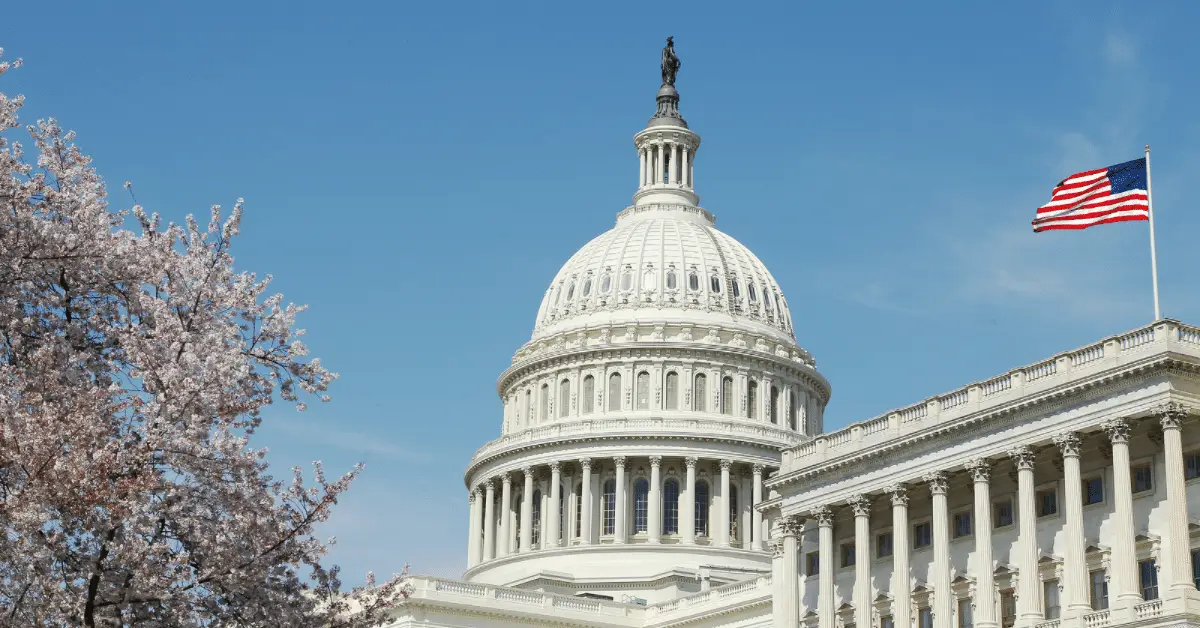
In the late 1980s, when the US economy was struggling, legislators looked for new ways to revive it. At the same time, it had become common for governments to promote domestic commercial activity by attracting global talent and foreign investment.
Having recognised the potential benefits of this strategy, Congress adopted an investment immigration option, which today we know as the EB-5 Immigrant Investor Program.
The EB-5 programme provides a route for foreign investors to obtain permanent residence in the United States, provided they meet the EB-5 eligibility requirements relating to investment and job creation levels. The EB-5 initiative works effectively because both sides benefit: the United States promotes economic growth, while foreign nationals receive permanent resident status.
However, the EB-5 programme also has its weaknesses, and over the years Congress and other stakeholders have sought various ways of improving the programme’s effectiveness. In this article, Prosperous Living Investment analyses the history of the EB-5 programme and explores its development from its inception to the present day.
Find out more aboutvisa EB-5.
Message
1990 – 1999
Congress created the fifth employment-based preference (EB-5) visa programme in 1990 in order to “create jobs for American workers and inject new capital into the US economy”.
At the time, the programme was aimed at “foreign entrepreneurs” who would not only invest USD 1 million or USD 500,000 in a “new commercial enterprise” but also “engage in the management of the new enterprise”, creating ten full-time jobs for US citizens or lawful permanent residents.
To make the programme more investor-friendly, Congress enacted the Appropriations Act of 1993 amending the EB-5 programme to create an “Immigration Pilot Program” — the Immigrant Investor Pilot Program (IIPP).
Under the IIPP, foreign nationals could invest in a pre-approved regional center, or “economic unit [known as a regional center], public or private, involved in promoting economic growth, including increased export sales, improved regional productivity, job creation, or increased domestic capital investment”.
Investing in a regional center brought foreign nationals an additional benefit by allowing them to count both directly and indirectly created jobs for the purposes of meeting the 10-job creation requirement.
This was intended to help prospective investors meet “the programme’s strict requirements” through passive investment. With the IIPP, the EB-5 visa became an investor visa rather than an entrepreneur visa.
Around 1995, former officials of the Immigration and Naturalization Service (INS) established a company called AIS which acted as an intermediary between the INS and immigrant entrepreneurs under the EB-5 programme.
While the EB-5 required an investment of USD 500,000, AIS required only USD 125,000 in cash with the remainder — USD 375,000 — in the form of a promissory note. AIS claimed that the promissory note would “be cancelled once the immigrant’s permanent residence application was approved”.
The US immigration authority, then known as the Immigration and Naturalization Service (INS), interpreted the rules on financial conditions in a way that accepted this arrangement until around 1998, when it was investigated by the Government Accountability Office (GAO).
It was alleged that the INS was favouring AIS in EB-5 matters. The INS (now USCIS) changed its “interpretation of the rules on financial conditions” as a result of the investigation.
In 1997 and 1998, two owner-operators of Interbank, of Herndon, Virginia “filed 320 fraudulent EB-5 petitions on behalf of 270 EB-5 immigrant investors”. The INS raided Interbank in August 1998. The EB-5 programme was temporarily suspended.
Considering a residency programme? The Prosperous Living Investment team assesses your profile free of charge and advises on the pathway that fits your goals.
2000 – 2009
Although no one at AIS or the INS was charged, in 2000 the two Interbank operators were arrested, and subsequently convicted and imprisoned on dozens of counts of “money laundering and fraud” in the largest EB-5 fraud case.
INS District Director Warren A. Lewis said, “Visa fraud, whether carried out on the street by selling counterfeit cards or through a complex financial scheme, breaks the law and will be investigated and prosecuted.”
Hundreds of immigrant investors “lured” to the United States had their permanent residence applications refused. As a result of the INS investigation, processing of 900 EB-5 cases was suspended, leaving immigrant families in limbo for years.
When the GAO presented its report in 2005, it concluded that immigrant investors were not using the programme because of the 900 suspended EB-5 files — some dating from 1995 — as well as the “burdensome application process” and “long adjudication times”.
According to a 2014 report by the Brookings Institution and the Rockefeller Foundation, from 2008 there was renewed interest in the “underused” EB-5 visa programme as the number of “wealthy investors” and “ultra-high-net-worth individuals” in emerging markets abroad grew and access to “traditional domestic financing” in the United States declined as a result of the Great Recession.
2010 – 2021
By 2010, use of the EB-5 programme by foreign investors was far below what Congress had originally anticipated. In 2011, USCIS began making a number of changes to the programme in the hope of increasing the number of applicants. By the end of fiscal year 2011, more than 3,800 EB-5 petitions had been filed, compared with fewer than 800 in 2007.
Originally, under the first EB-5 programme, the foreign investor had to create an entirely new commercial enterprise; however, under the Pilot Program, the investment could be made directly in a job-creating commercial enterprise (new or existing – a “Troubled Business”), or in a regional center – an investment vehicle managed by a third party (private or public), responsible for creating the required jobs.
Regional centers may charge a management fee for managing the investor’s investment and “a percentage of what they raise from developers”, which can amount to millions of dollars on large projects.
Since 2010, the US Securities and Exchange Commission (SEC) has become more assertive in regulating the programme, prosecuting individuals who do not comply with the rules. At the same time, USCIS has provided information on investor expectations, reporting requirements and added audits and site visits.
Overall, programme participants have developed their own best practices as well as educational initiatives to promote a better understanding of the legal parameters in immigration, finance and securities for those managing investor funds. The EB-5 is one of the few government job-creation programmes in the United States that costs the taxpayer nothing.
The programme reached capacity for the first time in August 2014, when the Department of State stopped issuing EB-5 visas until the start of the next fiscal year in October 2014. By 2014, the number of EB-5 visas issued had doubled compared with 2009.
In 2019, under the Trump administration, new rules for the programme took effect and the US Congress extended the programme for the remainder of the year. The new rules increased the investment amount from USD 1 million to USD 1.8 million, and from USD 500,000 to USD 900,000 in a Targeted Employment Area.
To counter the uncertainty of the EB-5 programme continuing in an unpredictable way, and to extend the programme to 2024, Senators Chuck Grassley (R-Iowa) and Patrick Leahy (D-Vermont) introduced the EB-5 Reform and Integrity Act of 2019, S. 2540.
The bill would give DHS greater authority over the programme, establish and fund an audit and site visit system, require greater disclosure and oversight, and improve transparency and accountability.
In 2020, Senator Lindsey Graham (R-SC) co-sponsored a bill that would allow foreign investors to take part outside low-employment areas, reduce the minimum investment required, and allow some participants to move to the United States while awaiting a visa.
The co-sponsors were Senators Chuck Schumer (D-NY), M. Rounds (R-SD) and Cornyn (R-TX). Related Companies of New York was one of the largest users of EB-5 funds, particularly for its Hudson Yards project, and spent more than USD 280,000 on EB-5-related funding. The vast Hudson Yards project, which opened in 2019, has its origins in a little-remembered document, the Group of 35 Report.
The Group of 35 was an “unusual” urban policy coalition established by Senator Schumer calling on New York City to become more involved in commercial development. The report, issued in 2001, recommended developing Central Business Districts (CBDs) as a strategy for remaining competitive. The new CBDs would be in central Brooklyn and Long Island City, but “…the most radical idea….” was to locate a new CBD in Manhattan, now the Hudson Yards site.

In March 2021, Grassley and Leahy introduced the EB-5 Reform and Integrity Act of 2021 to fix “…the fraud-ridden EB-5 foreign investor programme.” Leahy was particularly concerned about the Jay Peak Ski Resort fraud in Vermont, where developers were alleged to have taken hundreds of millions of dollars from investors.
The bill called for periodic audits by the Department of Homeland Security and new disclosure rules to protect investors and ensure compliance with EB-5 directives. The Act also reauthorised the EB-5 Regional Center programme, which was due to expire in June 2021.
The statutory authorisation for the regional center portion of the EB-5 Program lapsed at midnight on 30 June 2021, after an effort to extend and improve the programme was blocked in the US Senate.
2022
On 15 March, President Biden signed legislation including authority for theEB-5 Immigrant Investor Regional Center Programand various implementation dates for the programme.
There are three major changes to the programme in the new bill, including greater regulation and government oversight.
- First, the bill authorises the EB-5 for five years, to September 2027. Previous versions were short-term and last-minute extensions.
- Second are security provisions preventing participants from exploiting the programme; for example, regional centers must act more transparently and comply with rules from DHS.
- The third change is a “grandfather” provision protecting participants from suspension where the programme lapses during their “good faith” investment period.
In addition, investors historically had to invest USD 500,000 plus USD 50,000 in administrative fees in an EB-5 project. The new requirement is an investment of USD 1,050,000, or USD 800,000 in a high unemployment area.
Growing interest from China
Between 2009 and 2013, GreenTech Automotive, led by founder and CEO Charlie Wang, raised USD 141.5 million from Chinese investors under the EB-5 programme. However, by August 2013, of the 91 foreign investors in GreenTech, only one had received permanent resident status.
In November 2017, a total of 32 Chinese investors in the company brought a USD 17 million fraud action against Greentech and its principals. The action alleged that they lied, manipulated, made fraudulent representations and ran a “scam.”

The investors said they were each defrauded of USD 560,000. The investors said they were consequently at risk of removal from the United States because the Department of Homeland Security had determined that Greentech did not create the number of jobs required for the number of visas issued through the EB-5 programme.
In June 2017, the US Court of Appeals for the Fourth Circuit upheld a ruling from a lower federal judge holding that the action was not specific enough as to how the allegedly misleading and false statements induced the Chinese nationals to invest in Greentech; at the same time, the appeal court strongly disapproved of the statements the men had made to promote Greentech. GreenTech filed for bankruptcy in February 2018.
According to a 2015 Savills Studley report, in 2011, of a total of 3,463 EB-5 visas issued, 2,408 — representing 69.5% — were to Chinese nationals. By 2014, of a total of 10,692 EB-5 visas issued, 9,128 — representing 85.4% — were to Chinese nationals.
The report’s authors concluded that “the rise in applicants for the EB-5 programme stems from increased interest from mainland China”. As the Asian economy grew, there was a rise in new money in China. In 2012 there were 1.5 million, in 2013 there were 2.4 million, more than the new money in Japan.
In 2020, members of both houses of the US Congress called on the Trump administration to initiate a federal review of the EB-5 programme. They called on the US Government Accountability Office (GAO) to investigate the involvement of the Chinese Communist Party (CCP) in exploiting the programme.
Critics pointed out that nearly 80% of the visas issued between 2012 and 2018 went to nationals of the People’s Republic of China and that the majority of the EB-5 investor backlog comprised Chinese nationals.
Some financial experts considered that encouraging inward foreign investment through the programme was precisely what the United States needed to recover from the COVID-19 pandemic, providing funding, for example, for the USD 1 trillion infrastructure proposal then being drafted by the Trump administration.
The US Department of Transportation would use the funds for traditional roads and bridges but would also preserve resources for rural broadband development and 5G wireless networks.
The possibility of abolition
A detailed article onThe Trump Card.

On 25 February 2025, President Donald Trump announced that the EB-5 visa would be abolished; a “gold card” programme would replace it.
Trump stated that the programme would not require congressional approval, and that the minimum investment level would be USD 5,000,000. Trump promoted the idea by saying it could pay off the USD 36 trillion national debt.
As at 26 February, Trump had not mentioned a job creation requirement. When a reporter at the Oval Office event on 25 February asked him whether a Russian oligarch would be eligible for the programme, Trump replied, “Yeah, possibly. I know some Russian oligarchs who are very nice people.”
Find out more about the EB-5 on the US government website athere.
Accompanying you on your journey in residency investment
The Prosperous Living Investment team advises on pathways, assesses profiles and manages investments transparently for every residency, citizenship and international property objective.
Free profile assessmentWhere life gets prosperous