


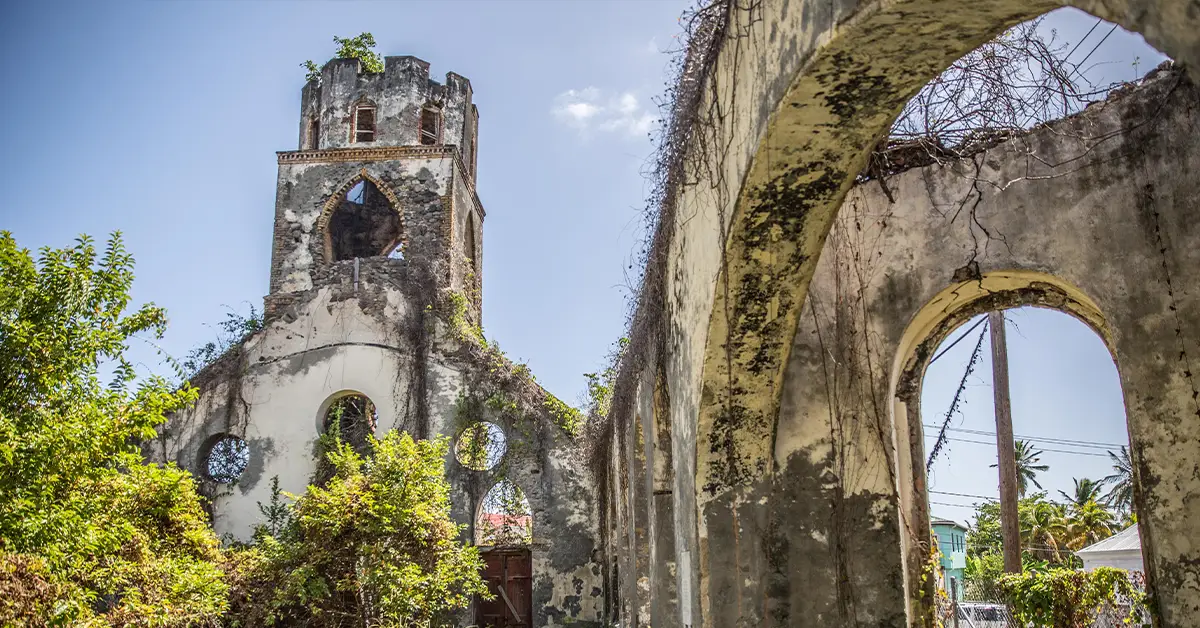
The history of Grenada is a story stretching more than three thousand years, from the first Indigenous communities to a modern independent democratic island nation. Lying at the southern edge of the Lesser Antilles arc, around 145 km north of the Venezuelan coast, Grenada has witnessed waves of migration, colonial conflict between European powers, plantation slavery, and then independence, revolution and finally a stable democracy.
For investors researching theGrenada citizenship by investmentprogramme, grasping this island nation’s history is not merely a cultural matter but also provides the foundation for understanding its political institutions, international relations and current standingGrenadain the Caribbean region.
Message
The pre-Columbian period: the Arawak and Kalinago
Before Europeans arrived, Grenada was already home to Indigenous South American peoples. Archaeological research at the Pearls site in Saint Andrew parish shows that the first inhabitants came to the island by wooden canoe from the Orinoco basin in present-day Venezuela, possibly from the 1st century AD or earlier.
The Arawak (also known as Taíno) settled in Grenada around the 6th century. They were a peaceful agricultural people, growing cassava, maize and sweet potatoes and developing refined pottery. They named the island in several ways, including Camajuya meaning “lightning” in the Arawak language.
Around the year 1000 AD, a new wave of migration arrived from the Orinoco region: the Kalinago, whom Europeans called the Carib. They gradually displaced the Arawak on the island and gave it a new name, Camerhogne, meaning “island of the iguanas” in Kalinago. Kalinago society was structured around villages, living along the coast and inland, with fishing, hunting and inter-island trade.
According to modern research by the Grenada National Museum, the traditional understanding that the Kalinago were warlike and exterminated the Arawak is largely a product of European colonial discourse. Archaeological evidence shows that relations between the Indigenous groups were more complex, with continuous mixing and cultural exchange between successive waves of migrants from the South American mainland.
Considering a residency programme? The Prosperous Living Investment team assesses your profile free of charge and advises on the pathway that fits your goals.
Contact with Europeans and the colonial contest
Christopher Columbus sighted Grenada on his third voyage on 15/8/1498 and named the island La Concepción. However, fierce resistance from the Kalinago prevented the Spanish from establishing a permanent colony. Throughout the 16th century, Grenada remained Indigenous territory.
The French were the first Europeans to conquer the island. In 1649, Governor Jacques Dyel du Parquet of Martinique led forces to seize Grenada. Kalinago resistance lasted for many years. One of the most tragic events in Grenada’s history took place in 1651 at the cliff of Sauteurs (Leapers’ Hill) in Saint Patrick parish: around 40 of the last Kalinago warriors, cornered, threw themselves into the sea to their deaths rather than surrender to the French.
Over more than a century of French rule, Grenada became an economic colony with sugar and cocoa plantations. The French brought slaves from West Africa to work the plantations. The island was renamed La Grenade in French.
The contest between France and Britain over Grenada began in the mid-18th century, reflecting the global war between the two empires. Under the Treaty of Paris of 1763 ending the Seven Years’ War, France ceded Grenada to Britain. However, during the American Revolutionary War, France retook the island in 1779. The Treaty of Versailles of 1783 finally recognised Grenada as a British colony, a status that would last nearly 200 years.
Fédon’s Rebellion and the British colonial era
An important chapter in Grenada’s history is Fédon’s Rebellion of 1795. Julien Fédon, a French-descended Catholic mixed-race Creole plantation owner, led a large-scale uprising against British rule, inspired by the Haitian Revolution and the French Revolution.
The uprising began in March 1795, with the participation of French Creoles, freed slaves and enslaved people. The rebels controlled most of the island for nearly 16 months, killing the British Governor Ninian Home and many other British settlers. It was not until June 1796 that Britain suppressed the uprising with reinforcements from other islands. Julien Fédon is thought to have died or escaped — his true fate remains a historical mystery.
After crushing the rebellion, Britain tightened its control. Slavery remained the foundation of the plantation economy until Britain abolished slavery throughout the empire in 1833 under the Slavery Abolition Act. Freed slaves continued to work under an “apprenticeship” system until 1838.
In 1877, Grenada became a British Crown Colony, placed under the direct administration of the British Government. In 1885, Saint George’s — Grenada’s capital — also became the capital of the British Windward Islands. The island economy shifted gradually from sugar to more diverse products: cocoa, nutmeg, cinnamon and coffee. Grenada became one of the world’s largest producers of nutmeg — the nickname “Spice Isle” is still used today.
From the West Indies Federation to independence in 1974
The 20th century was the period in which Grenada transformed from colony to independent nation. In 1950, a labour movement emerged under the leadership of Eric Gairy, who founded the Grenada Manual and Mental Workers’ Union and later the Grenada United Labour Party (GULP).
From 1958 to 1962, Grenada was part of the Federation of the West Indies — Britain’s attempt to unite its Caribbean colonies into a single nation before granting independence. This federation broke up because of conflicts between larger members such as Jamaica and Trinidad and Tobago.
After the Federation collapsed, Grenada was granted internal self-government as an Associated State with Britain from 3/3/1967. Herbert Blaize of the Grenada National Party was the first Premier of the Associated State, in office from March to August 1967. Eric Gairy succeeded him in August 1967 and remained in power until independence.
Theo the United States Department of State, Grenada formally gained independence from Britain on 7/2/1974. Eric Gairy became the first Prime Minister of independent Grenada. 7 February is celebrated each year as the country’s Independence Day. Grenada chose to remain in the Commonwealth, keeping Queen Elizabeth II as head of state, represented locally by a Governor-General.
The Eric Gairy regime and the Revolution of 1979
Eric Gairy’s period in power from 1974 to 1979 was highly controversial. Although he had brought Grenada to independence, Gairy was criticised for an authoritarian style of rule, corruption, and the use of a paramilitary force called the Mongoose Gang to suppress political opponents.
Opposition to Gairy grew. The New Jewel Movement (NJM) — the acronym standing for Joint Endeavour for Welfare, Education and Liberation — became the main opposition force. The NJM was a left-wing, Marxist-Leninist movement led by the young lawyer Maurice Bishop.
At the 1976 general election, the NJM together with other opposition parties significantly reduced Gairy’s parliamentary majority, but the opposition did not accept the result, alleging electoral fraud. Social tensions reached a peak in the late 1970s.
On 13/3/1979, while Eric Gairy was in New York to address the United Nations, Maurice Bishop and the NJM carried out an almost bloodless coup, overthrowing Gairy and establishing the People’s Revolutionary Government (PRG). Maurice Bishop became Prime Minister. This was a turning point in Grenada’s history, and the first and only Marxist revolution in the English-speaking Caribbean.
The Revolutionary Government suspended the Constitution, banned opposition parties, and held no elections throughout its four years in power. Bishop established close relations with Cuba and the Soviet Union. Cuban engineers were invited to build Point Salines international airport — the first modern infrastructure helping Grenada attract tourism but also causing great concern in the United States amid the Cold War.
The United States military intervention of 1983
In mid-October 1983, the internal rift within the NJM reached breaking point. Deputy Prime Minister Bernard Coard and the hardline faction confronted Maurice Bishop. On 19/10/1983, Bishop together with several ministers and supporters were killed by Coard’s military forces at Fort Rupert (now Fort George).
The massacre shocked the Caribbean region and the world. The Organisation of Eastern Caribbean States (OECS), Barbados and Jamaica called on the United States to intervene. Grenada’s Governor-General Paul Scoon also sent a secret appeal through diplomatic channels.
According to United States Department of State material, on 25/10/1983 a combined United States and Regional Security System (RSS) force based in Barbados launched Operation Urgent Fury, landing in Grenada. Within four days, United States forces overthrew the military government of General Hudson Austin. The United Nations General Assembly passed Resolution 38/7 on 2/11/1983 by 108 votes to 9, condemning the intervention as a “flagrant violation of international law”. The governments of Britain, Canada and Trinidad and Tobago also opposed the action.
Although internationally controversial, most Grenadians welcomed the intervention positively, seeing it as restoring order and opening the way to rebuilding democratic institutions. By December 1983, the United States had withdrawn most of its forces. In December 1984, Grenada held its first free election since the Revolution, with Herbert Blaize’s New National Party (NNP) winning.
The period of stable democracy from 1984 to the present
Since 1984, Grenada has maintained a stable parliamentary democracy on the Westminster model, with free elections and peaceful transfers of power. The country is a full member of theCommonwealth, the Organization of American States (OAS), the Caribbean Community (CARICOM) and the United Nations.
Keith Mitchell of the New National Party (NNP) dominated Grenadian politics for more than two decades. He served as Prime Minister from 1995 to 2008 and from 2013 to 2022, becoming Grenada’s longest-serving Prime Minister with more than 22 years in office. Under Mitchell, the NNP won clean sweeps of all 15 parliamentary seats at two consecutive elections in 2013 and 2018.
In June 2022, Keith Mitchell called an early election but was defeated by Dickon Mitchell (no relation), a young lawyer of the National Democratic Congress (NDC). Dickon Mitchell, born in 1978 in Saint David Parish, was sworn in as Grenada’s ninth Prime Minister on 24/6/2022, becoming the youngest ever to hold the office in the country’s history.
Dickon Mitchell’s government has pursued a strong reform agenda, including a commitment to ending nepotism, reforming the electoral system and proposing that Grenada move from a constitutional monarchy to a republic. In 2024, the country marked 50 years of independence with many large-scale national events. In February 2025, Keith Mitchell formally resigned as Leader of the Opposition, closing more than 35 years of frontline political activity.
Grenada in the modern international context — a new chapter in Grenada’s history
Today, Grenada is a small island nation with a population of around 125,000 but with considerable diplomatic standing. The country maintains active diplomatic relations with the United States, Britain, China, Cuba and the CARICOM countries alike. In January 2025, Prime Minister Dickon Mitchell met Chinese President Xi Jinping in Beijing, reaffirming Grenada’s commitment to the “one China” principle.
Grenada’s modern economy rests on three main pillars: tourism, agriculture (particularly nutmeg, cinnamon and cocoa), and the Citizenship by Investment Programme (CIP) launched by the Government of Grenada in 2013. This programme allows eligible foreign investors to obtain Grenadian citizenship through investment in the National Transformation Fund or government-approved property, opening up new opportunities for the island nation’s economic development.
Grenada also plays a pioneering role on climate and sustainable development. As a Small Island Developing State (SIDS), Grenada regularly speaks at international forums on climate change, the impact of sea level rise and climate finance for developing countries.
Conclusion
The history of Grenada is a turbulent journey from the Indigenous Arawak and Kalinago communities, through the French–British colonial contest, Fédon’s Rebellion, long British colonial rule, independence in 1974, the Marxist Revolution of 1979, the United States military intervention of 1983, to the stable parliamentary democracy of today.
This complex past has shaped Grenada’s distinctive identity: a country small in scale but with a rich political heritage, considerable diplomatic standing in the Caribbean, and a flexible capacity to adapt to global upheavals. A French–British colonial legacy combined with African culture and Indigenous traditions has created a Caribbean society with a strong identity that remains open to the modern world.
Accompanying you on your journey in residency investment
The Prosperous Living Investment team advises on pathways, assesses profiles and manages investments transparently for every residency, citizenship and international property objective.
Free profile assessmentWhere life gets prosperous