
United States
California billionaire tax heads to the November ballot as Governor Newsom rejects compromise
A proposed one-off 5% wealth tax on roughly 200 California billionaires has qualified for the November 2026 ballot;…


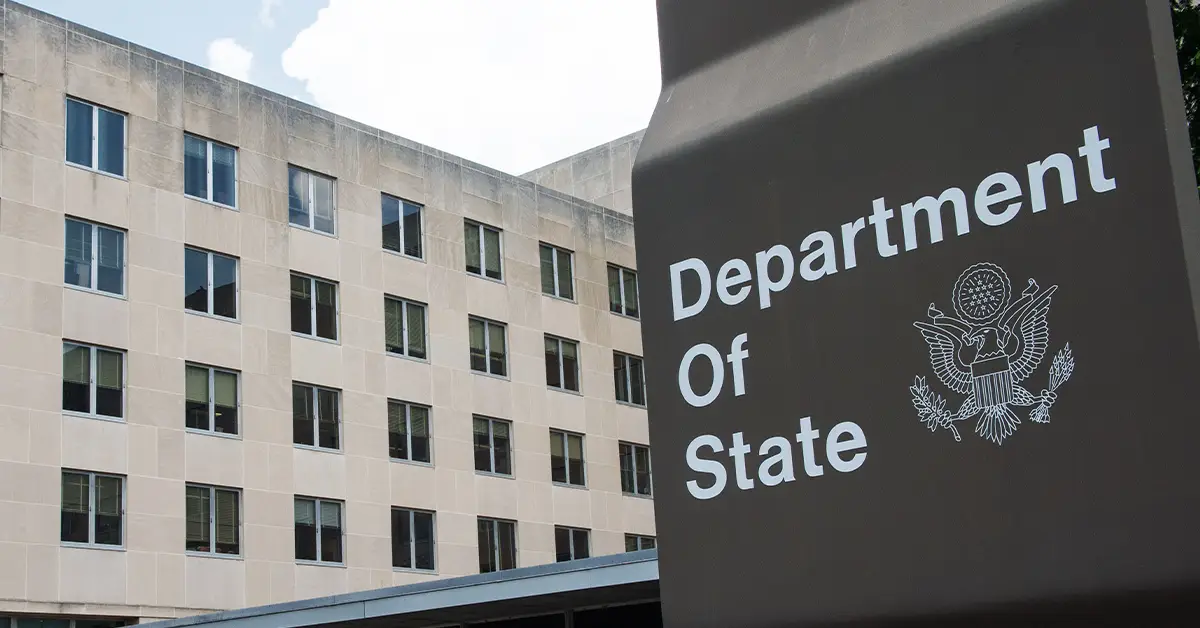
The US Department of State on 8 May 2026 began revoking US passports of citizens owing child support arrears of US$100,000 or more. According to the Department, the first phase targets approximately 2,700 passport holders based on data provided by the U.S. Department of Health and Human Services (HHS). The programme will be expanded to the US$2,500 threshold as stipulated by the Personal Responsibility and Work Opportunity Reconciliation Act of 1996 (PRWORA).
Prior to this expansion, the 1996 Act functioned as a passive filter. Parents owing more than US$2,500 in child support were only identified when applying for a new passport or renewing an existing one. Valid passports remained unaffected.
According to a U.S. Department of State announcement on 7 May 2026, HHS will transfer all data regarding arrears exceeding US$2,500 directly to the Department of State. The Department will proactively revoke passports without waiting for the individual to submit a renewal application.
HHS is currently collecting data from state agencies to identify passport holders who owe more than US$2,500. According to Department of State officials speaking to the Associated Press, the scope of the expansion could include thousands more individuals.
Considering a residency programme? The Prosperous Living Investment team assesses your profile free of charge and advises on the pathway that fits your goals.
According to the Associated Press, Mora Namdar, Assistant Secretary of State for Consular Affairs, stated: “We are expanding a common-sense measure that has proven effective in compelling those who owe child support to pay their debts. Once parents resolve their arrears, they may regain the privilege of holding a U.S. passport.”
According to the Department of State, since the Associated Press reported on the expansion plan on 10 February 2026, hundreds of parents have taken action and settled their debts with state agencies. The Department of State acknowledges it cannot confirm the cause in all cases, but this measure is applied to encourage parents to fulfil their obligations to their children under federal law.
Individuals whose passports are revoked will receive notification that their document is no longer valid for international travel. To reinstate it, the individual must pay all arrears in full to the state child support enforcement agency. Once HHS confirms full payment, the individual may apply for a new passport — a verification process that takes at least 2 to 3 weeks.
U.S. citizens abroad at the time of revocation must visit a U.S. embassy or consulate to apply for an emergency travel document. This document has limited validity and only permits direct return to the United States.
According to the U.S. Department of State, the Passport Denial Programme launched in 1998 has assisted states in collecting approximately US$657 million in child support arrears. Of this, more than US$156 million was collected through approximately 24,000 lump-sum payments over the past 5 years.
The Department of State website describes this move as strengthening the inter-agency enforcement system on an unprecedented scale between the Department of State and HHS, aimed at addressing those with significant child support arrears.
In parallel with executive action, the U.S. Congress is also considering legislative amendments. According to govinfo.gov, bill H.R. 6903, co-sponsored by Representative Beth Van Duyne (Republican) and Jimmy Panetta (Democrat), was introduced on 18 December 2025.
The bill was passed by the House of Representatives via voice vote on 27 April 2026. The bill requires the Secretary of State to revoke any U.S. passport upon receiving confirmation from the Secretary of HHS that the individual has child support arrears exceeding US$2,500. The bill also provides for the issuance of temporary passports in emergency situations. The Senate has yet to vote on H.R. 6903.
If enacted, H.R. 6903 will change the revocation mechanism from “may” (under PRWORA 1996) to “shall”. Currently, the Department of State carries out revocations under executive authority without the need for legislative amendment.
A proposed one-off 5% wealth tax on roughly 200 California billionaires has qualified for the November 2026 ballot;…

US employment sponsorship via an employment-based green card can take 3 to more than 15 years. An analysis…
President Trump signed an executive order on 19 May 2026 requiring US banks to screen for signs of…
The Prosperous Living Investment team advises on pathways, assesses profiles and manages investments transparently for every residency, citizenship and international property objective.
Free profile assessmentWhere life gets prosperous
We use analytics cookies (Google Analytics) to understand how this site is used. They stay off until you agree. Privacy policy.