

Studying in Saskatchewan – Canada


Studying in Saskatchewan is one of the leading choices for international students who set their sights on Canada. It is a place where international students can secure work after graduation and follow a promising immigration pathway.
Saskatchewan offers high-quality education at an affordable cost, attracting international students from all over the world.
The province has modern research and innovation facilities together with leading academic staff. Saskatchewan’s universities, colleges and technical institutes offer a wide range of courses and qualifications, from trade certificates to doctoral degrees.
After completing their studies in Saskatchewan, international students can take advantage of the province’s abundant skilled employment opportunities, as well as the routes to permanent residence in Canada.
Message
Overview
- Population: 1,273,211 (updated 18/11/2025)
- International students: 18,695 (2023 data from ICEF Monitor)
- Main places of study: Saskatoon, Regina
Considering a residency programme? The Prosperous Living Investment team assesses your profile free of charge and advises on the pathway that fits your goals.
Advantages of studying in Saskatchewan
- World-class education in mid-sized cities: Saskatchewan has two government-recognised public universities of world-class quality that attract international students from many countries. They are located in Regina and Saskatoon, each a city of fewer than 250,000 people. For students who would rather not live in a city of millions, Saskatchewan is an extremely appealing choice.
- The lowest unemployment rate in Canada: For many years, Saskatchewan has had the lowest unemployment rate in the country.
Immigration after studying in Saskatchewan
- Saskatchewan Immigrant Nominee Program (SINP):TheSaskatchewan Experiencecategory includes a sub-category for graduates of recognised post-secondary institutions in Canada who wish to apply for permanent residence. The requirements differ slightly between graduates of Saskatchewan institutions and graduates from other provinces, with lighter work experience requirements for those who graduated in Saskatchewan.
- Express Entry: Candidates immigrating to Canada through the federalComprehensive Ranking System (CRS)federal system who have completed their studies at a school in Nova Scotia may be awarded a significant number of additional points for their higher level of education. Moreover, international students graduating from Canadian institutions may already have Canadian work experience, a factor highly valued in the Express Entry system.
Institutions in Saskatchewan
These institutions are featured for their size, their proximity to urban centres, and their tradition of recruiting international students into their student body.
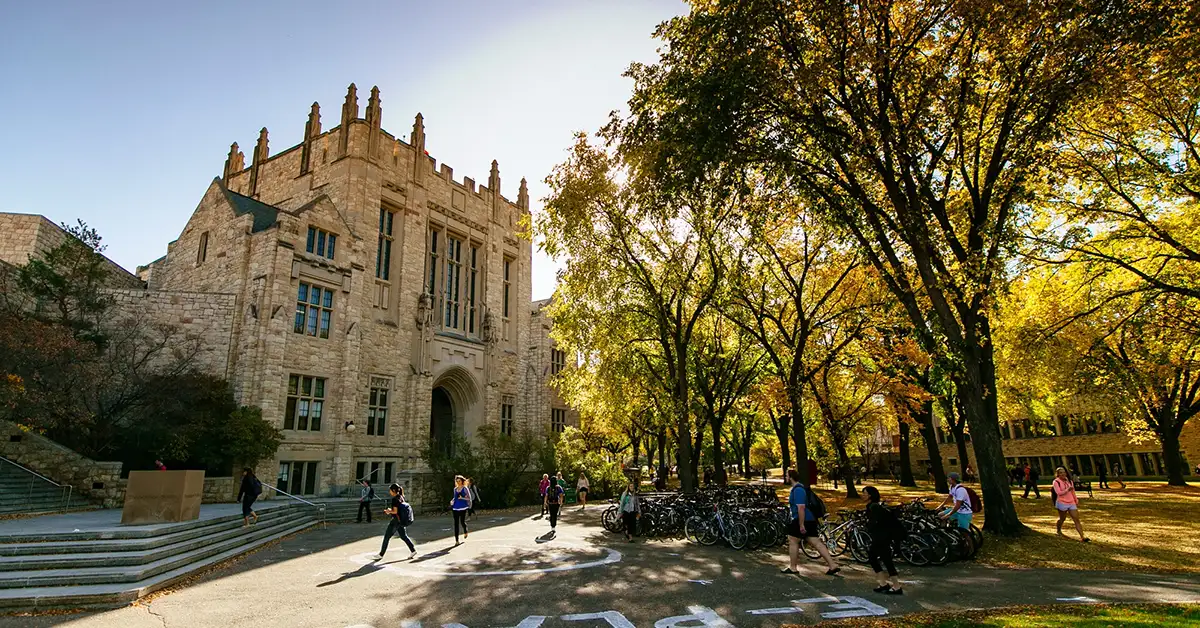
The University of Saskatchewan
- Website: https://www.dal.ca/
- The University of Saskatchewan has traditionally been known as an agricultural university, but it now also leads in many areas of scientific and technological research.
- Featured programmes: Animal Science, Agribusiness, Toxicology, Engineering Science
- Location: Saskatoon
The University of Regina
- Website: https://www.smu.ca/
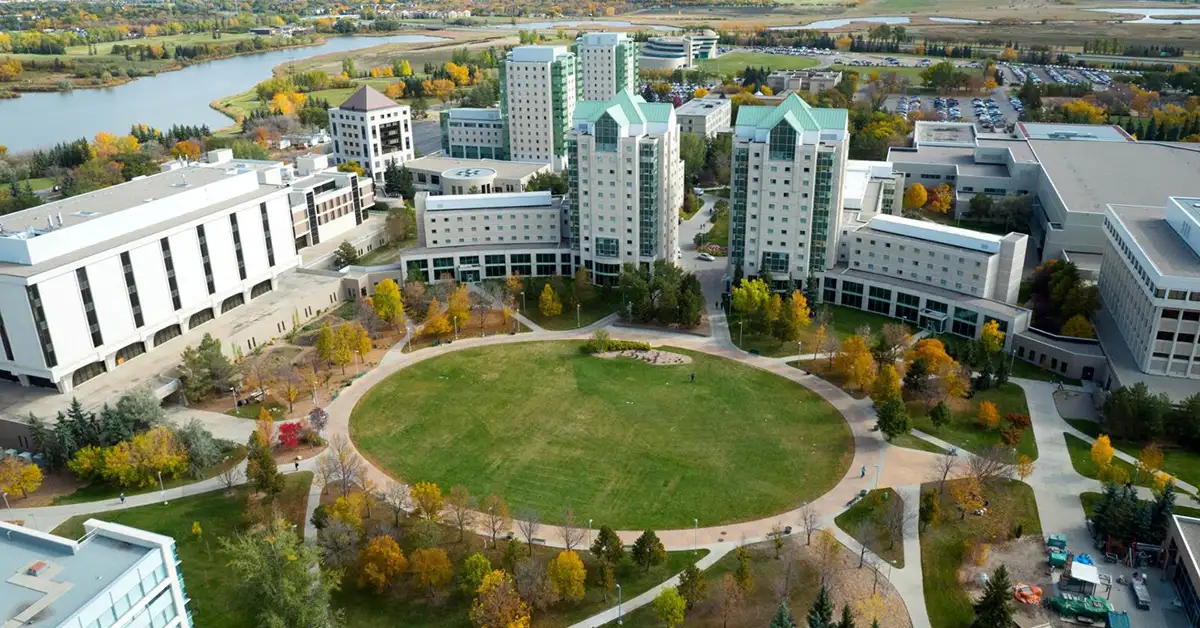
- With 10 faculties and 25 academic departments, the University of Regina offers a rich range of programmes. It provides numerous hands-on opportunities to apply knowledge in practice.
- Featured programmes: Nursing, Business Administration, Health Studies, Systems Engineering
- Location: Regina
Other institutions in Saskatchewan
The selected institutions are those that Prosperous Living Investment has assessed for quality, value and capacity to support international students studying in Saskatchewan. They are recognised by Colleges and Institutes Canada (formerly the Association of Canadian Community Colleges) or have been chosen for their proven pathway programmes and outstanding student services.
Frequently asked questions (FAQ) about studying in Saskatchewan
To apply for a CanadianStudy Permit, a prospective international student must first receive aLetter of Acceptance (LOA)from aDesignated Learning Institution in Canada (DLI). As each institution may have different admission requirements and application procedures, interested applicants may contact their chosen institution directly.
- University of Regina(founded 1974) is a young but fast-growing university, notable as the first in Western Canada to introduce a co-op programme. It has 15 faculties serving international, Canadian and Indigenous students. The campus is attractive, with a park and a lake, and its interconnected buildings make it easy for students to move around during the winter.
- Notable fields: Nursing, Business Administration, Health Studies, Systems Engineering
- University of Saskatchewanis renowned in the field of Agriculture, but is also strong in Science, Technology, Medicine and Environmental Science.
- Notable fields: Animal Science, Agribusiness, Toxicology, Engineering Science
- Luther College(founded 1913) is unusual in being both a secondary school and an affiliate of the University of Regina. Classes are small (fewer than 20 students), yet students still enjoy the amenities of a large university.
- Notable fields: English, Geography, Mathematics, Philosophy, Psychology, Religious Studies
- Saskatchewan Polytechnicis a leading technical institute with almost 150 programmes, offering certificates, diplomas and a Bachelor of Nursing (in partnership with the University of Regina). It is practically oriented and closely aligned with industry needs.
- Notable fields: Skilled Trades, Media Arts Production, Engineering Technology, Hospitality and Restaurant Management, Natural Resources and the Built Environment, Recreation and Community Development
- Parkland Collegewas Saskatchewan’s first regional college and is well known for its trades programmes, particularly its professional firefighter training.
- Notable fields: Firefighting, Dentistry, Education, Emergency Medical Response, Nursing, Electrical Engineering, Optometry, Social Work
Engineering, agriculture and health care are popular fields, matching the province’s workforce needs.
- College: $10,000 – $18,000 CAD per year
- University (bachelor’s): $16,500 – $20,000 CAD per year
- Language schools and postgraduate study: depending on the programme
International students must take out health insurance (usually provided through their institution). On arriving in Saskatchewan, students receive free basic provincial health cover.
Students must demonstrate10,000 CAD per yearfor living costs. Estimates for 12 months:
| Expense | Month | Year |
|---|---|---|
| Housing (shared) | $500 | $6,000 |
| Food | $300 | $3,600 |
| Clothing and sundries | $150 | $1,800 |
| Entertainment | $150 | $1,800 |
| Transport (Regina – student fare) | $72 | $864 |
| Telephone | $50 | $600 |
| Internet | $50 | $600 |
| Utilities | $100 | $1,200 |
| Total | $1,372 | $16,464 |
International students can take out private loans on the same terms as Canadian citizens, through banks, student organisations and so on. Scholarships and bursaries are also available from a range of organisations.
- University of Saskatchewan
- University of Regina
- Parkland College
- Great Plains College
- Saskatchewan Polytechnic
- University of Regina
- University of Saskatchewan
- Saskatchewan Polytechnic
- University of Regina
- Parkland College
- Saskatchewan Polytechnic
STEM stands for Science, Technology, Engineering and Mathematics. Although careers in STEM fields are very popular, there is no specific programme named “STEM” at any college or university in Saskatchewan. Prospective students are encouraged to research the programmes within their particular field of interest. Use the School Search tool to research programmes in these areas.
Saskatchewan has the lowest unemployment rate in Canada.
Graduates of a Designated Learning Institution (DLI) in Nova Scotia may apply for aPost-Graduation Work Permit (PGWP)after graduating from an eligible programme of study.
- Saskatchewan Immigrant Nominee Program (SINP):TheSaskatchewan Experiencecategory includes a sub-category for graduates of recognised post-secondary institutions in Canada who wish to apply for permanent residence. The requirements differ slightly between graduates of Saskatchewan institutions and graduates from other provinces, with lighter work experience requirements for those who graduated in Saskatchewan.
- Express Entry: Candidates immigrating to Canada through the federalComprehensive Ranking System (CRS)federal system who have completed their studies at a school in Nova Scotia may be awarded a significant number of additional points for their higher level of education. Moreover, international students graduating from Canadian institutions may already have Canadian work experience, a factor highly valued in the Express Entry system.
Summers are warm and dry and winters are cold, but the cities are well equipped for them. Saskatchewan has more tornadoes than any other part of Canada.
Two world-class universities in two cities of around 250,000 people — ideal for students who do not care for very large cities.
- Regina– home to the University of Regina and a Saskatchewan Polytechnic campus
- Saskatoon– the largest city in the province and home to the University of Saskatchewan
- Other cities: Prince Albert, Moosejaw, Yorkton
Accompanying you on your journey in residency investment
The Prosperous Living Investment team advises on pathways, assesses profiles and manages investments transparently for every residency, citizenship and international property objective.
Free profile assessmentWhere life gets prosperous