



Every applicant for an immigration or temporary residence visa must meet Canada’s medical admissibility requirements. Applicants are all required to undergo a medical examination.
Although medical examinations are usually limited to a standard physical examination, including blood tests, urine tests and an X-ray, an applicant’s previous medical records and mental health are also considered. Options remain open to you if you are refused entry for failing to meet Canada’s medical admissibility requirements, or if you are concerned that you may be found medically inadmissible.
Contents
Cases of medical inadmissibility for immigration to Canada
Applicants for a Canadian immigration visa (that is, permanent residence) may be found medically inadmissible to Canada where:
- Their medical condition might reasonably be expected to endanger the health or safety of the Canadian population at large.
- Their admission might reasonably be expected to place excessive demand on Canada’s publicly funded health and social services. (The excessive demand factor is waived in the family class of Canadian immigration for dependent family members — spouses, common-law partners, conjugal partners and dependent children — of the sponsor. A sponsored person may nonetheless still be refused if their state of health is expected to pose an excessive risk to public health or safety in Canada.)
In determining whether a person is medically inadmissible to Canada, the medical officer is obliged to consider the nature, severity and likely duration of any health impairment the person has, as well as other factors, such as:
- The risk of contagion.
- Unpredictable or unusual behaviour that may create a danger to public health and safety.
- Whether the supply of social or health services the person may need in Canada would place excessive demand on health services, thereby depriving Canadian citizens of health or social services.
Where permanent residence is concerned and a refusal is based on medical inadmissibility, it may be worth seeking a legal remedy by demonstrating that the applicant would not in fact exceed the estimated average cost of medical treatment for a Canadian, or that there are significant humanitarian and compassionate considerations warranting an exemption.
This may be done by providing a detailed response to a procedural fairness letter from the government before a refusal is issued, or by seeking judicial review at the Federal Court of Canada where the decision appears unreasonable.
Read aboutother grounds of inadmissibility to Canada.

Considering a residency programme? The Prosperous Living Investment team assesses your profile free of charge and advises on the pathway that fits your goals.
How to remedy the situation
A finding of medical inadmissibility may be remedied, depending on the person’s state of health. Examples of such conditions include, but are not limited to, the following list of medical conditions:
- Chronic kidney disease
- Heart disease
- Crohn’s disease
- Diabetes
- Cancer
- Autoimmune diseases, such as AIDS and lupus
- Learning disabilities relating to Pervasive Developmental Disorder requiring special education
- Autism
- Cerebral palsy
- Down’s syndrome
- Psychiatric disorders
- Blood disorders
- Hepatitis B & C
- Liver disease
- Lao
- Brain disorders
- Rare diseases and conditions
- Total knee replacement
In certain cases, for temporary stays in Canada, an individual who does not meet Canada’s medical admissibility requirements may be issued aTemporary Resident Permit (TRP)to enter Canada and overcome medical inadmissibility.
Submitting a TRP application to remedy medical inadmissibility for immigration to Canada
Once you or your immigration lawyer have gathered all the Canadian immigration documents needed to complete the TRP application, you must submit it to the Canadian immigration authority for review.
If you are a US citizen or hold US permanent resident status, you may apply for a temporary resident permit to overcome medical inadmissibility at any Canadian consulate or port of entry (land, sea or air).
Applications at a Canadian consulate
Although applying for a TRP through a Canadian consulate involves a considerable processing time (3–6 months), it is regarded as the best approach for submitting a temporary resident permit application to the Canadian immigration authority. This is because the decision is made by an experienced immigration officer who understands the various reasons your entry may be justified.
To apply for a TRP, you will need to submit an application together with supporting documents explaining the reasons for your medical inadmissibility and why your entry to Canada may be justified.
Applications at a port of entry
Temporary resident permit applications at a port of entry are available to foreign nationals with last-minute travel plans. Port of entry applications are processed immediately at airports, land border crossings or sea entry points — anywhere a passport is required to enter the country.
A Canadian immigration officer weighs the inadmissible person’s need to enter Canada against the risk to the health and public safety of the Canadian population. Applicants must be able to demonstrate that their entry to Canada is justified on health grounds.
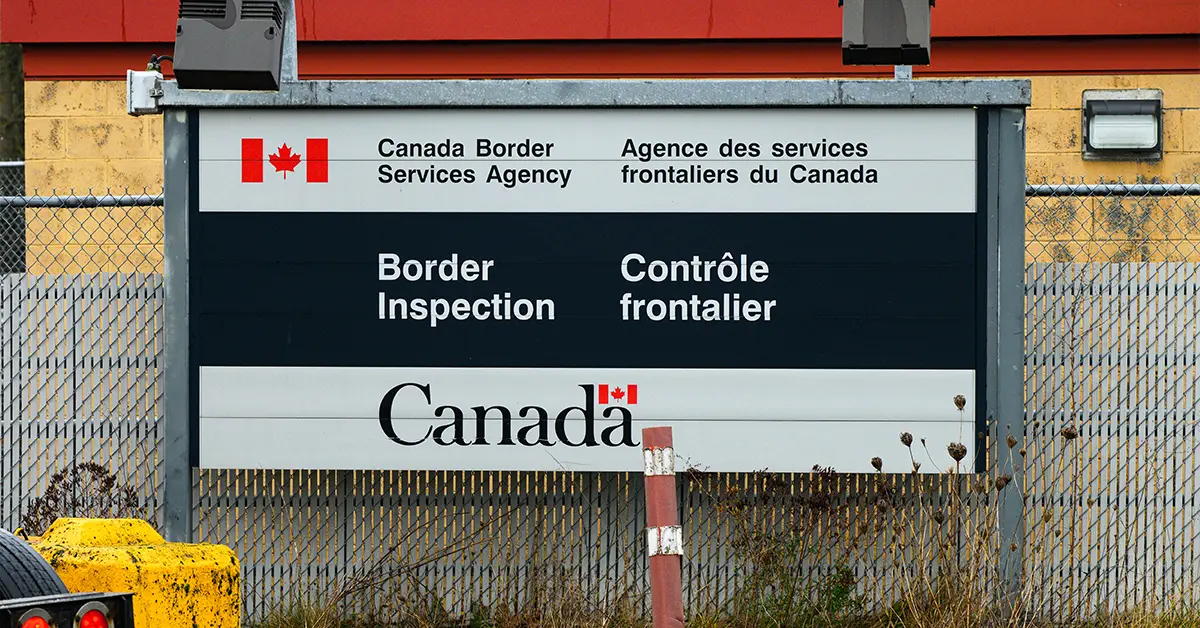
Advantages and disadvantages of applying in person at a port of entry
The main advantage of applying this way is the speed with which a person can obtain a TRP, which may be issued within minutes.
The main disadvantage of a port of entry application is uncertainty; you do not know whether your application will be approved or refused by the immigration officer handling your case. If refused, you will not be permitted to enter Canada until you obtain approval from a Canadian consulate.
If you are a citizen of a visa-exempt country, you will need to apply for a temporary resident permit according to the guidance set out for your particular country, as the application form may differ from country to country.
Application fee
A fee of CAD 229.77 applies to each temporary resident permit application submitted.
The Procedural Fairness Letter
A detailed article aboutThe Procedural Fairness Letter.
If you have received a Procedural Fairness Letter, you may have only a short period in which to submit a response.
In most cases, the window for responding ranges from 7 to 30 days. In response, a Legal Opinion Letter citing any relevant law, case precedent and verified evidence is recommended to improve the prospects of achieving medically admissible status.
Find out more about medical admissibility for immigration to Canada on the Government of Canada website athere.
Frequently asked questions (FAQ) on medical admissibility for immigration to Canada
Anyone applying to immigrate to Canada must undergo a medical assessment to identify potential threats to Canadian public health or conditions that might place excessive demand on the healthcare system. These assessments comprise a physical examination, as well as blood and urine tests.
They are valid for 1 year from the date of examination. If your visa has not been issued within 1 year of your last examination, you will have to undergo another medical examination.
If you are affected by a disease or disorder that could pose a significant health risk to the Canadian population, you may be found medically inadmissible.
Any condition posing a threat to public health, or which might place excessive demand on health or social services, may lead to a finding of medical inadmissibility.
Yes, exceptions may apply to spouses, common-law or conjugal partners and dependent children through the Family Class.
Pregnant applicants do not have to undergo an X-ray as part of the assessment; after the birth, however, both the newborn and the mother must undergo a medical examination.
Recognised medical examinations are carried out by Panel Physicians in many countries. For Canadian immigration visa applications, applicants may use the services of a designated panel physician anywhere in the world.
Both accompanying and non-accompanying dependants must undergo a medical examination. In certain cases, a non-accompanying dependant who is unwilling or unable to undergo the examination may be exempted. Non-accompanying dependants will not, however, be eligible for sponsorship through the Family Class.
Yes — the application requirements differ. You will have to undergo another medical examination.
Accompanying you on your journey in residency investment
The Prosperous Living Investment team advises on pathways, assesses profiles and manages investments transparently for every residency, citizenship and international property objective.
Free profile assessmentWhere life gets prosperous