
Saint Kitts and Nevis citizenship by investment

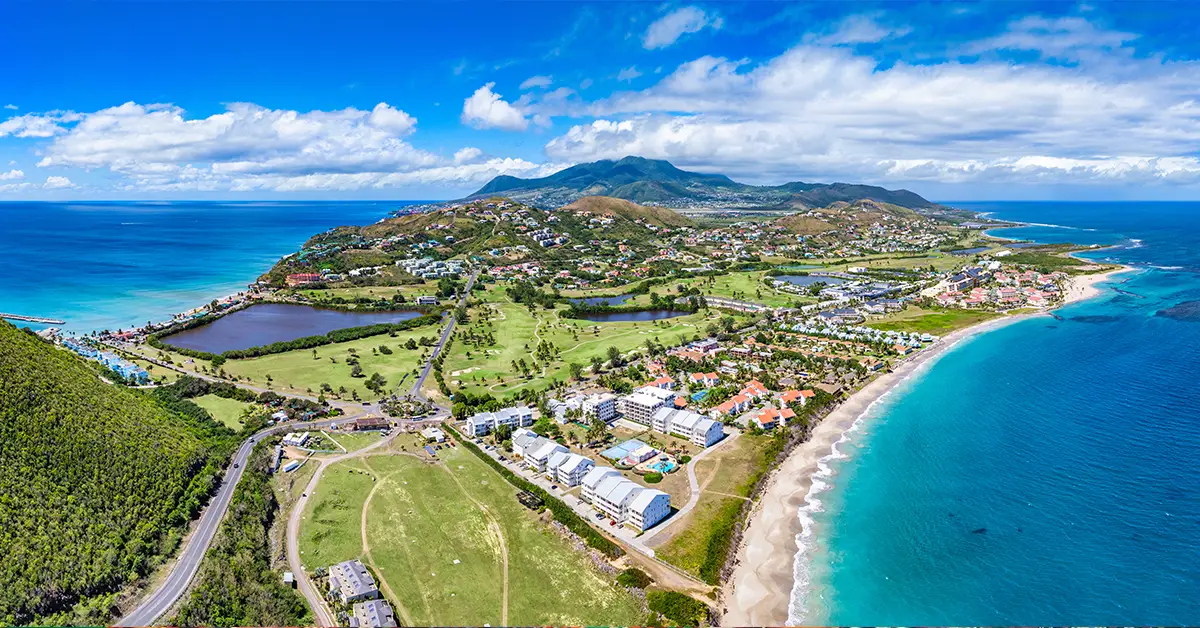
Saint Kitts and Nevis citizenship by investment is one of the fastest routes for an investor to obtain a lawful second passport, with a minimum investment from USD 250,000. Established in 1984, this is the world’s oldest Citizenship by Investment (CBI) programme, and is regarded as the benchmark for stability and standing in the industry.
This twin-island Caribbean nation grants citizenship for life, permits dual nationality, requires no physical residence, and opens up freedom of travel to more than 150 countries. For Vietnamese investors seeking a flexible and tax-efficient migration solution, Saint Kitts and Nevis is a leading option worth considering in the region.
A detailed article onSaint Kitts and Nevis.
Message
An overview of the Saint Kitts and Nevis CBI programme
The Saint Kitts and Nevis CBI programme is run by the Citizenship by Investment Unit (CIU) — the statutory body within the government. According toCitizenship Unit Act 2024, the CIU is responsible for licensing agents, assessing applications and managing the whole process of granting citizenship through investment.
The programme has run continuously for more than 40 years, and has granted citizenship to tens of thousands of investors worldwide. This stability is entirely different from the newer CBI programmes, which frequently change their conditions or suspend abruptly.
Since 27/07/2023, the government has comprehensively restructured the programme. The old Sustainable Growth Fund (SGF) option has been replaced by the Sustainable Island State Contribution (SISC), the minimum investment has been raised, and the due diligence process has been tightened to reinforce international confidence.
This is a strategic step to protect the value of the Saint Kitts and Nevis passport against pressure from the European Union, Britain and the United States for higher due diligence standards across global CBI programmes.
Considering a residency programme? The Prosperous Living Investment team assesses your profile free of charge and advises on the pathway that fits your goals.
Saint Kitts and Nevis citizenship by investment: four official options
Investors now have four main routes into the programme. Each route suits different financial objectives and investment strategies.
Sustainable Island State Contribution (SISC)
SISC is the most popular option and the lowest in cost. The investor contributes a minimum of USD 250,000 to the national development fund — non-refundable. This level applies to a single individual or a family of up to four.
The money from SISC is used by the government to develop seven strategic pillars: renewable energy, health, education, sustainable agriculture, tourism, infrastructure and economic diversification. According toCIU Saint Kitts and Nevis, this is the option designed for investors who prioritise processing speed and have no need to own real assets.
The greatest advantage is the simple procedure, low legal risk, and no asset management after citizenship is granted. The disadvantage is that the money is non-refundable and brings no financial return.
Developer’s Real Estate Investment
This route requires a minimum investment of USD 325,000 in a government-approved property development. These are usually luxury resorts, hotels or condo hotels operated by licensed developers.
The investor may resell the property after 7 years of ownership without losing citizenship. Some projects also guarantee a stable rental yield, turning the investment into a cash-flow instrument rather than a pure cost.
From 25/10/2024, the minimum property investment was reduced from USD 400,000 to USD 325,000. This is an important change, making the programme more competitive with the other CBIs in the region.
Private Real Estate Sale
This route is for investors who need to own an independent private asset outside a pre-approved development. The minimum investment is USD 600,000.
The investor has full freedom to choose a property suited to personal needs, usually a villa, coastal land or a private home. Although the cost is higher, this route offers privacy and maximum control over the asset.
Public Benefit Option (PBO)
This is the fourth route, requiring a minimum contribution of USD 250,000 to a government-approved public benefit project. Unlike SISC (where the government allocates the money itself), PBO ties the contribution to a specific project creating jobs and stimulating the local economy.
The PBO projects currently recognised by the CIU comprise the upgrading of Basseterre High School, the National Housing Corporation, the Prime Creative Arts Centre, the Royal St. Kitts Beach Resort and the expansion of Robert L. Bradshaw International Airport.
Eligibility and application documents
Investors must meet basic conditions to take part in the programme. These criteria are applied more strictly than in the other Caribbean CBIs.
- Aged 18 or over, with the lawful means to invest
- No criminal record, and not on any international sanctions list
- Transparent investment funds, with lawful origin capable of proof
- Meeting basic due diligence and health requirements
- Not from a country restricted under the CIU’s due diligence policy
The dependants who may be included in an application comprise a lawful spouse, financially dependent children under 25, and parents aged 55 or over. Since the 2024 reforms, siblings may no longer be included in an application.
A mandatory requirement since 2023 is that every main applicant and dependant over 16 must attend a due diligence interview. The interview may take place online, in Saint Kitts and Nevis, or at a location approved by the CIU. This rule is intended to increase transparency and weed out applications showing signs of fraud.
The CBI application process
The citizenship process is usually completed within 4 to 6 months from the date a complete application is filed. This is considerably shorter than the European residence-by-investment programmes.
Step one is preliminary due diligence by a CIU-authorised agent. This is the risk assessment stage before money is invested, weeding out ineligible applications early. The programme’s average approval rate is above 95% — a figure reflecting the quality of the due diligence right at the entry point.
Step two is gathering and verifying the documents, comprising the papers on identity, finances, source of funds, health, and family. All must be notarised and legalised in accordance with Saint Kitts and Nevis rules.
Step three is filing the formal application with the CIU. The processing fee, due diligence fee and professional fees must be paid in advance. Once filed, the application undergoes independent international due diligence — usually carried out by firms specialising in global KYC and compliance.
Step four is the mandatory interview with the main applicant and dependants aged 16 and over. This is a step the CIU has taken increasingly seriously since the 2023 reforms, to confirm true identity and remove the risk of impersonation.
The final step is transferring the investment after receiving the Approval in Principle letter. Once payment is made, the investor swears the oath of allegiance and receives the Certificate of Registration of citizenship together with the Saint Kitts and Nevis passport.
The benefits of the Saint Kitts and Nevis passport
The Saint Kitts and Nevis passport is among the strongest Caribbean passports, ranked highly on the Henley Passport Index. As at 2026, Saint Kitts and Nevis citizens have visa-free or visa-on-arrival access to around 150 to 157 countries and territories — depending on the counting method.
The notable destinations comprise the entire Schengen area (stays of up to 90 days in 180), Britain (up to 6 months via the Electronic Travel Authorisation), Ireland, Singapore, Hong Kong, and most South American and Middle Eastern countries. This is a valuable privilege for investors travelling internationally on business.
On tax, Saint Kitts and Nevis levies no worldwide personal income tax, inheritance tax, wealth tax or capital gains tax. This is a tax structure investors may lawfully use to optimise personal and corporate financial planning.
The citizenship granted is citizenship for life, and may be passed to children and grandchildren under the rules on descent. Saint Kitts and Nevis recognises dual nationality, meaning Vietnamese investors need not renounce their original citizenship — a favourable condition compared with some other programmes.
Total cost and the associated fees
Besides the minimum investment, investors need to allow for the mandatory fees arising during processing. This is information often overlooked when assessing the true cost.
The Due Diligence fee applies to each member of the application. The main applicant usually bears a higher fee than the dependants. This fee is non-refundable whether the application is approved or refused.
The Government Application Fee is calculated by the number of people in the application. The authorised agent’s professional fee usually ranges from USD 20,000 to USD 50,000 depending on the complexity of the case.
The other additional costs comprise notarised translation fees, consular legalisation fees, medical examination fees, biometric fees under the new rules from 14/04/2026, and the passport issue fee after approval.
The true total cost for a single individual application through SISC usually falls in the region of USD 275,000 to 305,000. For a family of four, the figure may exceed USD 330,000. The property route has a higher total cost but the main investment may be recovered after 7 years.
A comparison with the other CBI programmes in the region
Saint Kitts and Nevis is not the only CBI option in the Caribbean. Understanding the differences helps investors make the decision that fits their objectives.
Compared withGrenada citizenship by investment, Saint Kitts and Nevis costs more but has a wider visa-free network in some regions. Grenada has the unique advantage that its citizens may apply for the United States E-2 visa to run a business — a benefit Saint Kitts and Nevis does not have.
Compared withTurkey citizenship by investment, Saint Kitts and Nevis has a faster processing time and requires no actual property ownership at the SISC level. However, Turkey brings stronger geopolitical benefits with its position bridging Europe and Asia.
Compared withMalta residence by investment, Saint Kitts and Nevis costs far less and is considerably faster to process. Malta requires a minimum residence of 12 to 36 months before citizenship is granted and a total cost above EUR 800,000, but in return gives full EU citizenship.
For further reference on citizenship by investment or residence by investment programmes, investors may consult theMap of residence and citizenship by investment.
The important changes from 2023 to 2026
The programme has undergone several important reforms over the past three years. Investors need to keep up to date to avoid outdated information.
In July 2023, the government raised the minimum investment and abolished the time-limited discount schemes. The SGF option was formally replaced by SISC. The mandatory interview requirement was applied to all applications.
In October 2024, the minimum property investment was reduced from USD 400,000 to USD 325,000. The age at which parents may be included in an application was lowered from 65 to 55. Siblings are no longer included.
From 14/04/2026, the CIU is collecting biometrics (fingerprints and facial recognition) for all CBI citizens. New-generation electronic passports are expected to be issued from 31/07/2026, gradually replacing the old passports.
Britain’s introduction of the Electronic Travel Authorisation from 02/2026 also affects the entry process. Saint Kitts and Nevis citizens still need no visa, but must register for the ETA online before flying.
Conclusion
Saint Kitts and Nevis citizenship by investment remains one of the world’s leading CBI options thanks to its stability, standing and efficiency in time. The programme suits Vietnamese investors seeking a strong second passport, tax efficiency, and no physical residence obligation.
The investment level from USD 250,000 through SISC suits individuals and small families who prioritise speed. The property routes offer the chance of recovering the capital but demand careful due diligence on the project and developer before committing.
With the continual changes from 2023 to 2026, investors should work directly with a CIU-authorised agent to ensure the information is current and the application strategy is optimised. This is an investment not only financial but also in a lasting legacy for the family.
Accompanying you on your journey in residency investment
The Prosperous Living Investment team advises on pathways, assesses profiles and manages investments transparently for every residency, citizenship and international property objective.
Free profile assessmentWhere life gets prosperous