

Ireland
Ireland ends visa-free travel for Saint Kitts and Nevis, Saint Lucia and Nicaragua from 15 June 2026
From 15 June 2026, citizens of Saint Kitts and Nevis, Saint Lucia and Nicaragua will need a visa…



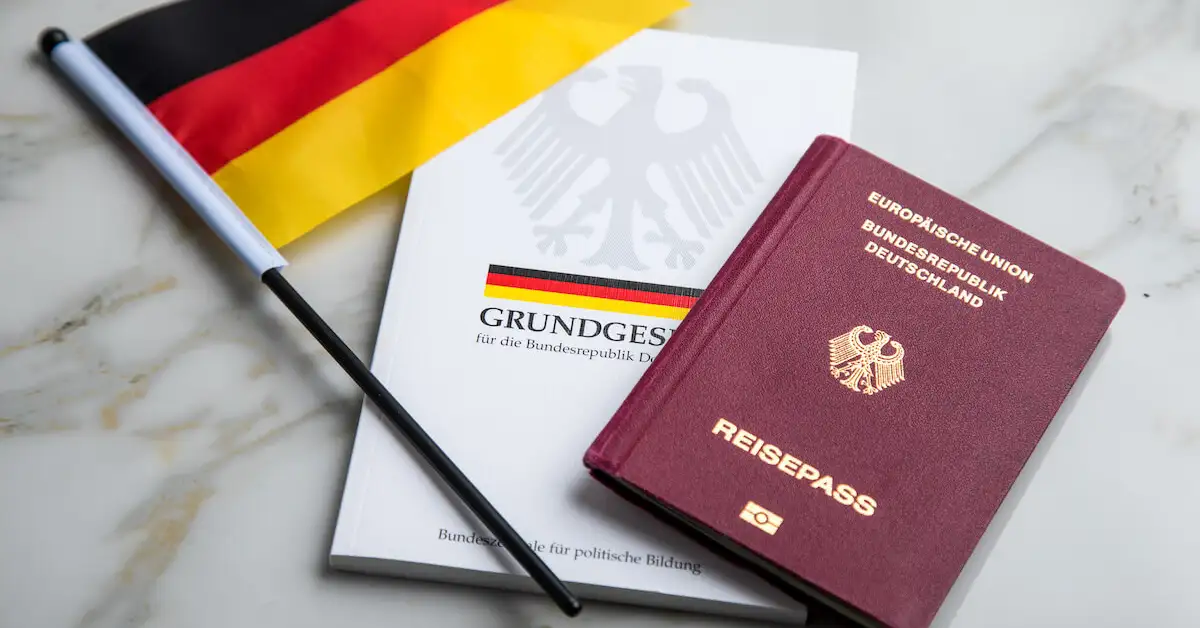
Germany has recently undergone major changes to its immigration law. The Christian Democratic Union (CDU) party, led by Chancellor Friedrich Merz, promised to remove the “fast-track citizenship” law during its election campaign. Many critics argue that this will discourage highly skilled immigrants from coming to Germany.
Last Wednesday, the German Bundestag voted to repeal the fast-track citizenship law. This law was enacted under the previous centre-left government of the Social Democratic Party (SPD) led by Olaf Scholz.
The vote proceeded smoothly because it was one of the few policies of the coalition government agreed upon by the anti-immigration Alternative for Germany (AfD) party – the largest opposition party. In total, 450 members of parliament voted in favour, 134 against, and 2 abstained.
Chancellor Merz made the repeal of this law a key part of his election campaign. The CDU (centre-right) party wanted to tighten some of the citizenship liberalisation rules from the previous government.
However, after the CDU formed a coalition with the SPD, they only agreed to repeal the “fast-track citizenship” portion. Both parties considered this change reasonable.
The CDU party once wrote in its policy programme: “A German passport should be the end result of the integration process, not the starting point.” Nevertheless, the old law still required immigrants to prove they were “exceptionally well-integrated” before being granted fast-track citizenship.
Considering a residency programme? The Prosperous Living Investment team assesses your profile free of charge and advises on the pathway that fits your goals.
For decades, Germany lagged behind some other European countries regarding citizenship. Previously, Germany only allowed dual citizenship with EU citizens, or in special cases with non-EU citizens who did not have automatic residence rights.
In July 2024, the SPD-led coalition government (including the Green Party and the Free Democratic Party – FDP) introduced two new ways to obtain German citizenship. Most importantly, it allowed immigrants to keep their original passports.
There are currently no exact figures on the number of people who have obtained citizenship via the fast-track route. However, public broadcaster ARD reported that immigration offices noted a very low number of applications.
Many opposition politicians and immigration experts argue that this change sends the “wrong signal” to highly qualified immigrants. Germany is facing an ageing population and labour shortages, so it needs to attract more talent.
Green Party chairman Felix Banaszak told the news site Web.de: “Reversing this law is the wrong signal. We need all the strength we can get — whether someone has lived here for 3 years or 3 generations.”
In summary, the repeal of the fast-track citizenship law is part of the policy to tighten immigration under Chancellor Merz. It may help with better control, but it is also criticised for making Germany less attractive to foreign workers. If you are interested in European immigration, keep an eye on further changes from the German government.
Find out more about German immigration on the government website at here.
From 15 June 2026, citizens of Saint Kitts and Nevis, Saint Lucia and Nicaragua will need a visa…

Latvia's parliament has passed an immigration law removing the real estate and bank deposit routes from the Golden…

Sales by Egypt's leading developers eased slightly in Q1 2026 as the property market entered a correction phase,…
The Prosperous Living Investment team advises on pathways, assesses profiles and manages investments transparently for every residency, citizenship and international property objective.
Free profile assessmentWhere life gets prosperous
We use analytics cookies (Google Analytics) to understand how this site is used. They stay off until you agree. Privacy policy.