


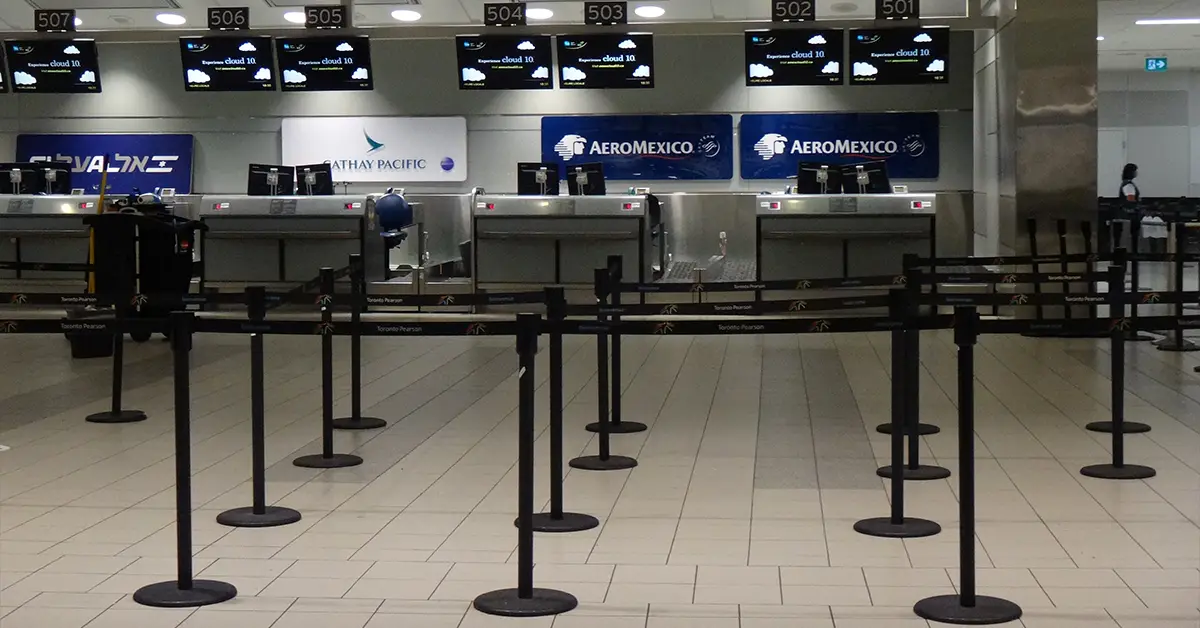
Stepping up to the entry desk of theCanada Border Services Agency (CBSA)is the most nerve-racking moment of the journey to Canada, whether as a tourist, a worker or a soon-to-be settler. CBSA officers are not looking to make life difficult — their job is to make sure everyone entering does so for the right purpose and truthfully in line with their application.
The golden rule in answering the CBSA:brief — truthful — to the point. Avoid long-winded accounts, because the more you say the easier it is to create contradictions. This article gathers together the common questions and how to answer them for the 3 main entry categories.
Message
The tourist category (Tourism / Visitor)
The CBSA’s aim in interviewing tourists is to establish that the applicant will leave Canada on time after the trip, with no intention of staying unlawfully.
Answer briefly, matching the purpose declared in the visa application: “I’m here for tourism and sightseeing” or “I’m visiting my family/friends.”
State the exact number of days or weeks in the itinerary: “I will be here for 2 weeks.” Have the return ticket ready to show when asked. Note: tourists may not stay more than 6 months per entry.
Give the specific hotel address or that of the relative’s home: “I’ll be staying at the XYZ Hotel in Toronto.” Where staying in several places, give the first and you may mention the travel plan.
Answer truthfully about the cash and means of payment: “I have 3,000 CAD in cash and credit cards.” The amount carried should be proportionate to the intended length of stay.
Considering a residency programme? The Prosperous Living Investment team assesses your profile free of charge and advises on the pathway that fits your goals.
The worker category (Work Permit)
For those entering on a work permit, the CBSA verifies that the applicant really is the person hired and will work in the position registered.
Give the exact company name and position stated on the Letter of Introduction (LOI) — the formal job offer letter. This is a common question and the cause of many refusals of entry: applicants who cannot remember the company name or job title leave the CBSA doubting the genuineness of the job offer (a “phantom” offer) or their English ability to do the work.
Answer: “Yes, I have them right here.” Always have the paper file in hand before reaching the desk — do not wait until asked and then rummage in your suitcase. The LMIA (Labour Market Impact Assessment) is the document from Employment and Social Development Canada confirming that the employer is permitted to hire a foreign worker.
Answer truthfully, Yes or No. Where the answer is yes, state where and for how long. The CBSA has cross-checking systems for entry, exit and work history — any false statement will be found.
The settlement category (Permanent Resident Landing)
For those entering for the first time as permanent residents (PR), the CBSA carries out the legal formalities completing PR status and checks the goods being brought in.
Answer: “Yes, it is.” This is the confirmation step for the officer to carry out the “landing” process — formally activating permanent resident status.
Answer in line with the application filed with IRCC (Immigration, Refugees and Citizenship Canada). Every dependant (spouse, children) declared in the PR application must be confirmed at the border — even where they enter at a different time.
Where the answer is yes, say “Yes” and complete declaration form E677. Carrying more than CAD 10,000 is not an offence — butfailing to declare it isand the money may be seized. A practical recommendation: carry less than CAD 10,000 in cash to avoid the declaration and reduce the risk of loss after a flight of nearly 20 hours that easily leaves people tired and less alert. The rest is better sent by international transfer or carried as a bank draft.
Give your own address or that of a trusted relative or friend to receive the PR card by post. Where there is no fixed address yet, it can be updated through the online form within 180 days of landing. No registered address means no PR card — creating difficulties for daily life and administrative formalities later.
The “Goods to Follow” form (Form BSF186 / B4)
This is the most important document for the settlement category. FormBSF186(formerly called the B4) allows new permanent residents to list the personal goods that will be shipped to Canada later — and to have them exempt from import duty when they arrive at port.
The principle: only goods declared on this list at the time of landing are exempt from duty when they arrive later. Goods not on the list are taxed on their value at the time of import.
The list should be prepared before flying and comprise: a detailed description of each item (brand, model, serial number where applicable), quantity, estimated value in CAD, and condition (new or used). The goods commonly declared comprise household items, electronics, vehicles, jewellery, valuable collections, books and personal papers.
Attitude and “survival” tips at the border
- Be calm and polite. Look the officer in the eye when answering, and keep your voice clear and at a suitable volume. Where you do not hear the question clearly, ask politely: “Could you please repeat that?” or “Pardon me?”. Do not answer at random when you have not understood the question — misunderstanding it can lead to a wrong answer and raise suspicion.
- Never lie. The CBSA has very powerful data cross-checking systems, connected toIRCC, the CRA (the Canada Revenue Agency), Interpol and many international databases. One small lie — even unintentional — can lead to serious consequences: refusal of entry on the spot, visa cancellation, or a permanent entry ban under section 40 of the Immigration and Refugee Protection Act (misrepresentation).
- Turn off or put away your phone. Never use a phone, take photographs or film while in the border control area — unless permitted. Doing so may be treated as a breach of security rules.
- Have your documents in good order. Arrange the papers in a logical order in a separate folder: passport, COPR (Confirmation of Permanent Residence) or LOI or visa, and the supporting documents for your category. The average CBSA interview takes 2–15 minutes depending on the category — careful preparation keeps the process quick.
- Dress smartly. There is no need to be formal, but be clean and tidy. Scruffy or overly casual clothing can affect the first impression.
The situations that may lead to a private room (Secondary Inspection)
In some cases, the CBSA may ask applicants into a private interview room (secondary inspection) for a more detailed check. The common reasons comprise: points in the file needing clarification, answers contradicting the information declared, suspicious signs found in the baggage, or random selection.
In the interview room, the principles for answering stay the same: brief, truthful, to the point. Applicants have the right to ask for an interpreter where their English is not enough to answer complex questions clearly. Do not argue or become tense — always stay cooperative and respectful.
Conclusion
Canada’s door is always open to those who are truthful and well prepared. The interview at the CBSA desk is not a barrier to keep out lawful applicants — it is the final confirmation step before the new journey in Canada begins.
The three most important factors in getting through the border interview smoothly: preparing the documents fully before the flight, having the basic information about the purpose of the trip at your fingertips (company, job title, address of stay), and staying calm and truthful throughout. With this preparation, a family entering Canada will have a smooth exchange and formally take hold of their settlement dream.
Accompanying you on your journey in residency investment
The Prosperous Living Investment team advises on pathways, assesses profiles and manages investments transparently for every residency, citizenship and international property objective.
Free profile assessmentWhere life gets prosperous