

British passport

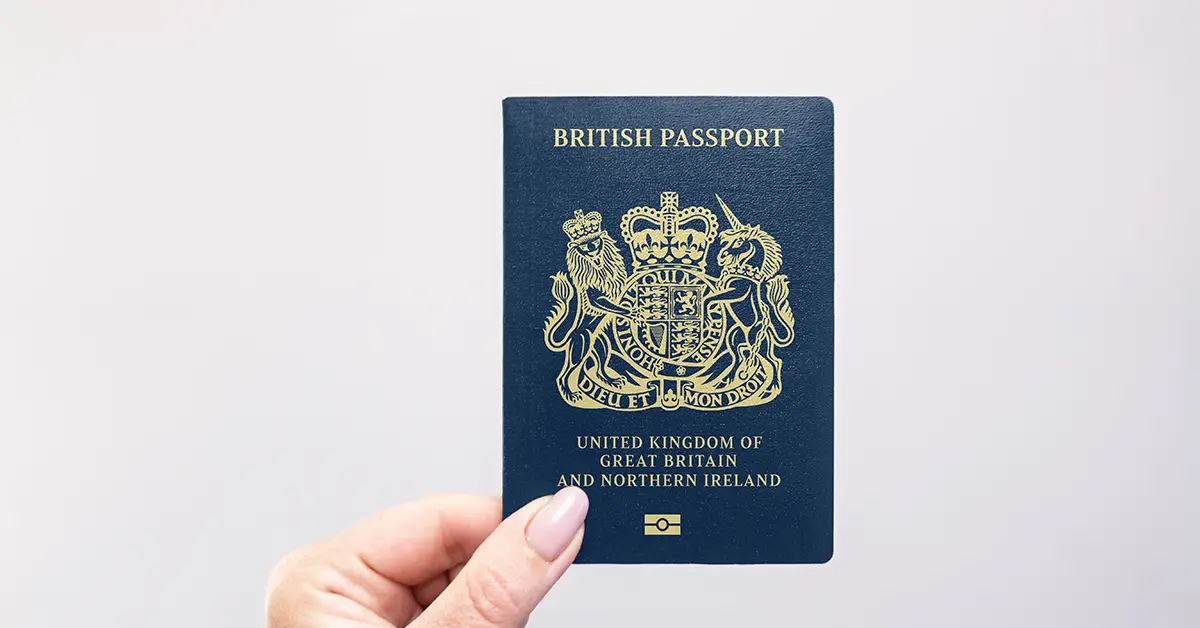
The British passport is a travel document issued by the United Kingdom or by other British Crown dependencies and overseas territories to individuals holding any form of British nationality.
It gives the holder the right to travel internationally subject to visa requirements and serves as proof of British nationality.
It also gives access to consular assistance from British embassies worldwide. Passports are issued using the royal prerogative, exercised by His Majesty’s Government; this means that the issue of a passport is a privilege, not a right, and it may be withdrawn in certain circumstances.
British citizen passports have been issued in the United Kingdom by His Majesty’s Passport Office, an agency of the Home Office, since 2014. All passports issued in the United Kingdom since 2006 have been biometric passports.
Message
Overview of the British passport
| Type | Passport |
|---|---|
| Issued by | United Kingdom – His Majesty’s Passport Office – CSRO (Gibraltar) – The Crown dependencies – Overseas territories |
| Purpose | Identification, international travel |
| Valid in | For most types of passport, all countries; the British National (Overseas) passport is not recognised in the People’s Republic of China, Hong Kong and Macau |
| Eligibility | British citizens |
| Validity | Adults: 10 years Children: 5 years |
| Expense | Adults (16 and over): – Standard (34 pages): $94.50 GBP – Frequent traveller (54 pages): $107.50 GBP Children (under 16): – Standard (34 pages): $61.50 GBP – Frequent traveller (54 pages): $74.50 GBP The above fees apply only to online applications made from within the United Kingdom |
The United Kingdom’s legacy as an imperial power has given rise to several classes of British nationality, and different types of British passport exist as a result.
Furthermore, each Crown dependency and some overseas territories issue their own variant of the British passport to those connected with their jurisdiction, with minor differences from the United Kingdom variant.
All British passports entitle the bearer to request consular assistance from British embassies and, in certain circumstances, from some Commonwealth high commissions. British citizens may use their passport as proof of the right of abode in the United Kingdom.
British citizens have visa-free or visa-on-arrival access to 184 countries and territories; the international access available to British citizens ranks eighth in the world according to the Visa Restrictions Index 2025. Since the introduction of the biometric passport in 2006, a new design has been introduced every 5 years.
Considering a residency programme? The Prosperous Living Investment team assesses your profile free of charge and advises on the pathway that fits your goals.
History
The British passport dates back to 1414, when King Henry V issued “Safe Conducts” to help his subjects prove their identity abroad – the first mention in an Act of Parliament. The oldest surviving passport was issued on 18/6/1641 by King Charles I.
By 1855, the standardised passport was reserved for British subjects and was a single sheet of paper. The First World War (1915) prompted a version with a photograph, mass-printed. 1921: the introduction of the 32-page blue hardback booklet with the royal coat of arms, which lasted until 1993.
1988: the move to machine-readable passports (ICAO), in burgundy to match the EU – Glasgow was the first to issue them. 2006: the biometric Series A with an RFID chip and British bird artwork. 2015: Series B on the theme of “Creative United Kingdom”. 2020: Series C in blue, marking Brexit, in forgery-resistant polycarbonate.
2023: the name of King Charles III printed. From 12/2025: Series D with an updated Charles III coat of arms and UK landscapes (Ben Nevis, the Lake District).
Five Nations Passport Group
Detailed article onFive Nations Passport Group.
Since 2004, the United Kingdom has taken part in the Five Nations Passport Group, an international forum for cooperation between the passport issuing authorities of Australia, Canada, New Zealand and the United States to “share best practice and discuss innovation relating to the development of passport policy, products and practice”.
Types of British passport
There are several types of British passport, for the different classes of British nationality, variants for certain territories, as well as diplomatic, official, collective and emergency passports. The table below shows the number of valid British passports at the end of 2024 for each class of nationality:
| Class of nationality | Code | Valid passports at 31/12/2024 |
|---|---|---|
| British citizens | GBR | 52,370,423 |
| British Overseas Territories citizens | GBD | 117,558 |
| British Nationals (Overseas) | GBN | 718,725 |
| British subjects with the right of abode in the United Kingdom | GBS | 19,561 |
| British subjects without the right of abode in the United Kingdom | 810 | |
| British Overseas citizens | GBO | 9,758 |
| British protected persons | GBP | 1,075 |
Common format
The common-format British passport is issued to British citizens (except those applying in a Crown dependency), British Nationals (Overseas), British subjects, British Overseas citizens and British protected persons.
They are also issued to British Overseas Territories citizens applying in the United Kingdom, in a territory with no local variant, or from abroad. All these passports have the same cover, but the class of British nationality is specified on the personal information page.
All common-format British passports are issued by His Majesty’s Passport Office in the United Kingdom. British citizens may apply for a passport online or by post, from any location. Since 2011, British diplomatic missions have issued emergency passports only.
Variants
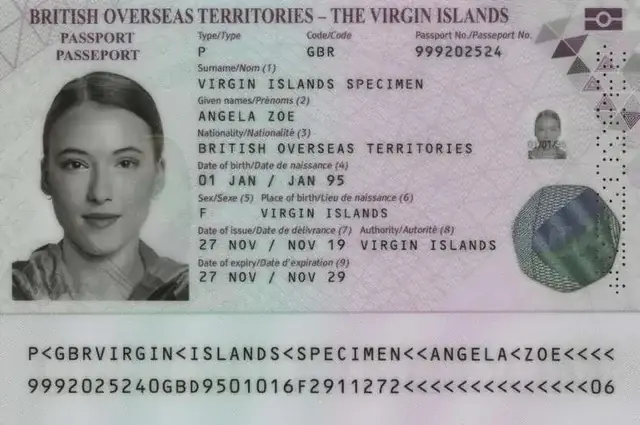
Local variants of the British passport are issued to British citizens in the Crown dependencies of Guernsey, the Isle of Man and Jersey, and to British Overseas Territories citizens in Anguilla, Bermuda, the British Virgin Islands, the Cayman Islands, Gibraltar, Montserrat, Saint Helena and the Turks and Caicos Islands.
These passports show the name of the Crown dependency or territory on the cover, on page 1 and on the personal information page, and the note inside the cover is in the name of the respective governor or lieutenant governor rather than the British monarch.
Although variant passports are produced in the United Kingdom, applicants can only obtain them from the government of the respective Crown dependency or territory. British citizens from these jurisdictions who apply directly in the United Kingdom receive a common-format passport. BOTCs who are also British citizens may hold both types of passport.
Special British passports
Diplomatic passports are issued to British diplomats and senior government officials and their dependants. Official passports are issued to other British government officials, such as administrative and technical staff, and their dependants.
King’s Messenger passports are issued to staff who deliver government documents. Since 2014, they have been replaced by standard diplomatic passports with an observation.
Collective passports (also known as group passports) are issued to a defined group of 5 to 50 individuals who are British citizens under 18 travelling together to certain Schengen Area countries, such as a school group on a school trip.
Emergency passports are issued to British citizens by British diplomatic missions worldwide. They may also be issued to Commonwealth citizens in countries where their own country has no diplomatic representation.
Design
Outer cover
The current British passport is described as navy blue, although many observers describe the colour as black.
The blue passport has the coat of arms of the United Kingdom embossed in the centre of the front cover. “BRITISH PASSPORT” is engraved above the coat of arms, and the name of the issuing government is engraved below it (for example “UNITED KINGDOM OF GREAT BRITAIN AND NORTHERN IRELAND” or “TURKS AND CAICOS ISLANDS”).
Information page
British passports issued by His Majesty’s Passport Office contain the following data on the information page:
- Photograph of the holder/bearer (a digital image printed on the page)
- Type (P)
- Issuing country code
- Passport number
- Surname
- Given names
- Nationality
- Date of birth
- Sex
- Place of birth
- Date of issue
- Authority
- Date of expiry
- The machine-readable zone begins with P< GBR
Passports of the Crown
The King, Charles III, is not required to hold a passport, as passports are issued in his name and under his authority, so his holding one would be superfluous. All other members of the royal family, however, including the heir, William, Prince of Wales, do require a passport.
Expense
A British passport costs between nothing and $120, the latter for an adult (16 and over) 50-page frequent traveller passport applied for on a paper form. The standard adult application fee is $94.50 (online), or $107 (by paper form).
Accompanying you on your journey in residency investment
The Prosperous Living Investment team advises on pathways, assesses profiles and manages investments transparently for every residency, citizenship and international property objective.
Free profile assessmentWhere life gets prosperous