

Work permits through the CPTPP

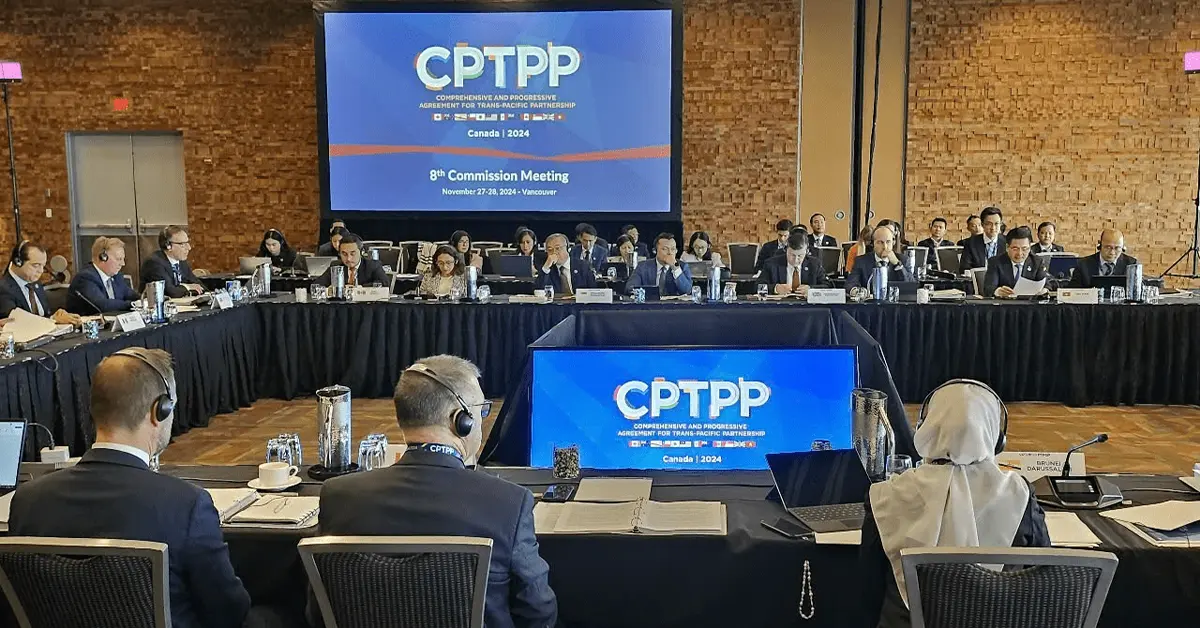
The Comprehensive and Progressive Agreement for Trans-Pacific Partnership (CPTPP) is a free trade agreement between Canada and 11 other countries in the Asia – Pacific region: the United Kingdom, Australia, Brunei, Chile, Japan, Malaysia, Mexico, New Zealand, Peru, Singapore and Vietnam.
Contents
The CPTPP facilitates temporary entry to Canada for eligible business persons and workers from designated CPTPP signatory countries by removing the requirement for awork permitorLabour Market Impact Assessment (LMIA)for those who meet the criteria under one of the following categories:
Professionals and technicians
As with the North American Free Trade Agreement (NAFTA) and Canada’s Comprehensive Economic and Trade Agreement with the European Union (CETA), the Comprehensive and Progressive Agreement for Trans-Pacific Partnership (CPTPP) allows designated highly skilled professionals and technicians holding a job offer or contract in Canada to work for up to one year without a Labour Market Impact Assessment (LMIA).
Both professionals and technicians under the CPTPP must work in professional occupations falling within Skill Type 0, Skill Level A or Skill Level B under theNational Occupational Classification (NOC).
A professional is defined as follows:
- Applies theory and practice in a specialised body of knowledge.
- Holds a post-secondary degree requiring four (4) or more years of study, unless otherwise specified, together with any additional requirements defined in the NOC.
- Has two years of paid work experience in the field in which they will work in Canada.
- Is paid a wage commensurate with that of professionals of similar standing in the region where the work is to be performed. This wage is understood to exclude non-monetary elements such as housing costs and travel expenses.
- Is able to communicate in English or French at a level the processing officer considers satisfactory.
A technician is defined as follows:
- Holds a post-secondary or technical degree requiring at least two years of study for entry to the occupation, unless otherwise specified, together with any other minimum entry requirements defined in the NOC.
- Has four years of paid work experience in the field of activity covered by the contract.
- Is paid a wage commensurate with that of technicians of similar standing in the industry in the region where the work is performed. This wage is understood to exclude non-monetary elements such as housing costs and travel expenses.
- Is able to communicate in English or French at a level the processing officer considers satisfactory.
Both professionals and technicians under the CPTPP must also meet one of the following conditions:
- Where the occupation is regulated by the province or territory of destination, evidence of licensing or certification in their occupation from the relevant Canadian or foreign regulatory body is required.
- Where the occupation is not regulated by the province or territory of destination, or where no licence or certification is required to take up the job offer, evidence of study in a field related to the professional occupation (theory) and evidence of paid work experience in that professional occupation (practice) are required.
- Is able to communicate in English or French at a level the immigration officer considers satisfactory.
Canada permits temporary entry for specific occupations from designated CPTPP signatory countries, as follows:
Canada’s education requirement for Australian professionals is considered met where they have satisfied Australia’s education requirements and the Canadian client or employer provides a letter confirming that their qualifications are satisfactory.
Professionals: All occupations listed under NOC Skill Type 0 and Skill Level A, with the exception of the following:
- All health, education and social services occupations and related occupations.
- All professional occupations related to the cultural industries.
- Directors of recreation, sport and fitness programmes and services.
- Managers in telecommunication carriers.
- Managers in postal and courier services.
- Judges and notaries.
Technicians: The following occupations listed under NOC Skill Level B, unless otherwise indicated:
- Civil engineering technologists and technicians
- Mechanical engineering technologists and technicians
- Industrial engineering technologists and technicians
- Construction inspectors and estimators
- Engineering inspectors, testing officers and regulatory officers
Supervisors in the following fields:
- Machinists and related trades
- Printing and related trades
- Mining and quarrying
- Oil and gas drilling and services
- Mineral and metal processing
- Petroleum, gas and chemical processing and utilities
- Food, beverage and tobacco processing
- Plastic and rubber products manufacturing
- Forest products processing
- Textile processing
Contractors and supervisors in the following fields:
- Electrical trades and telecommunications
- Pipefitting trades
- Metal casting
- Forming and erecting trades
- Carpentry trades
- Mechanic trades
- Heavy construction equipment crews
- Other construction trades
- Installers, repairers and servicers
- Electrical and electronics engineering technologists and technicians
- Electricians
- Industrial instrument technicians and mechanics
- Aircraft instrument, electrical and avionics mechanics, technicians and inspectors
- Oil and gas well drillers, servicers, testers and related workers
- Graphic designers and illustrators
- Interior Designer
- Computer and information systems technicians*
- International sales and purchasing officers
- Architectural technologists and technicians
- Industrial Designer
- Drafting technologists and technicians
- Land survey technologists and technicians
- Technical occupations in geomatics and meteorology
*Includes some elements of NOC Skill Level A
Professionals:All occupations listed under NOC Skill Type 0 and Skill Level A, with the exception of the following:
- All health, education and social services occupations and related occupations.
- All professional occupations related to the cultural industries.
- Directors of recreation, sport and fitness programmes and services.
- Managers in telecommunication carriers.
- Managers in postal and courier services.
- Judges, lawyers and notaries, except foreign legal consultants.
- Researchers, except those employed by an academic institution.
Technicians
Note:A Japanese college degree, or the equivalent of that degree, or higher is required. Canada may refuse temporary entry to a technician whose contract does not call for the substantial application of theoretical knowledge in the physical sciences, engineering or other natural sciences, or in the human sciences such as economics.
The following occupations listed under NOC Skill Level B, unless otherwise indicated:
- Technical occupations in geomatics and meteorology.
- Civil engineering technologists and technicians.
- Mechanical engineering technologists and technicians.
- Industrial engineering technologists and technicians.
- Construction inspectors and estimators.
- Engineering inspectors, testing officers and regulatory officers.
Supervisors in the following fields:
- Machinists and related trades.
- Printing and related trades.
- Mining and quarrying.
- Oil and gas drilling and services.
- Mineral and metal processing.
- Petroleum, gas and chemical processing and utilities.
- Food, beverage and tobacco processing.
- Plastic and rubber products manufacturing.
- Forest products processing.
- Textile processing.
- Electrical trades and telecommunications.
- Pipefitting trades.
- Metal casting.
- Forming and erecting trades.
- Carpentry trades.
- Mechanic trades.
- Heavy construction equipment crews.
- Other construction trades.
- Installers, repairers and servicers.
- Electrical and electronics engineering technologists and technicians.
- Industrial instrument technicians and mechanics.
- Aircraft instrument, electrical and avionics mechanics, technicians and inspectors.
- Oil and gas well drillers, servicers, testers and related workers (except operators).
- Graphic designers and illustrators.
- Interior designers.
- Computer and information systems technicians (includes some elements of NOC Skill Level A).
- International sales and purchasing officers.
- Architectural technologists and technicians.
- Industrial designers.
- Drafting technologists and technicians.
- Land survey technologists and technicians.
*Includes some elements of NOC Skill Level A.
Professionals
- All health, education and social services occupations and related occupations.
- All professional occupations related to the cultural industries.
- Directors of recreation, sport and fitness programmes and services.
- Managers in telecommunication carriers.
- Managers in postal and courier services.
- Judges, lawyers and notaries, except foreign legal consultants.
Technicians
- Civil engineering technologists and technicians.
- Mechanical engineering technologists and technicians.
- Industrial engineering technologists and technicians.
- Construction inspectors and estimators.
- Engineering inspectors, testing officers and regulatory officers.
Contractors and supervisors in the following fields:
- Electrical trades and telecommunications.
- Heavy construction equipment crews.
- Other construction trades.
- Installers, repairers and servicers.
- Electrical and electronics engineering technologists and technicians.
- Electricians.
- Industrial instrument technicians and mechanics.
- Graphic designers and illustrators.
- Interior designers.
*Includes some elements of NOC Skill Level A.
Considering a residency programme? The Prosperous Living Investment team assesses your profile free of charge and advises on the pathway that fits your goals.
Business travel
The Comprehensive and Progressive Agreement for Trans-Pacific Partnership (CPTPP) allows designated business visitors to enter Canada for up to six months without a work permit.
A CPTPP business visitor is defined as a person whose:
- Primary source of income for the work performed in Canada is outside Canada.
- Enterprise they represent is based outside Canada and earns its profits principally outside Canada.
CPTPP business visitors are permitted to carry out the following business activities in Canada:
- Meetings and consultations: business persons attending meetings, seminars or conferences, or engaging in consultations with business partners.
- Research and design: technical, scientific and statistical researchers conducting independent research or research for an enterprise based in a CPTPP signatory country other than Canada.
- Manufacturing and production: purchasing and production management personnel carrying out commercial transactions for an enterprise based in a CPTPP signatory country other than Canada.
- Marketing:
- Market researchers and analysts conducting research or analysis independently or for an enterprise based in a CPTPP signatory country other than Canada.
- Trade fair and promotional personnel attending a trade fair.
- Sales:
- Sales representatives and agents taking orders or negotiating contracts for goods or services for an enterprise, but not delivering the goods or supplying the services.
- Buyers purchasing for an enterprise based in a CPTPP signatory country other than Canada.
- Distribution: transport operators carrying goods or passengers into Canada, or loading and carrying goods or passengers from Canada, with no unloading in Canada, to the territory of a CPTPP signatory country.
- After-sales or after-lease services:
- Applies only to citizens of Australia, Mexico and New Zealand.
- Installers, repairers and servicers, together with supervisors, holding the specialised knowledge essential to the seller’s or lessor’s contractual obligation, performing services or training workers to perform services, under a warranty or other service contract incidental to the sale or lease of commercial or industrial equipment or machinery, including computer software, purchased or leased from an enterprise based in a CPTPP signatory country other than Canada, for the duration of the warranty or service contract.
- General services:
- Professionals engaged in a business activity at a professional or technical level as set out in the CPTPP provisions for professionals and technicians.
- Management and supervisory personnel engaged in a commercial transaction for an enterprise based in a CPTPP signatory country other than Canada.
- Financial services personnel (insurers, bankers or investment brokers) engaged in a commercial transaction for an enterprise based in a CPTPP signatory country other than Canada.
- Tourism personnel (tourism and travel agents, tour guides or tour operators) attending or participating in a convention, or conducting a tour that has begun in a CPTPP signatory country.
- Translators or interpreters performing services as employees of an enterprise based in a CPTPP signatory country other than Canada.

Intra-company transfers
The Comprehensive and Progressive Agreement for Trans-Pacific Partnership (CPTPP) allows eligible employees of foreign enterprises that have a parent, branch, subsidiary or affiliate in Canada to enter Canada for up to three years (renewable) without a Labour Market Impact Assessment (LMIA).
All intra-company transferees must meet the following conditions:
- Be a citizen of a CPTPP signatory country.
- Have been employed by, or been a partner in, an enterprise in a CPTPP signatory country continuously for at least one year within the three years preceding the date of application.
- This includes citizens of CPTPP countries employed by an enterprise in another CPTPP signatory country.
- Be transferred to an enterprise that is a parent, branch, subsidiary or affiliate of a company in Canada.
The Government of Canada may require evidence that the employee has been continuously employed by the enterprise for one year within the three-year period immediately preceding the date of the application for entry.
Employees admitted to Canada under the CPTPP intra-company transferee category receive a work permit valid for up to three years, which may be renewed.
A business person under the CPTPP must work in one of the following roles:
- Executive: defined as a business person within an organisation who directs the organisation or a major component or function of it, sets its goals and policies, and receives only general supervision from higher-level executives, the board of directors or shareholders.
- Manager: taken to mean a business person who principally directs the organisation or a department within it, supervises and controls the work of other supervisory, professional or managerial employees, has the authority to hire and dismiss, and exercises discretion over day-to-day operations.
- Specialist: defined as an employee with specialised knowledge of the company’s products, services, processes or procedures and of how they are applied in international markets.
- Management trainee on professional development: an employee holding a post-secondary degree who is sent to a parent, branch, subsidiary or affiliate in Canada to broaden their knowledge and experience in preparation for a senior leadership position within the company.
For citizens of Australia, Japan, Mexico and New Zealand, the CPTPP applicant must fall within one of the following categories:
- Manager
- Executive
- Professionals

Investors
The Comprehensive and Progressive Agreement for Trans-Pacific Partnership (CPTPP) permits temporary entry to Canada for up to one year for eligible investors, independent executives and individuals responsible for establishing a commercial presence.
Anyone found eligible under the CPTPP investor category receives a work permit valid for one year, which may be renewed where necessary.
A CPTPP investor is defined as a person who:
- Establishes, develops or administers an investment to which they or their enterprise has committed, or is in the process of committing, a substantial amount of capital.
- Works in a supervisory or executive capacity, or in a role involving essential skills.
The programme requirements mirror those of theCUSMA investorcategory in assessing whether the amount of capital invested is considered substantial.
The investor work permit currently applies only to citizens of Australia, Japan, Mexico or Vietnam.
Read more about working under the FTAs and the CPTPP on the Government of Canada website athere.
Accompanying you on your journey in residency investment
The Prosperous Living Investment team advises on pathways, assesses profiles and manages investments transparently for every residency, citizenship and international property objective.
Free profile assessmentWhere life gets prosperous