

Study in Ontario – Canada


Studying in Ontario is one of the leading choices for international students who set their sights on Canada. It is a place where international students can secure work after graduation and follow a promising immigration pathway.
More international students come to Ontario than to any other Canadian province, and with good reason. Ontario is home to some of Canada’s leading universities and colleges, at the forefront of innovation and research. International students can gain a competitive advantage because the degrees, diplomas and certificates awarded by universities and colleges in Ontario are highly regarded throughout Canada and recognised worldwide.
Ontario meets the needs of every kind of student, from those who enjoy big-city life to those who thrive in a small-town setting.
Canada’s financial centre (Toronto), its legislative capital (Ottawa), along with many other cities and thousands of multinational corporations, are all located in Ontario, offering countless employment opportunities after graduation. With more than half of all new immigrants to Canada settling in this province, Ontario is a place where newcomers always feel at home.
Message
Overview
- Population: 16,243,258 (updated 02/06/2025)
- International students: 526,015 (2023 data from ICEF Monitor)
- Main places of study: Toronto, Ottawa, Kingston, London, Hamilton
Considering a residency programme? The Prosperous Living Investment team assesses your profile free of charge and advises on the pathway that fits your goals.
Advantages of studying in Ontario
- Global recognition: International students gain a competitive advantage because the degrees, diplomas and certificates awarded by universities and colleges in Ontario are recognised worldwide.
- More people, more opportunities: As Canada’s most populous province, and home to its largest city (Toronto) and its capital (Ottawa), Ontario is where much of the action takes place and where the major decisions are made. For international students who wish to obtain a Post-Graduation Work Permit and build a career in Canada, Ontario offers unrivalled employment opportunities.
- Start a career and go far: A recent report by University Works, promoted by the Council of Ontario Universities, found that university graduates in Ontario have seen the highest employment growth of any group of students over the past 10 years, with the highest employment rate (92%) in Canada. They also earn considerably more and are more likely to work in jobs related to their field of study.
Immigrating after studying in Ontario
- Ontario Immigrant Nominee Program (OINP)– International Student category: International students who choose Ontario as their Canadian destination are well placed for permanent immigration through the OINP’s International Student category, which accepts applications under the following sub-categories:
- International Student with a Job Offer stream: This sub-category was created to help employers recruit international students. It is open to employers in Ontario and to students who hold a job offer in the province.
- International PhD Graduate stream: This sub-category is aimed at individuals who have graduated from a doctoral programme at one of Ontario’s publicly funded universities. No job offer is required.
- International Master’s Graduate stream: This sub-category, currently operating as a temporary pilot programme, is aimed at individuals who have graduated with a Master’s degree from one of Ontario’s publicly funded universities. No job offer is required.
- Express Entry: Candidates immigrating to Canada through the federalComprehensive Ranking System (CRS)federal system who have completed their studies at a school in Ontario may be awarded a significant number of additional points for their higher level of education. Moreover, international students graduating from Canadian institutions may already have Canadian work experience, a factor highly valued in the Express Entry system.
Schools in Ontario
These institutions are featured for their size, their proximity to urban centres, and their tradition of recruiting international students into their student body.
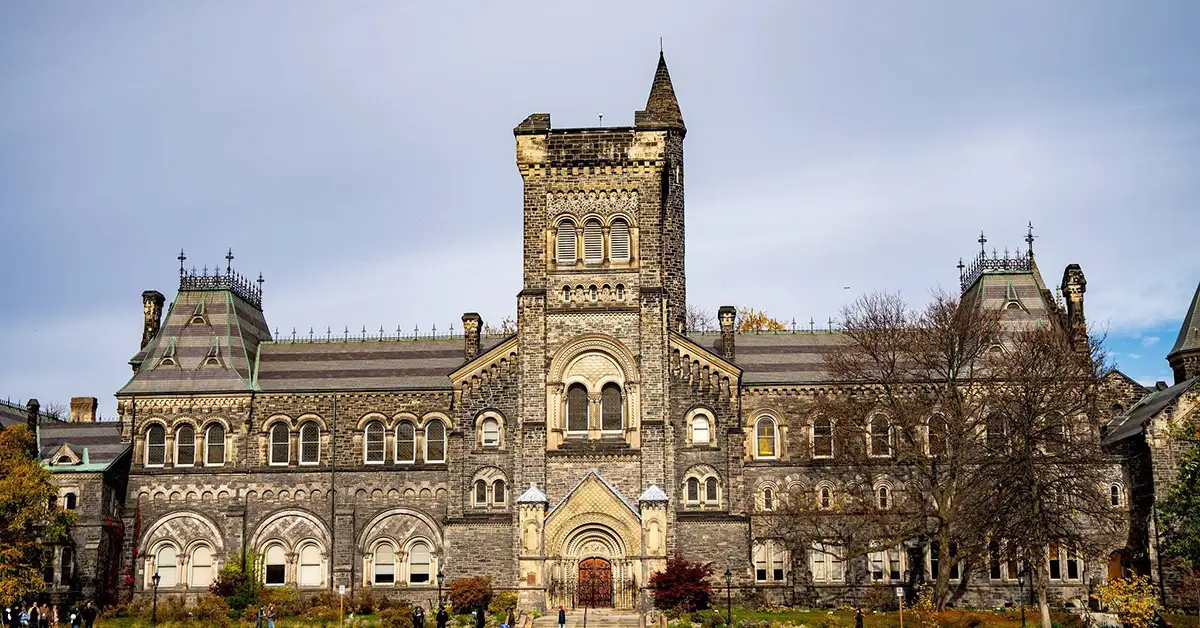
University of Toronto
- Website: https://www.utoronto.ca/
- The University of Toronto is a large university, consistently ranked among the world’s top 20 public universities. Its reputation as a research institution has brought it countless awards.
- Featured programmes: Architecture, Commerce, Medicine, Engineering, Education
- Location: Toronto
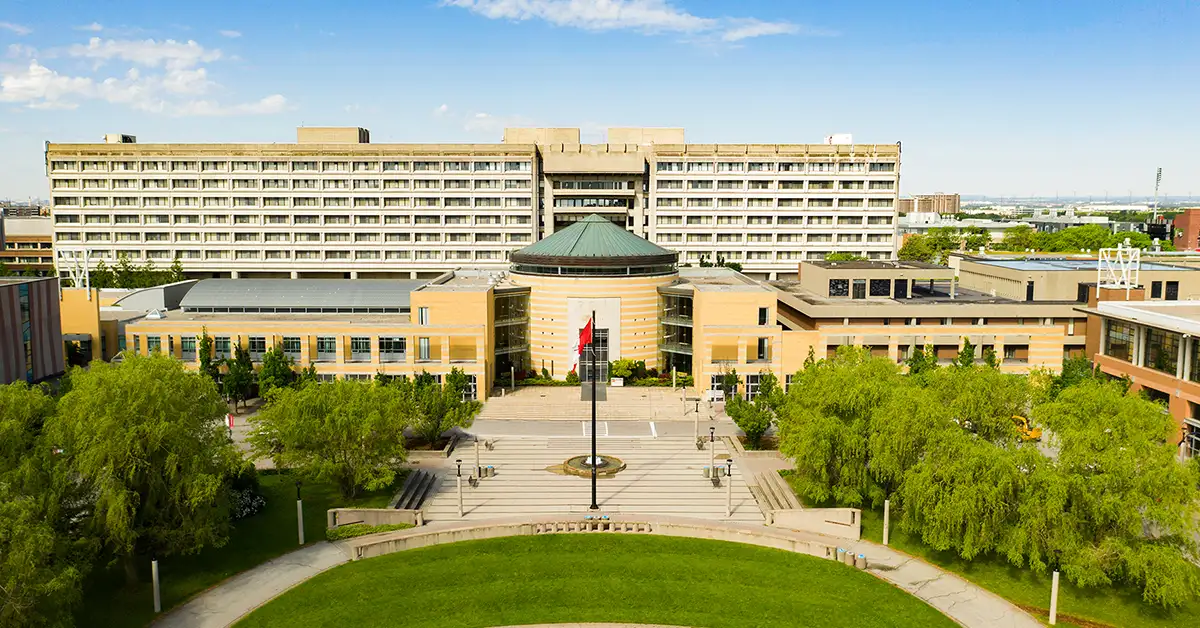
York University
- Website: https://www.yorku.ca/
- Located north of Toronto and Canada’s third-largest public university with almost 60,000 students, York University offers more than 5,000 courses spread across 11 faculties.
- Featured programmes: Business, Law, Environmental Studies, Liberal Arts, Engineering
- Location: Toronto
University of Ottawa
- Website: https://www.uottawa.ca/en
- The University of Ottawa is Canada’s second-largest bilingual university, offering more than 250 undergraduate programmes and almost as many postgraduate programmes across 10 faculties.
- Featured programmes: Biomedical Sciences, Law, Medicine, Management
- Location: Ottawa

University of Waterloo
- Website: https://uwaterloo.ca/
- The University of Waterloo’s facilities are innovative, well funded and hands-on, with a clear mission to become one of the world’s most inventive places to study.
- Featured programmes: Actuarial Science, Architecture, Nanotechnology, Commerce
- Location: Waterloo

Toronto Metropolitan University
- Website: https://www.torontomu.ca/
- Toronto Metropolitan University is a truly urban university located in the middle of Toronto’s financial district. It was formerly known as Ryerson.
- Featured programmes: Biomedical Sciences and Biomedical Engineering, RTA School of Media, Urban Sustainability, Journalism, Aerospace Engineering
- Location: Toronto

The University of Western Ontario
- Website: https://www.uwo.ca/index.html
- Western University comprises 82 buildings on 1,200 acres in London, Ontario, and is a leading research university in many fields.
- Featured programmes: Social Sciences, Business, Medicine and Health Sciences, Engineering, Law
- Location: London
Other schools in Ontario
Selected schools are those that Prosperous Living Investment has assessed for quality, value, and capability with international students studying in Ontario. These schools are accredited by Colleges and Institutes Canada (formerly the Association of Canadian Community Colleges) or have been selected for their proven pathway programmes and excellent student services.
- Algoma University
- Algonquin College
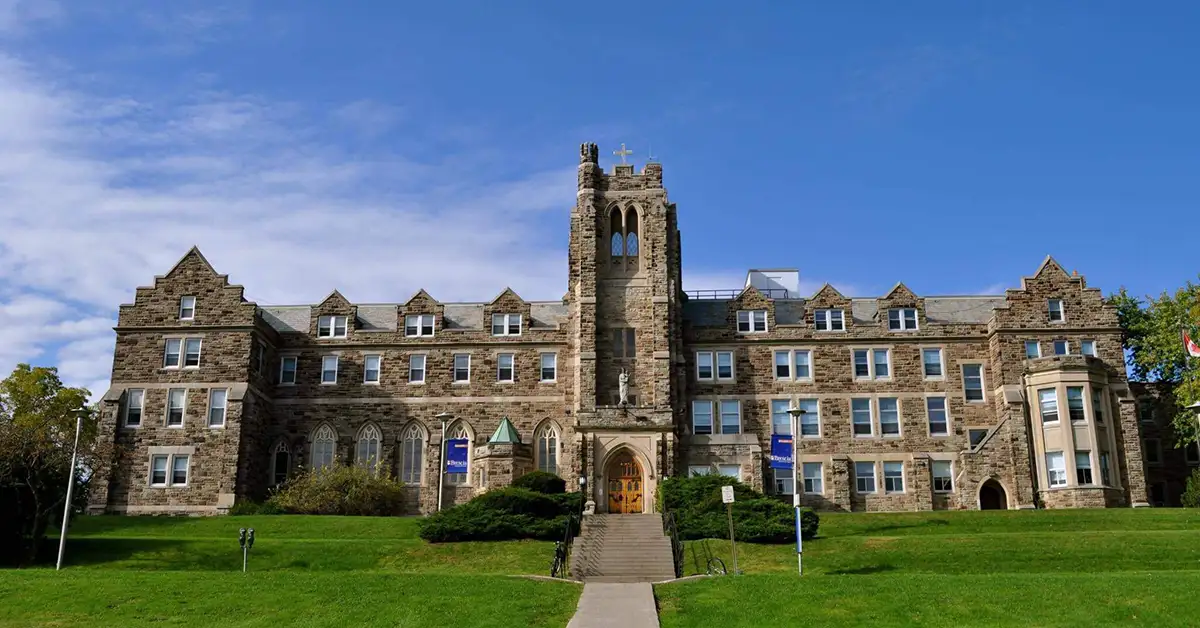
- Brescia University College
- Cambrian College of Applied Arts and Technology
- Canadore College of Applied Arts and Technology
- Carleton University
- Centennial College of Applied Arts and Technology
- Collège Boréal
- Dominican College of Philosophy and Theology
- Fanshawe College of Applied Arts and Technology
- George Brown College
- Georgian College of Applied Arts and Technology
- Humber College Institute of Technology & Advanced Learning
- Huron University College
- King’s University College at UWO
- Lakehead University
- Lambton College of Applied Arts and Technology
- Laurentian University of Sudbury
- Loyalist College of Applied Arts and Technology
- McMaster University
- Niagara College
- Nipissing University
- Northern College of Applied Arts and Technology
- Ontario College of Art & Design University
- Queen’s University
- Saint Paul University
- Sault College of Applied Arts and Technology
- Seneca College of Applied Arts and Technology
- Sheridan College Institute of Technology and Advanced Learning
- St. Clair College of Applied Arts and Technology
- St. Jerome’s University
- St. Lawrence College
- Trent University
- University of Guelph
- University of Ontario Institute of Technology
- University of Windsor
- Wilfrid Laurier University
Frequently asked questions (FAQ) about studying in Ontario
To apply for a CanadianStudy Permit, a prospective international student must first receive aLetter of Acceptance (LOA)from aDesignated Learning Institution in Canada (DLI). As each institution may have different admission requirements and application procedures, interested applicants may contact their chosen institution directly.
In 2016, 5 of Canada’s 10 leading universities were located in Ontario. Below are some notable examples from this province, which has a total of 22 publicly funded universities.
- The University of Toronto consistently tops the university rankings in Canada and is regularly ranked highly worldwide. With almost 80,000 students, classes can be large, but the university attracts some of the world’s leading academics to teach. It has separate “colleges” — not independent institutions, but a model based on the United Kingdom’s collegiate system to create a sense of community for students. Featured programmes: Architecture, Commerce, Medicine, Engineering, Education, Public Health.
- McMaster University is one of Canada’s long-established universities, a leader in innovative educational methods and renowned for its self-directed, problem-based approach to learning. Located in Hamilton and surrounded by the Royal Botanical Gardens, “Mac” is both an outstanding academic institution and a relaxing place, away from the bustle of nearby Toronto. Featured programmes: Health Sciences, Medicine, Engineering, Social Sciences, MBA.
- The University of Waterloo sits at the heart of Ontario’s technology hub, and its science programmes are very well known. With many technology companies nearby, employment prospects are excellent — helped in large part by the world’s largest co-operative education programme; more than 18,000 students are placed in work placements. Featured programmes: Statistics and Actuarial Science, Engineering, Architecture, Nanotechnology.
- The University of Ottawa boasts the largest law faculty in Canada — hardly surprising, given that it is located in the country’s capital. In addition, Ottawa is one of Canada’s top ten research universities, with one of the country’s best medical programmes. It is also the second-largest bilingual university in Canada. Featured programmes: Biomedical Sciences, Law, Medicine, Management.
Colleges in Ontario rival the universities in the quality of their education and the variety of their programmes. Ontario has 24 publicly funded colleges, known as Colleges of Applied Arts and Technology (CAATs). Of these, five (Humber, Sheridan, Conestoga, Seneca and George Brown) have been recognised as Institutes of Technology and Advanced Learning on the strength of their reputations.
- Centennial College in Toronto is the oldest publicly funded college in Ontario. It is also known as one of the most diverse institutions in Canada, with almost 100 ethnocultural groups and nearly 80 languages spoken on campus. Centennial maintains links with organisations around the world and actively recruits international students. It offers more than 150 programmes at Bachelor’s, diploma and certificate level. Featured programmes: Communications and Media Fundamentals, Business, Tourism, joint programmes in Journalism, New Media Studies, Nursing and Paramedicine.
- Collège Boréal is a French-language institution serving the Northern and Central South-Western regions of Ontario. It offers 78 post-secondary and apprenticeship programmes to more than 9,000 students, with a focus on practical training in the workplace. Students must demonstrate French-language ability to be admitted. Featured programmes: Welding Apprenticeship, Business Administration – Accounting, Veterinary Technician, Heavy Equipment Mechanic, Child and Youth Worker.
- Algonquin College, with three campuses in Ottawa, Perth and Pembroke, offers more than 180 programmes at degree, diploma, certificate and apprenticeship level. With a hands-on, actively engaged approach to education, Algonquin prepares students to join the global workforce. Featured programmes: Business, Technology and Health Sciences, as well as distinctive programmes in Outdoor Adventure and Forestry.
- With such a variety of programmes at many high-quality institutions, it is difficult to generalise about student preferences in Ontario. However, as the centre of much of Canada’s financial, government and arts activity, many students pursue programmes related to finance, business, technology and the arts.
- Ontario is also home to some of Canada’s leading universities for STEM programmes (Science, Technology, Engineering and Mathematics), which are likewise much in demand.
- Beyond the programmes mentioned above, institutions across Ontario offer a wide range of other programmes.
Tuition fees for international students in Ontario vary greatly between colleges and universities, as well as between different programmes of study. As a rough estimate, international students can expect to pay between $10,000 and $15,000 per year at a college. For Bachelor’s programmes at a university, international students can expect to pay between $20,000 and $35,000 per year. Tuition for language schools and postgraduate programmes can differ considerably.
International students studying in Canada must take out health insurance before arriving in Canada. This is usually arranged through the post-secondary institution.
Some universities and colleges take part in the University Health Insurance Plan (UHIP), which carries a monthly premium. International students at these participating institutions are required to enrol in UHIP.
To apply for a Study Permit, a prospective international student must show that they have $10,000 CAD in addition to tuition fees to cover living costs in Ontario, equivalent to $833 CAD per month. Living costs, particularly rent, can vary considerably across Ontario — this is especially true when comparing Toronto with other cities.
| Item | Per month | Per year |
|---|---|---|
| Housing: Studio | $800 CAD | $9,600 CAD |
| Housing: One-bedroom apartment | $1,100 CAD | $13,200 CAD |
| Housing: Room in a shared apartment | $600 CAD | $7,200 CAD |
| Food | $250 CAD | $3,000 CAD |
| Clothing and other expenses | $150 CAD | $1,800 CAD |
| Entertainment and activities | $150 CAD | $1,800 CAD |
| Health insurance (UHIP/private) | $51 CAD | $612 CAD |
| Transport (post-secondary student fare in Toronto) | $112 CAD | $1,344 CAD |
| Phone bill | $60 CAD | $720 CAD |
| Internet | $50 CAD | $600 CAD |
| Utilities | $120 CAD | $1,440 CAD |
| Total living costs | $1,543–$2,043 CAD | $18,516–$24,516 CAD |
International students in Nova Scotia can access private loans on terms similar to those offered to Canadian citizens and permanent residents. Loans may be provided by banks, student organisations or other groups.
It is important to research the loan options thoroughly, and to understand the interest rates and repayment schedules, before committing to any agreement. Many organisations and institutions may offer scholarships or grants to international students studying in Ontario.
For further information, students are encouraged to contact the international student services office at their institution. Postgraduate programmes in particular often have funding options for students pursuing a Master’s or Doctoral programme. It is important to contact the institution directly for further information.
A popular programme across Canada, students can study Engineering at many universities and colleges in Ontario.
According to Maclean’s magazine, five of Canada’s ten leading universities for Engineering are in Ontario: the University of Toronto, the University of Waterloo, the University of Ottawa, Queen’s University and McMaster University. Waterloo has the largest Engineering programme in Canada, and is particularly renowned for Software Engineering. Engineering programmes are also available at many other Ontario universities with solid reputations.
Engineering is also a popular programme at the colleges. Institutions such as Algonquin, Centennial, Conestoga, Georgian, Humber, Sheridan and Niagara, along with many others, all offer a varied range of Engineering programmes.
A popular programme across Canada, students can study Computer Science and related programmes at many institutions in Ontario.
According to Maclean’s rankings, the University of Toronto ranks first in Canada for Computer Science, while the University of Waterloo is joint second. Queen’s University is also in the top 10.
Like the University of Waterloo, Wilfred Laurier University also benefits from its location within Ontario’s “technology triangle” (the name given to the Waterloo region, which includes the cities of Cambridge and Kitchener) and offers highly regarded computer technology programmes.
Many colleges in Ontario offer computer technology programmes with placement opportunities. Institutions such as Mohawk, Sheridan and Fanshawe all have well-regarded programmes. Many other colleges, including Niagara and Seneca, also offer Bachelor’s degrees in fields related to computer technology.
A popular programme across Canada, students can study Nursing and related health programmes at many universities and colleges in Ontario.
According to Maclean’s rankings, the University of Toronto ranks first for Nursing programmes. McMaster University, Queen’s University, the University of Ottawa and the University of Western Ontario (“Western”) are also in the top 10.
Loyalist College is noted for its Nursing programme. Collège Boréal offers a Bachelor of Nursing in French. Many other leading colleges such as Mohawk, Conestoga, Centennial and George Brown offer Bachelor’s and diploma programmes in Nursing.
STEM stands for Science, Technology, Engineering and Mathematics. Although careers in STEM fields are very popular, there is no specific programme named “STEM” at any college or university in Nova Scotia. Prospective students are encouraged to research programmes in their particular field of interest.
With numerous placement and co-operative work opportunities in lively urban centres, many graduates enjoy excellent employment prospects after leaving university.
Ontario’s “Technology Triangle” — formed by the cities of Waterloo, Kitchener and Cambridge — is home to some of the world’s largest technology companies and is a centre of innovation. Blackberry’s head office is located here, and Gmail was developed in part at Google’s office in downtown Kitchener.
Employment in the professional, scientific and technical services, information, leisure and culture, manufacturing, and health care and social services sectors grew considerably between June 2015 and September 2016. Employment in the utilities and construction industries has also risen since June 2015.
Graduates of a Designated Learning Institution (DLI) in Ontario may apply for aPost-Graduation Work Permit (PGWP)after graduating from an eligible programme of study.
The International Student category of the Ontario Immigrant Nominee Program (OINP) includes sub-categories for international students and graduates:
- International PhD Graduate stream
- International Master’s Graduate stream
- International Student with a Job Offer stream
International graduates who have completed a programme of study at a school in Ontario may be eligible to immigrate through the federal Express Entry immigration selection system. Graduates may be awarded additional points on the basis of their higher level of education. Moreover, international graduates from Canadian institutions may already have accumulated Canadian work experience, a factor highly valued in the Express Entry system.
As the most populous region of Ontario, extending south of the Prairie Provinces, most of Ontario’s major cities and towns have a milder climate than other parts of Canada. The many lakes of Southern Ontario help keep winter temperatures and snowfall more moderate than elsewhere in the country. Areas further north, including Thunder Bay and Sudbury, usually experience colder temperatures in winter.
- More international students study in Ontario than in any other province, and the institutions here are well accustomed to serving international students.
- A number of universities and colleges in Ontario are recognised worldwide, so the opportunities after graduation are limitless.
- As Canada’s economic and political centre, Ontario has a great many employment opportunities. Canada’s capital, Ottawa, and the country’s largest city, Toronto, offer a wide range of jobs and career opportunities for students and graduates in every field.
- A recent report by University Works, promoted by the Council of Ontario Universities, found that university graduates in Ontario have seen the highest employment growth of any group of students over the past 10 years, with the highest employment rate (92%) in Canada. They also earn considerably more and are more likely to work in jobs related to their field of study.
- Toronto is the largest city in Ontario and in Canada as a whole. The financial and information technology sectors are particularly strong in terms of employment opportunities. Neighbouring towns and cities such as Mississauga, Whitby and Brampton have gradually been absorbed into Toronto’s growth, forming the “Greater Toronto Area”, or GTA.
- Ottawa is the capital of Ontario. Beyond its excellent schools and its tourism industry, many people are drawn by jobs in the federal government, which is the largest employer in the region.
- Hamilton was formerly a major industrial city — particularly in steel production. After a period of economic decline that led to many job losses, the city is now experiencing renewed growth in the services and arts sectors.
- Waterloo is a centre of technology and innovation, and the local colleges and universities offer technology programmes that reflect this. The head office of the Blackberry company is located in Waterloo, and the company is the city’s largest employer.
Accompanying you on your journey in residency investment
The Prosperous Living Investment team advises on pathways, assesses profiles and manages investments transparently for every residency, citizenship and international property objective.
Free profile assessmentWhere life gets prosperous