

Study in Nova Scotia – Canada

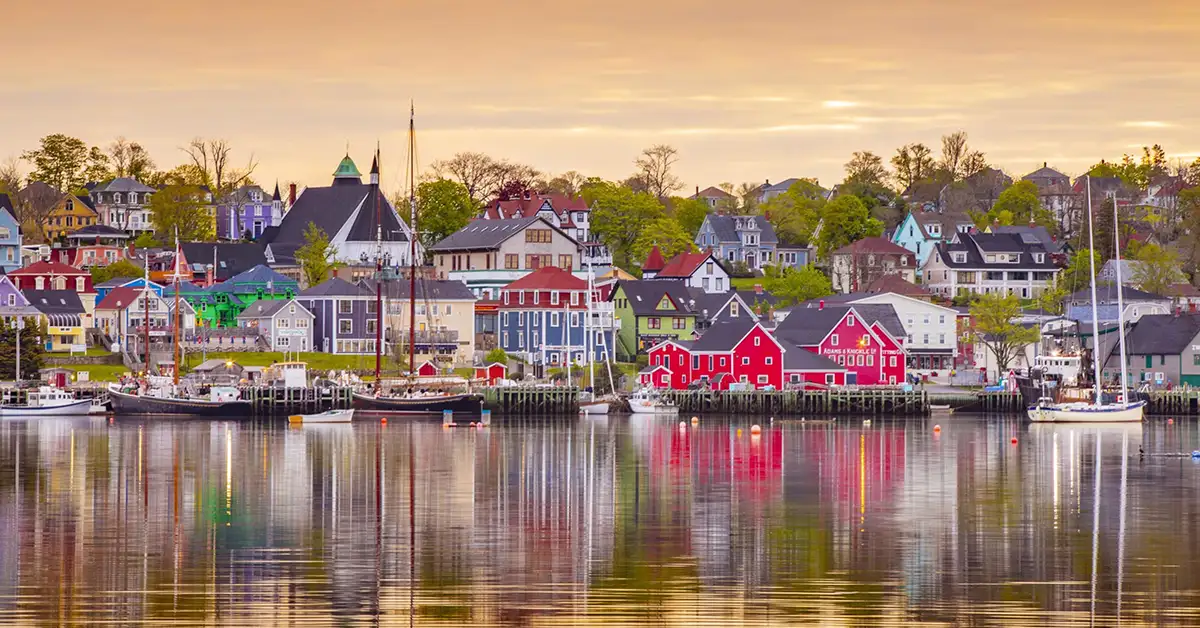
Studying in Nova Scotia is one of the leading choices for international students who set their sights on Canada. It is a place where international students can secure work after graduation and follow a promising immigration pathway.
Nova Scotia, one of Canada’s most beautiful regions, offers the chance to experience a rich culture and history while studying at leading universities and colleges. Despite a population of under one million, Nova Scotia boasts 10 degree-granting universities, the highest ratio of universities per capita in Canada.
In addition to a wide range of undergraduate degrees, institutions in Nova Scotia offer postgraduate degrees in fields of study and research such as medicine, dentistry, business, engineering, education, fine arts and many others.
Message
Overview
- Population: 1,082,270 (updated 02/06/2025)
- International students: 26,610 (2023 data from ICEF Monitor)
- Main places of study: Halifax, Wolfville, Antigonish
Considering a residency programme? The Prosperous Living Investment team assesses your profile free of charge and advises on the pathway that fits your goals.
Advantages of studying in Nova Scotia
- Surrounded by fellow students: In Nova Scotia, it is hard to walk down the street without meeting a student — and many of them come from abroad. Nova Scotia has the highest ratio of students per capita in Canada, giving life in the province a distinctive energy and atmosphere.
- Quality educational institutions: Nova Scotia is home to some of the highest-ranked institutions in Canada, particularly universities focused on undergraduate programmes. According to Maclean’s respected 2016 university rankings, three of the seven top universities in Canada offering primarily undergraduate programmes are located in Nova Scotia.
- Many routes to permanent residence: Perhaps more than in any other Canadian province, when you arrive in Nova Scotia as an international student you will sense that the people here want you to stay. Not only are you well placed to apply for permanent residence through federal immigration programmes, but the Nova Scotia Provincial Nominee Program also has streams designed specifically for students. See further details below.
Immigrating after studying in Nova Scotia
- Nova Scotia Experience: Express Entry: Nova Scotia Experience: Express Entry, one of the many streams of the Nova Scotia Provincial Nominee Program, offers a route to permanent residence for skilled candidates who have worked for a Nova Scotia employer for at least one year. Interestingly, this points-based immigration stream awards points to individuals who have completed at least two years of full-time study (within a programme lasting at least two years) at a secondary or post-secondary school in Nova Scotia. Points are also awarded if the applicant’s spouse or common-law partner has completed studies in Nova Scotia. The Nova Scotia Experience: Express Entry stream is aligned with the federal Comprehensive Ranking System (CRS), allowing applications to be processed quickly.
- Nova Scotia Provincial Nominee Program: International Graduate Entrepreneur stream: The International Graduate Entrepreneur stream of the Nova Scotia Provincial Nominee Program offers an immigration opportunity to international students who have graduated from a university or community college in Nova Scotia and have started their own business. At present, it is the only stream of its kind in Canada.
- Atlantic International Graduate Program (AIGP)
The Atlantic International Graduate Program (AIGP) allows international students graduating from eligible institutions in Atlantic Canada to apply for permanent residence without prior work experience. The AIGP forms part of theAtlantic Immigration Program (AIP), a new Canadian immigration initiative that began in 2017 and has continued since. - Express Entry: Candidates immigrating to Canada through the federalComprehensive Ranking System (CRS)federal system who have completed their studies at a school in Nova Scotia may be awarded a significant number of additional points for their higher level of education. Moreover, international students graduating from Canadian institutions may already have Canadian work experience, a factor highly valued in the Express Entry system.
Schools in Nova Scotia
These institutions are featured for their size, their proximity to urban centres, and their tradition of recruiting international students into their student body.
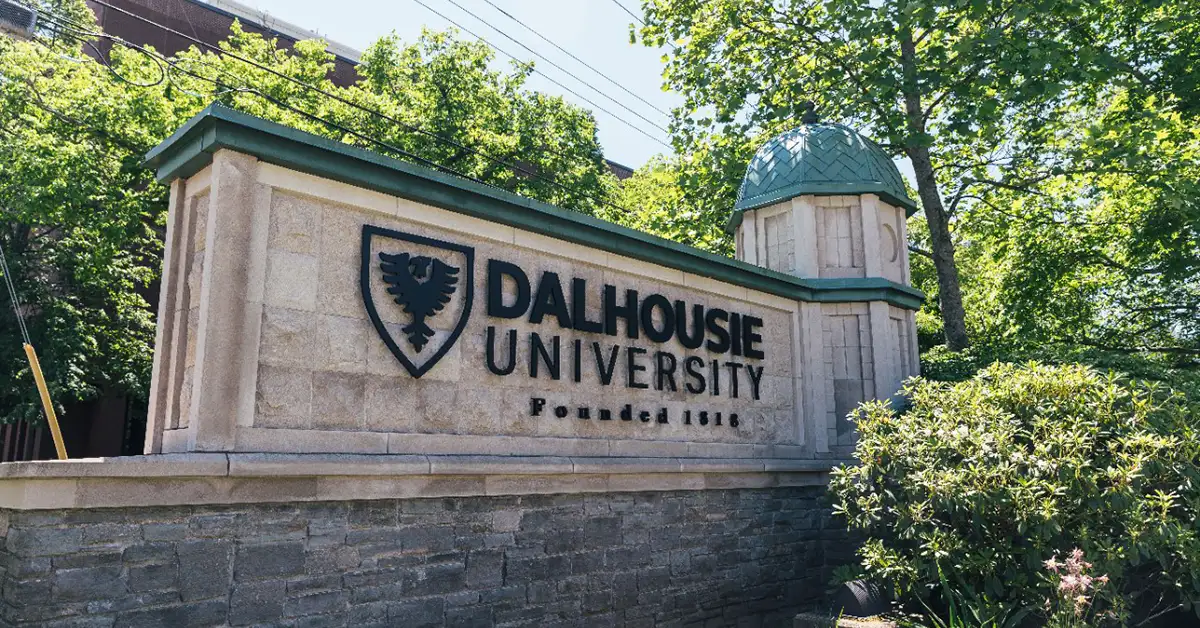
Dalhousie University
- Website: https://www.dal.ca/
- Dalhousie maintains an interdisciplinary, inclusive focus and close ties with the surrounding community. Students from other Canadian provinces, along with thousands of international students, come here to study every year.
- Featured programmes: Medicine, Engineering, Law, Management, Science, Agriculture, Arts, Social Sciences
- Location: Halifax
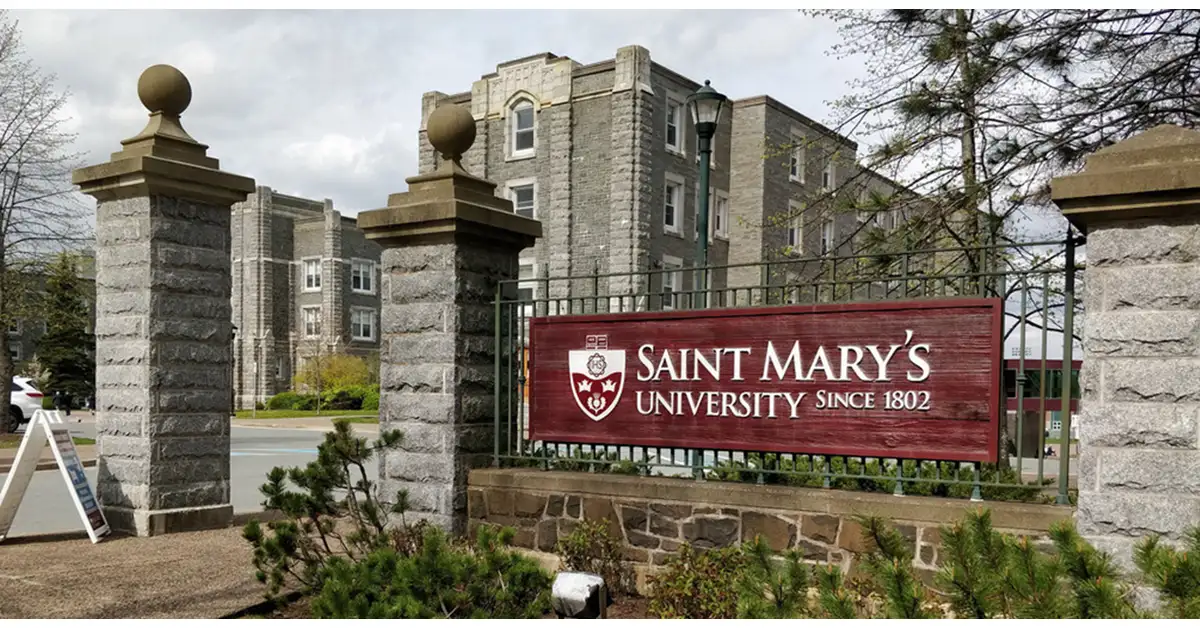
Saint Mary’s University
- Website: https://www.smu.ca/
- Saint Mary’s has long been known as being highly supportive of international students. Its student services are excellent, and the university provides an international centre dedicated to supporting and advising international students.
- Featured programmes: Business, Astronomy, Chemistry, International Development Studies
- Location: Halifax
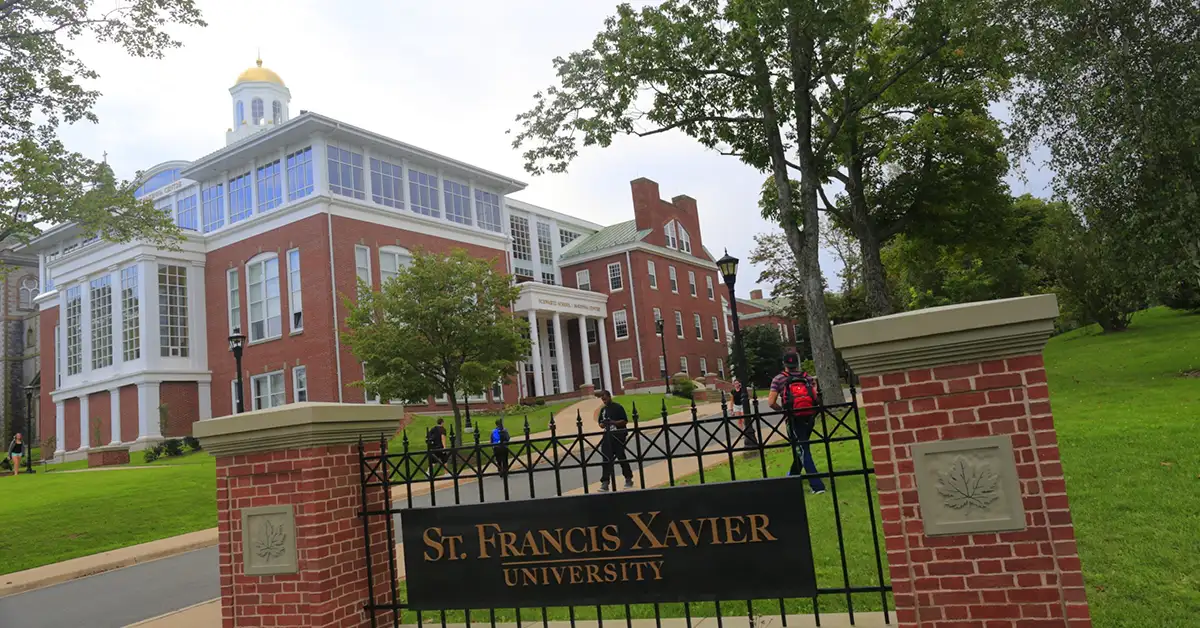
St. Francis Xavier University
- Website: https://www.stfx.ca/
- The campus of St. Francis Xavier University has an Ivy League architectural style, with limestone halls and a pedestrian-friendly design. It has been ranked by Maclean’s as the number one primarily undergraduate university in Canada no fewer than five times.
- Featured programmes: Business, Education, Engineering, Information Systems, Music
- Location: Antigonish
Acadia University
- Website: https://www2.acadiau.ca/home.html
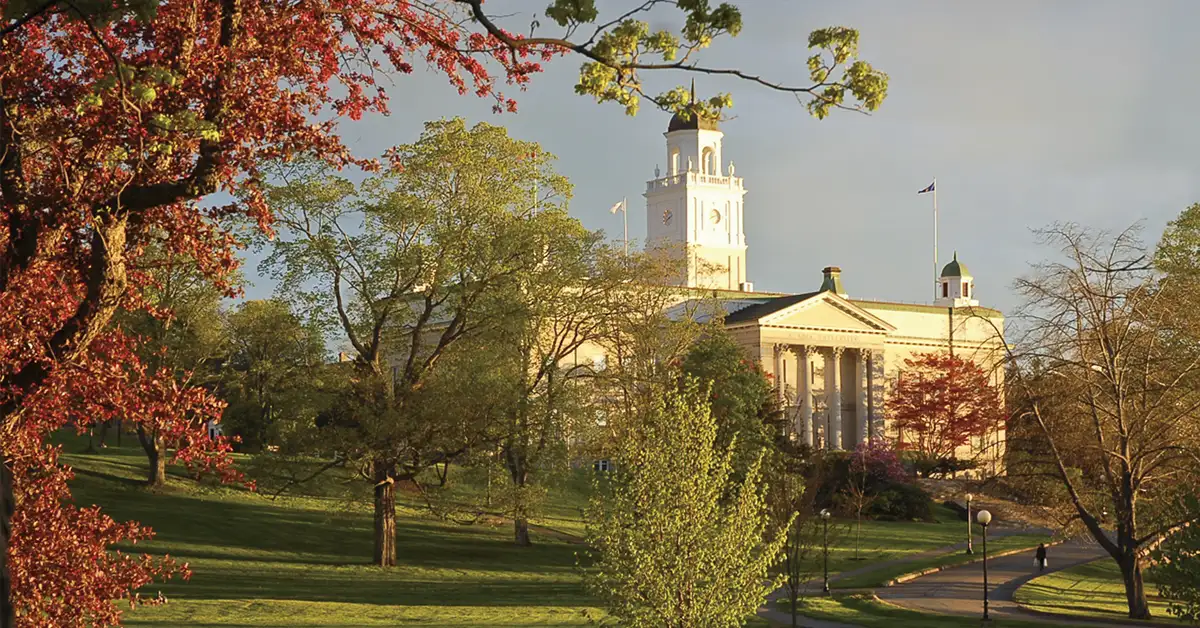
- Acadia is a place of diversity and community. Almost 15% of its students are international students, and nearly half of all students live on campus. For a small school, there is no shortage of degree programmes: it has more than 200.
- Featured programmes: Business, Computer Science, Environmental Studies
- Location: Wolfville
Other schools in Nova Scotia
Selected schools are those that Prosperous Living Investment has assessed for quality, value, and capability with international students studying in Nova Scotia. These schools are accredited by Colleges and Institutes Canada (formerly the Association of Canadian Community Colleges) or have been selected for their proven pathway programmes and excellent student services.
- Cape Breton University
- Mount Saint Vincent University
- Nova Scotia College of Art and Design
- Nova Scotia Community College (NSCC)
- Université Sainte-Anne
- University of King’s College
Frequently asked questions (FAQ) about studying in Nova Scotia
To apply for a CanadianStudy Permit, a prospective international student must first receive aLetter of Acceptance (LOA)from aDesignated Learning Institution in Canada (DLI). As each institution may have different admission requirements and application procedures, interested applicants may contact their chosen institution directly.
- Dalhousie University: Located in the capital, Halifax, it is the province’s best-known university. Dalhousie maintains an interdisciplinary, inclusive focus and close ties with the surrounding community. Both research and teaching are strong here, as are school spirit and sport. Featured programmes: Medicine, Engineering, Law, Management, Architecture, Science, Agribusiness, Arts and Social Sciences
- Acadia University: In Wolfville, it is a place of diversity and community. Almost 15% of its students are international students, and nearly half of all students live on campus. For a small school, it has more than 200 degree programmes. The population of this small town doubles during term time while students are studying. Featured programmes: Business Administration, Computer Science, Environmental Science, Music
- St. Francis Xavier University (St. FX): Recently ranked second in Canada in Maclean’s list of students’ favourite universities, in the “Primarily Undergraduate” category. The university excels in research and plays an important role in the surrounding community. Featured programmes: Business Administration, Education, Engineering, Information Systems, Music and Jazz Studies
- Nova Scotia Community College (NSCC): A major provider of technical and vocational training programmes. It has 13 campuses and six learning centres located across the province. It has more than 25,000 students, drawn by nationally recognised institutes such as the Nova Scotia Nautical Institute, the School of Fisheries, the Aviation Institute, and the Centre of Geographic Sciences. Featured programmes: Geomatics Engineering Technology, Information Technology, Radio & Television Arts, Graphic Design
- Nova Scotia College of Art and Design (NSCAD): A studio-focused institution, with a total student body of under 1,000. NSCAD is now a full university, offering Bachelor’s and Master’s programmes in Fine Arts, Design, and Art History. Featured programmes: Interdisciplinary Design, Fine Arts, Art History and Critical Studies, Textiles and Fashion
- Engineering and Information Technology programmes are very popular here, as both can lead to employment in the province’s main industries.
- Arts programmes are also popular — the region has a long history of arts and crafts, and the Nova Scotia College of Art and Design is a major draw for art students.
- Beyond the programmes above, institutions across Nova Scotia offer a wide and varied range of programmes.
Tuition fees for international students vary considerably, depending on the institution and the programme of study. As a rough estimate, international students in Nova Scotia can expect to pay around $10,000 CAD per year at a college. International students can expect to pay between $13,000 and $25,000 CAD per year for Bachelor’s programmes at a university. Tuition at language schools and for postgraduate study can differ considerably.
International students in Canada must take out health insurance before arriving in Canada. In Nova Scotia, students are usually covered by the health insurance plans of their college or university. It is advisable to consult the website of the institution you intend to attend for further information.
To apply for a Study Permit, a prospective international student must show that they have $10,000 CAD in addition to tuition fees to cover living costs in Nova Scotia, equivalent to $833 CAD per month. Costs can vary considerably across the province, particularly between Halifax and smaller towns.
| Item | Per month | Per year |
|---|---|---|
| Accommodation (shared, off campus) | $570 CAD | $6,840 CAD |
| Food | $250 CAD | $3,000 CAD |
| Clothing and other expenses | $150 CAD | $1,800 CAD |
| Entertainment and activities | $150 CAD | $1,800 CAD |
| Transport (Halifax fare) | $70 CAD | $840 CAD |
| Phone bill | $60 CAD | $720 CAD |
| Internet | $50 CAD | $600 CAD |
| Utilities | $100 CAD | $1,200 CAD |
| Total living costs | $1,400 CAD | $16,800 CAD |
International students in Nova Scotia can access private loans on terms similar to those offered to Canadian citizens and permanent residents. Loans may be provided by banks, student organisations or other groups.
It is important to research the loan options thoroughly, and to understand the interest rates and repayment schedules, before committing to any agreement. Many organisations and institutions may offer scholarships or grants to international students studying in Nova Scotia.
For further information, students are encouraged to contact the international student services office at their institution. Postgraduate programmes in particular often have funding options for students pursuing a Master’s or Doctoral programme. It is important to contact the institution directly for further information.
A popular programme across Canada, Engineering can be studied at many universities and colleges in Nova Scotia.
- Nova Scotia Community College (NSCC): There are fourteen Engineering Technology programmes in specialised fields such as Environmental, Architectural, Geomatics, and Electrical Engineering.
- Dalhousie University: Offers ten Engineering programmes, with specialisations including Metallurgical and Mining Engineering.
- Acadia University, St. Francis Xavier, Cape Breton University, and other universities also offer Engineering programmes.
A popular programme across Canada, Computer Technology and related programmes can be studied at many universities and colleges in Nova Scotia.
- Acadia University: Undergraduate and postgraduate Computer Science programmes offer specialisations such as Mobile and Ubiquitous Computing, Game Development, and Software Development.
- Nova Scotia Community College (NSCC): Its Computer Electronics Technician programme is highly regarded.
- Dalhousie University: Offers four programmes relating to computer science and engineering, as well as informatics.
- St. Francis Xavier University: The Department of Computer Science regularly develops new courses, such as “Social Issues in the Information Age”, introduced in 2017.
A popular programme across Canada, Nursing and related health programmes can be studied at many universities and colleges in Nova Scotia.
- St. Francis Xavier University: From January 2017, it has offered a two-year accelerated Nursing programme in addition to its four-year Bachelor’s programme and part-time Registered Nursing programme.
- Nova Scotia Community College (NSCC): It has a popular Practical Nursing programme, as well as a one-year re-entry programme designed to update students’ skills to Licensed Practical Nurse level.
- Dalhousie University: The Nursing programme, available at the Halifax and Yarmouth campuses, is highly regarded within the industry.
STEM stands for Science, Technology, Engineering and Mathematics. Although careers in STEM fields are very popular, there is no specific programme named “STEM” at any college or university in Nova Scotia. Prospective students are encouraged to research programmes in their particular field of interest.
Across the province, tourism offers opportunities in a wide range of hospitality and leisure occupations.
The main industries in Nova Scotia include Agriculture, Forestry, Natural Gas Extraction, Mining, and Fishing.
Halifax is an important base for the financial sector, as well as for the aerospace industry — the engine manufacturer Pratt and Whitney Canada and Halifax International Airport are both important to the economy.
As across Canada, health care and social services is a major employer in Nova Scotia.
Graduates of a Designated Learning Institution (DLI) in Nova Scotia may apply for aPost-Graduation Work Permit (PGWP)after graduating from an eligible programme of study.
Nova Scotia Experience: Express Entry offers a route to permanent residence for skilled candidates who have worked for a Nova Scotia employer for at least one year. This stream is aligned with the federal Comprehensive Ranking System (CRS), allowing applications to be processed quickly.
The International Graduate Entrepreneur stream of theNova Scotia Provincial Nominee Program (NSNP)offers an immigration opportunity to international students who have graduated from a university or community college in Nova Scotia and have started their own business.
At present, it is the only stream of its kind in Canada. International graduates may also pursue permanent residence through the federal Express Entry system. Candidates immigrating to Canada who have completed their studies at a school in Nova Scotia may be awarded additional points for their higher level of education.
Moreover, international students graduating from Canadian institutions may already have Canadian work experience, a factor highly valued in the Express Entry system.
Nova Scotia has a temperate climate, with less extreme temperatures than other parts of Canada. Winter temperatures usually drop just below freezing, and summer temperatures stay in the mid-20s in degrees Celsius. The province can also experience sudden changes in weather and temperature, and some areas have frequent fog. The climate is influenced by the ocean that almost surrounds the province.
- Nova Scotia has the highest number of universities per capita in Canada, so student life in the province is very lively. Even small towns such as Wolfville (home to Acadia University) and Antigonish (home to St. Francis Xavier University) offer plenty of activities and services for students.
- Universities in Nova Scotia dominate the rankings for student satisfaction. According to Maclean’s magazine’s 2016 ranking of primarily undergraduate universities, Cape Breton University placed 15th, Saint Mary’s University 9th, Mount Saint Vincent 5th, Acadia University 4th, and St. Francis Xavier 2nd for overall student satisfaction.
- Nova Scotia is a province of small towns and communities. With a population of more than 390,000, Halifax is the largest city and the province’s main urban centre. The next largest towns and areas are Cape Breton, with 97,000 people, and Truro, with 12,000.
- Many universities and colleges are located in small towns with populations of three to five thousand, and the populations of these towns can double during term time while students are studying.
Accompanying you on your journey in residency investment
The Prosperous Living Investment team advises on pathways, assesses profiles and manages investments transparently for every residency, citizenship and international property objective.
Free profile assessmentWhere life gets prosperous