

Studying in New Brunswick, Canada

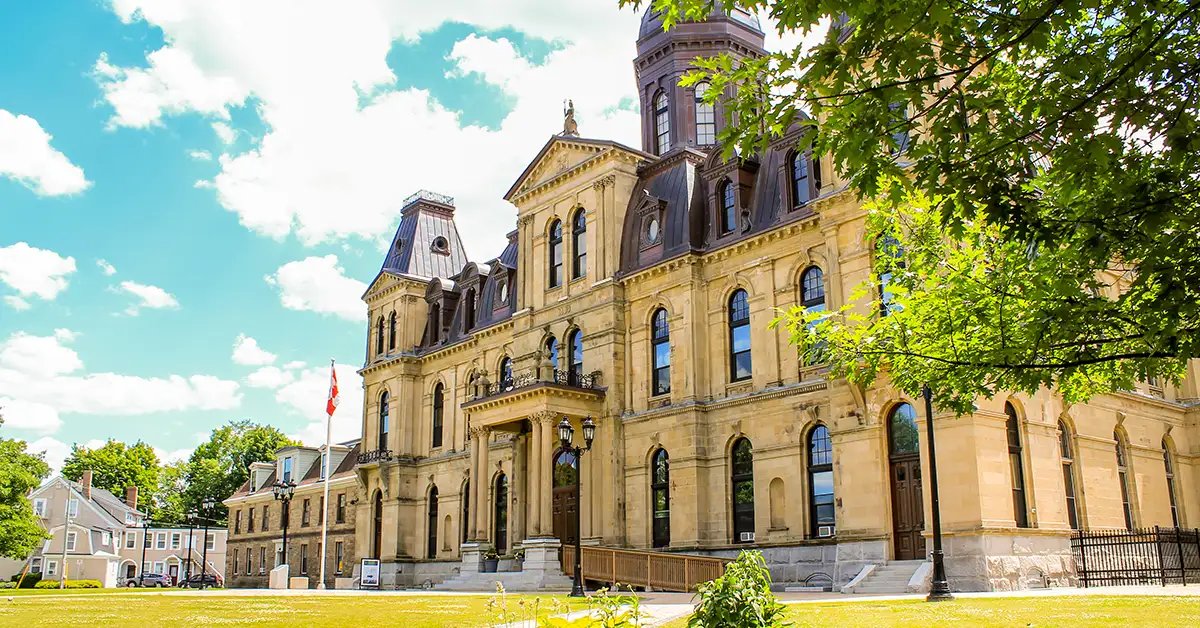
Studying in New Brunswick is one of the leading choices for international students setting out to study in Canada. It is a place where international students can find work after graduating and follow a promising immigration route.
New Brunswick is home to medium-sized urban centres such as Moncton, Fredericton and Saint John, which dominate the province’s higher education landscape.
New Brunswick has a rich educational history. The University of New Brunswick was the first English-language university in Canada, and Mount Allison University was the first in what was then the British Empire to award a bachelor’s degree to a woman.
For prospective international students seeking a high-quality education without the bustle and living costs of large cities, New Brunswick may be an attractive option.
Message
Overview
- Population: 862,327 (updated 2 June 2025)
- International students: 16,030 (2023 data from ICEF Monitor)
- Main places of study: Fredericton, Moncton, Saint John
Considering a residency programme? The Prosperous Living Investment team assesses your profile free of charge and advises on the pathway that fits your goals.
The advantages of studying in New Brunswick
- An international focus: although English speakers form the majority over French speakers, New Brunswick has a substantial French-speaking minority community and is an officially bilingual province. This gives international students the opportunity to study in one or both of Canada’s official languages. The province’s universities also maintain an international focus, with partnerships with other institutions worldwide.
- Smaller urban centres: if large cities such as Toronto, Vancouver, Montreal or Calgary are not right for you, New Brunswick may be the ideal choice. The province offers an urban living environment without the bustle — let alone the living costs — of a sprawling metropolis. Fredericton, Saint John, Moncton and Dieppe are all well-known centres of higher education.
Immigration after studying in New Brunswick
- The New Brunswick Provincial Nominee Program (NBPNP):The NBPNP’s Express Entry Labour Market Stream, a direct route to Canadian permanent residence, requires candidates to have at least 12 months of full-time paid work experience (or the part-time equivalent) in New Brunswick within the three years before applying. One of the best ways to enter the professional labour market in New Brunswick is to graduate from a college or university in the province and then apply for a Post-Graduation Work Permit.
- The Atlantic International Graduate Program (AIGP): the Atlantic International Graduate Program (AIGP) allows international students graduating from eligible institutions in Atlantic Canada to apply for permanent residence without needing prior work experience. AIGP is part ofThe Atlantic Immigration Program (AIP), a new Canadian immigration initiative that began in 2017 and has continued since.
- Express Entry: candidates immigrating to Canada through the federalComprehensive Ranking System (CRS)federal — those who have completed their studies at an institution in New Brunswick may be awarded a significant number of additional points for their higher level of education. International students graduating from Canadian institutions may also already have Canadian work experience, a factor highly valued in the Express Entry System.
Institutions in New Brunswick
These institutions are featured because of their size, their proximity to urban centres, and their tradition of including international students in their student body.
University of New Brunswick
- Website: https://www.unb.ca/
- As a nationally recognised university in an officially bilingual province, the University of New Brunswick has a long history of working with international partners through welcoming international students.
- Notable programmes: medicinal chemistry, environment and natural resources, law, health sciences, marine biology
- Location: Fredericton, Saint John
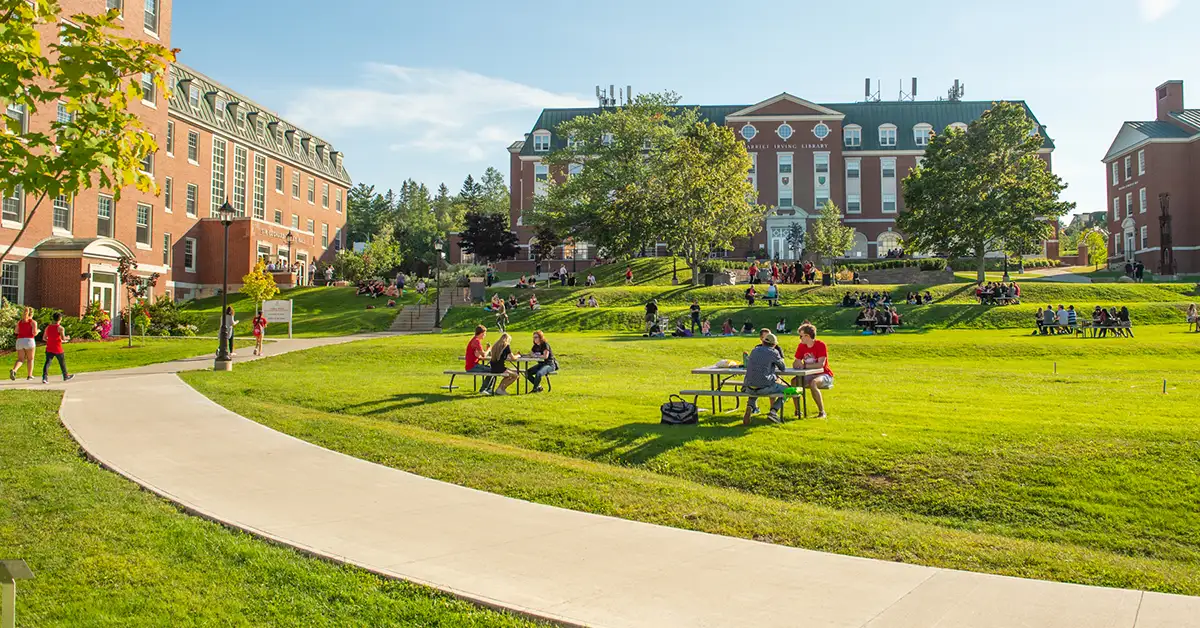
Université de Moncton
- Website: https://www.umoncton.ca/
- Although French is the language of instruction for most programmes, the Université de Moncton welcomes non-French speakers who wish to become fluent in both languages while completing their studies.
- Notable programmes: law, forestry, education, nutrition, social work, business
- Location: Moncton
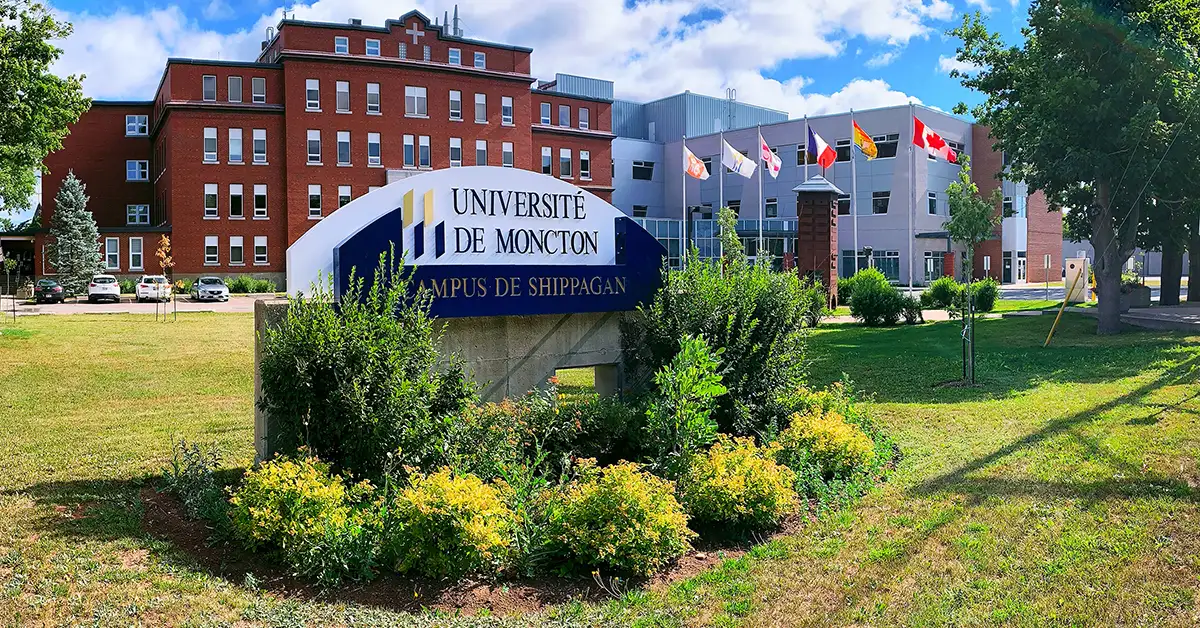
Other institutions in New Brunswick
The selected institutions are those Prosperous Living Investment has assessed for quality, value and capability with international students studying in New Brunswick. These institutions are accredited by Colleges and Institutes Canada (formerly the Association of Canadian Community Colleges) or have been selected for their proven pathway programmes and excellent student services.
- Collège communautaire du Nouveau-Brunswick (CCNB)
- Mount Allison University
- New Brunswick College of Craft and Design
- New Brunswick Community College (NBCC)
- St. Thomas University
Frequently asked questions (FAQ) about studying in New Brunswick
To apply for a Canadianstudy permit, a prospective international student must first receive aLetter of Acceptance (LOA)from aDesignated Learning Institution in Canada (DLI). As each institution may have different admission requirements and application processes, interested applicants may contact their chosen institution directly.
- The University of New Brunswick (UNB): the oldest public university in North America (founded in 1785). A comprehensive university with campuses in Fredericton and Saint John, it offers undergraduate and postgraduate education across the arts and sciences. It is also highly regarded for research in many innovative fields such as space science, chemistry and information technology. With the many outdoor opportunities and extracurricular activities at UNB, school spirit rivals that of a much larger university.
- Notable programmes at the University of New Brunswick (UNB): environment and natural resources, law, health sciences, marine biology
- Université de Moncton: the largest French-language university outside Quebec. As well as a range of arts, science, commerce and engineering programmes, it has the only common law programme taught entirely in French in Canada. Although courses are taught in French, many students speak English and take the opportunity to develop their language skills. All students are assessed in French during admission, and non-French-speaking students must take a number of French courses. The Université de Moncton offers the lowest tuition fees for international students in the province, at CAD 10,470 a year (plus ancillary fees) for 2016/2017.
- Notable programmes at the Université de Moncton: law, forestry, education, nutrition, social work, business, applied computer science
- Mount Allison University: offers a competitive education in a small-town setting. In fact, the town of Sackville, where the university is located, is so small that its population nearly doubles during the university term. The student-to-staff ratio is impressive, and the university is known for its hands-on, interdisciplinary approach. In 2014, Maclean’s magazine ranked “Mount A” first in the undergraduate university category for the third year running.
- Notable programmes at Mount Allison University: biology, religious studies, chemistry, drama, joint programmes
- New Brunswick Community College (NBCC): a distributed college with six campuses, offering nearly 90 programmes across more than 15 different departments. This community college is ideal for students seeking a placement, co-op or hands-on component that will make it easier for them to find work after graduating. Notable programmes: trades, business administration, civil engineering, hotel and restaurant management, information technology, mechanical engineering
- Collège Communautaire du Nouveau-Brunswick (CCNB): founded in 1970, this is the largest French-language community college in New Brunswick, serving all the French-speaking and Acadian communities in the province. Its five campuses offer more than 90 programmes across 16 fields of training. CCNB’s mission is to train students for future economic development in the region, including shipbuilding and hydroelectric plant construction. Notable programmes: textile design, photography, Indigenous visual arts, Bachelor of Applied Arts
- New Brunswick has two highly regarded law programmes, at the University of New Brunswick and the Université de Moncton.
- As across Canada, engineering and nursing are popular programmes of study. Liberal arts programmes are also popular at the many small universities scattered across the province.
- Beyond the programmes above, institutions across New Brunswick offer a wide range of programmes.
Tuition fees for international students vary considerably, depending on the institution and the programme. International students in New Brunswick may pay between CAD 11,000 and CAD 15,000 a year at a university, and around CAD 12,000 a year at a college. Fees may depend on the programme of study and may vary considerably between undergraduate and postgraduate level.
International students studying in Canada may apply for provincial health insurance after three months of residence in the province. International students will need to provide proof of residence and of full-time enrolment at a post-secondary institution in New Brunswick.
To apply for a study permit, a prospective international student must demonstrate that they have CAD 10,000 in addition to tuition fees to cover living costs in New Brunswick, equivalent to CAD 833 a month.
| Item | Per month (approx.) | Per year (approx.) |
|---|---|---|
| Accommodation (shared, off campus) | $400 CAD | $4,800 CAD |
| Food | $300 CAD | $3,600 CAD |
| Clothing and other costs | $150 CAD | $1,800 CAD |
| Leisure and activities | $150 CAD | $1,800 CAD |
| Transport (Fredericton fare) | $40 CAD | $480 CAD |
| Phone bill | $60 CAD | $720 CAD |
| Internet | $50 CAD | $600 CAD |
| Utilities | $80 CAD | $960 CAD |
| Total living costs | $1,230 CAD | $14,760 CAD |
International students in New Brunswick may access private loans on similar terms to Canadian citizens and permanent residents. Loans may be offered by banks, student organisations or other groups.
It is important to research the loan options carefully, and to understand the interest rates and repayment plans, before committing to any agreement. Many organisations and institutions may offer scholarships or grants to international students studying in New Brunswick.
For further information, students are encouraged to contact their institution’s international student services office. Postgraduate programmes in particular often have funding options for students pursuing a master’s or doctoral programme. It is important to contact the institution directly for further information.
As a popular programme across Canada, engineering can be studied at several universities and colleges in New Brunswick.
- The University of New Brunswick: the first Canadian university to introduce an engineering programme, in 1854. It now offers seven undergraduate engineering options — chemical, civil, electrical, geological, geomatics, mechanical and software. It also has six postgraduate programmes (chemical, civil, electrical, forest, geomatics and mechanical).
- New Brunswick Community College (NBCC): also well known for its engineering programmes, offering eight full-time programmes with specialisations in civil, electrical and mechanical engineering, and energy engineering technology.
- Collège Communautaire du Nouveau-Brunswick (CCNB): offers construction and civil engineering programmes in French, as well as several related programmes and specialisations.
As a popular programme across Canada, nursing and related health programmes can be studied at many universities and colleges in New Brunswick.
- New Brunswick Community College (NBCC): offers eight health-related programmes, including practical nursing.
- The University of New Brunswick: offers popular Bachelor of Nursing and Advanced Bachelor of Nursing programmes. The courses are built around philosophical approaches to nursing technique, as well as practical experience.
- Université de Moncton: offers undergraduate and postgraduate nursing programmes in French.
- Collège Communautaire du Nouveau-Brunswick (CCNB): offers 13 health and nursing programmes in French.
As a popular programme across Canada, nursing and related health programmes can be studied at many universities and colleges in New Brunswick.
- New Brunswick Community College (NBCC): offers eight health-related programmes, including practical nursing.
- The University of New Brunswick: offers popular Bachelor of Nursing and Advanced Bachelor of Nursing programmes. The courses are built around philosophical approaches to nursing technique, as well as practical experience.
- Université de Moncton: offers undergraduate and postgraduate nursing programmes in French.
- Collège Communautaire du Nouveau-Brunswick (CCNB): offers 13 health and nursing programmes in French.
STEM stands for Science, Technology, Engineering and Mathematics. Although careers in STEM fields are very popular, there is no specific programme called “STEM” at a college or university in New Brunswick. Prospective students are encouraged to research programmes in their particular field of interest.
Employment in finance, insurance, real estate, rental and leasing, wholesale and retail trade, and manufacturing grew between June 2015 and September 2016. Health care and social assistance is also a major employer in the province. New Brunswick has committed to increasing immigration because of a shortage of skilled labour in the province. International students with a degree or diploma from an institution in New Brunswick may be increasingly sought after by local businesses after graduating.
Graduates of a Designated Learning Institution (DLI) in New Brunswick may apply for aPost-Graduation Work Permit (PGWP)after graduating from an eligible programme of study.
New Brunswick’s Express Entry Labour Market Stream is a direct route to Canadian permanent residence. Candidates with at least 12 months of full-time paid work experience (or the part-time equivalent) in New Brunswick within the three years before applying are treated as priority candidates.
One of the best ways to enter the professional labour market in New Brunswick is to graduate from a college or university in the province and then apply for a Post-Graduation Work Permit. International graduates with a job offer may also be eligible for the Skilled Worker with Employer Support Stream of the New Brunswick Provincial Nominee Program.
New Brunswick accepts applications under this category from individuals who have received a full-time, permanent job offer from a New Brunswick employer. International graduates may also pursue a permanent residence application through the federal Express Entry System.
Candidates immigrating to Canada who have completed their studies at an institution in New Brunswick may be awarded points for their higher level of education. International students graduating from Canadian institutions may also already have Canadian work experience, a factor highly valued in the Express Entry System.
Like most of Canada, New Brunswick has warm summers and cold winters. Summer temperatures usually do not climb as high as elsewhere in the country, and coastal locations have a milder climate.
- Although English speakers form the majority over French speakers, New Brunswick has a substantial French-speaking minority community and is an officially bilingual province. This gives international students the opportunity to study in one or both of Canada’s official languages.
- The province’s universities also maintain an international focus, with partnerships with other institutions worldwide. New Brunswick offers an urban living environment without the bustle — let alone the living costs — of a sprawling metropolis. Fredericton, Saint John, Moncton and Dieppe are all well-known centres of higher education.
- With the province’s recent commitment to attracting more economic immigrants, international graduates may find a favourable route to permanent residence through New Brunswick.
- Fredericton: the provincial capital, and a centre for government services, educational institutions and the military.
- Moncton: the largest city in New Brunswick by area. Air and rail connections have helped establish the city as an important centre for commerce, trade and distribution.
- Saint John: a port town with several heavy industries, and the most populous city in New Brunswick. Since the shipbuilding industry closed in 2003, the city has begun to develop its tourism, educational services and information technology sectors.
Accompanying you on your journey in residency investment
The Prosperous Living Investment team advises on pathways, assesses profiles and manages investments transparently for every residency, citizenship and international property objective.
Free profile assessmentWhere life gets prosperous