

Studying in Manitoba, Canada

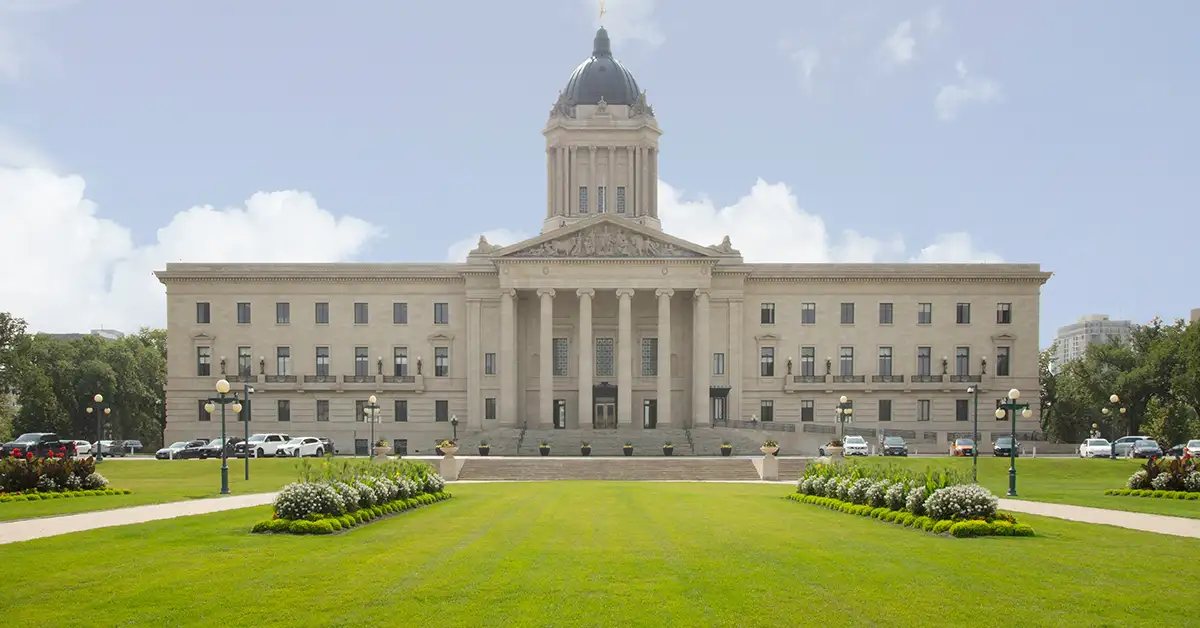
Studying in Manitoba is one of the leading choices for international students setting out to study in Canada. It is a place where international students can find work after graduating and follow a promising immigration route.
Manitoba offers international students access to a world-class education at affordable tuition rates. Higher education in Manitoba is concentrated mainly in the provincial capital and largest city, Winnipeg, home to more than half of Manitoba’s population.
Graduating from an institution in Manitoba gives an individual an internationally recognised degree, diploma or certificate and the opportunity to work and immigrate after graduating.
Message
Overview
- Population: 1,509,667 (updated 2 June 2025)
- International students: 28,190 (2023 data from ICEF Monitor)
- Main place of study: Winnipeg
Considering a residency programme? The Prosperous Living Investment team assesses your profile free of charge and advises on the pathway that fits your goals.
The advantages of studying in Manitoba
- Tuition fee rebate: as well as having some of the most affordable tuition fees and living costs in the country, Manitoba offers a 60% rebate on certain post-secondary fees to individuals who work in the province after graduating.
- Subsidised healthcare for Canadian-born children: the Canadian-born children of international students (who meet the other residency requirements set out in the Manitoba Health Services Insurance Act) are eligible for provincial health insurance in Manitoba. Equally, international students holding a work permit valid for one year or more, or a study permit allowing them to work in Canada for 12 continuous months or more, are also eligible for provincial health insurance.
- A growing labour market: the Manitoba government forecasts that a total of 177,800 new job opportunities will be created in the province between 2015 and 2021, with unemployment expected to fall from 5.5% to 4.9% over the same period. Personal incomes are also forecast to rise by an average of 4.6% a year.
- A low cost of living: Manitoba’s low cost of living allows residents to live better for less, with housing costs among the lowest in Canada.
Immigration after studying in Manitoba
- The Manitoba Provincial Nominee Program (MPNP): under the MPNP’s Skilled Worker in Manitoba category, applications are accepted from eligible temporary foreign workers and international graduates who are currently working in Manitoba and have been offered permanent employment by a Manitoba employer. Combined with a positive labour market forecast, this makes studying in Manitoba an attractive long-term option for individuals wishing to make Canada their permanent home.
- Express Entry: candidates immigrating to Canada through the federalComprehensive Ranking System (CRS)who have completed their studies at an institution in Manitoba may be awarded a significant number of additional points for their higher level of education. International students graduating from Canadian institutions may also already have Canadian work experience, a factor highly valued in the Express Entry System.
Institutions in Manitoba
These institutions are featured because of their size, their proximity to urban centres, and their tradition of including international students in their student body.
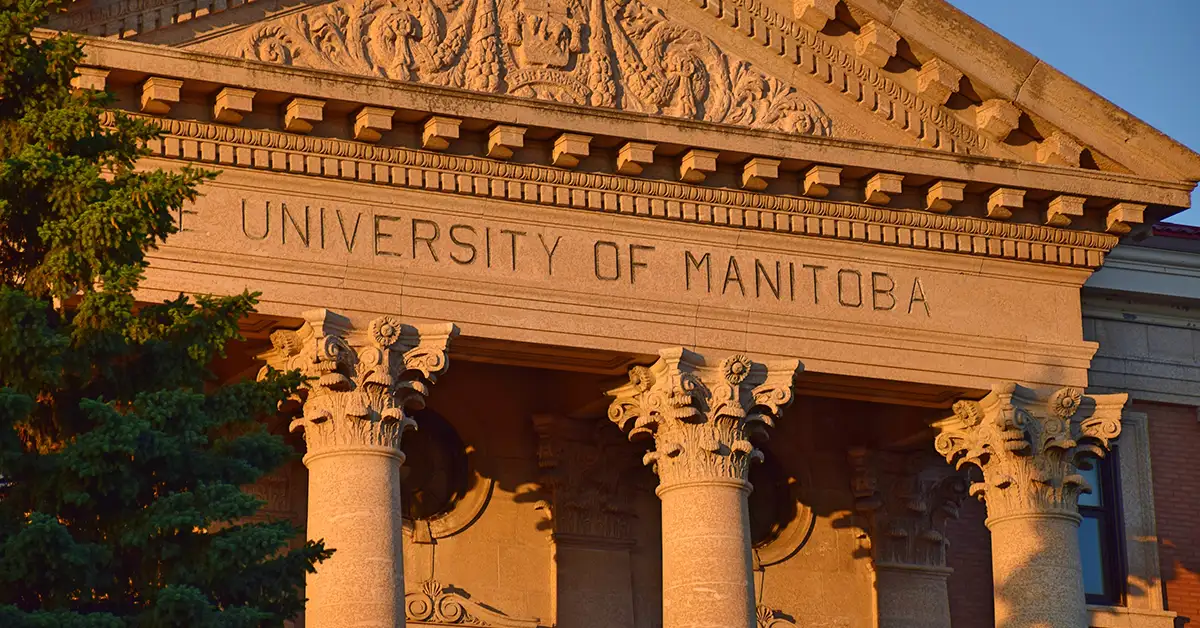
The University of Manitoba
- Website: https://umanitoba.ca/
- The University of Manitoba is ranked first in Canada for excellent student services, and is known for supporting international students. The University of Manitoba is internationally recognised as an innovator in research and technology.
- Notable programmes: actuarial science, architecture, engineering, law, pharmacy
- Location: Winnipeg
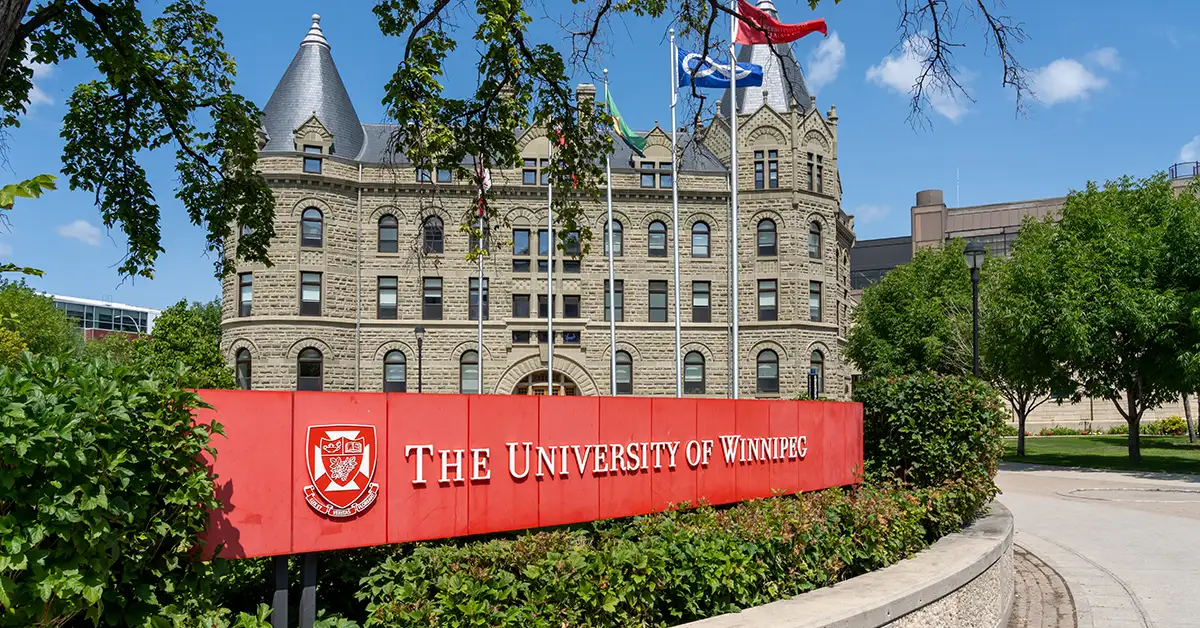
The University of Winnipeg
- Website: https://www.uwinnipeg.ca/
- Maclean’s recognises the University of Winnipeg as one of the leading undergraduate universities in Canada for student satisfaction, largely thanks to a range of modern facilities and excellent student services.
- Notable programmes: theatre and film, kinesiology, biological anthropology
- Location: Winnipeg
Other institutions in Manitoba
The selected institutions are those Prosperous Living Investment has assessed for quality, value and capability with international students studying in Manitoba. These institutions are accredited by Colleges and Institutes Canada (formerly the Association of Canadian Community Colleges) or have been selected for their proven pathway programmes and excellent student services.
- Assiniboine Community College
- Booth University College
- Brandon University
- Canadian Mennonite University
- Manitoba Institute of Trades and Technology
- Red River College of Applied Arts, Science and Technology
Frequently asked questions (FAQ) about studying in Manitoba
To apply for a Canadianstudy permit, a prospective international student must first receive aLetter of Acceptance (LOA)from aDesignated Learning Institution in Canada (DLI). As each institution may have different admission requirements and application processes, interested applicants may contact their chosen institution directly.
- The University of Winnipeg: highly ranked for student satisfaction, particularly at undergraduate level. Located in central Winnipeg, many of its courses and programmes involve community projects. The University of Winnipeg has also invested heavily in modern facilities for sport and contemporary arts. Notable programmes: theatre and film, kinesiology, biological anthropology, marriage and family therapy
- The University of Manitoba: also in Winnipeg, with a strong academic reputation, having produced 97 Rhodes Scholars. It also cares about the student experience, and is ranked first for excellent student services. Notable programmes: actuarial mathematics, architecture, engineering, law, pharmacy
- Brandon University: the only university in Manitoba outside Winnipeg, in the province’s second city, Brandon. This university also offers some of the lowest tuition fees for international students in Canada. Notable programmes: nursing, education, music
- Assiniboine Community College: with an emphasis on apprenticeships, continuing education and contract training. It is particularly well known in the province for providing practical nursing training. Its hands-on teaching approach delivers results — according to a 2014 report, 93% of its graduates found work in their field within six weeks of graduating.
- Although the number of international students enrolling each year is small, the college still offers tailored student services and support. In partnership with Brandon University, it also offers a 2+2 programme allowing two years of study at each institution. Notable programmes: nursing, culinary arts, network administration technology, business administration
- Other notable programmes: cybersecurity, restaurant and food service management, entrepreneurship diploma programme, university preparation
- Universities and colleges in Manitoba offer many specialist engineering programmes.
- Because the healthcare and natural resources sectors employ thousands of workers, these are also popular fields of study.
- Beyond the programmes above, institutions across Manitoba offer a wide range of programmes.
Tuition fees for international students vary considerably, depending on the institution and the programme. International students in Manitoba may pay between CAD 11,000 and CAD 13,000 a year at a college, and between CAD 13,000 and CAD 19,000 a year at undergraduate level at a university. Language school and postgraduate fees may differ considerably.
Since 1 September 2018, international students (holding a valid study permit issued byImmigration, Refugees and Citizenship Canada (IRCC)) are no longer eligible for health insurance from Manitoba Health.
Although this applies to most international students in the province, it does not mean that all international students are ineligible for provincial health insurance — the province considers each individual’s circumstances and whether they meet the eligibility requirements. Health insurance may, for example, be provided to those holding a study permit who:
To apply for a study permit, a prospective international student must demonstrate that they have CAD 10,000 in addition to tuition fees to cover living costs in Manitoba, equivalent to CAD 833 a month.
Average living costs may differ between rural and urban locations. Estimates may also vary depending on the type of accommodation and the type of programme. The University of Manitoba also estimates that new students may spend between CAD 600 and CAD 1,000 on suitable winter clothing, as a one-off cost.
| Item | Per month | Per year |
|---|---|---|
| Accommodation (single, off campus) | $700 CAD | $8,400 CAD |
| Food | $225 CAD | $2,700 CAD |
| Clothing and other costs | $150 CAD | $1,800 CAD |
| Leisure and activities | $150 CAD | $1,800 CAD |
| Health and dental insurance | $25 CAD | $300 CAD |
| Transport (Winnipeg fare) | $70 CAD | $840 CAD |
| Phone bill | $60 CAD | $720 CAD |
| Internet | $50 CAD | $600 CAD |
| Utilities | $80 CAD | $960 CAD |
| Total living costs | $1,510 CAD | $18,120 CAD |
International students in Manitoba may access private loans on similar terms to Canadian citizens and permanent residents. Loans may be offered by banks, student organisations or other groups.
It is important to research the loan options carefully, and to understand the interest rates and repayment plans, before committing to any agreement. Many organisations and institutions may offer scholarships or grants to international students studying in Manitoba.
For further information, students are encouraged to contact their institution’s international student services office. Postgraduate programmes in particular often have funding options for students pursuing a master’s or doctoral programme. It is important to contact the institution directly for further information.
- Engineering is a popular programme across Canada. In Manitoba, the University of Manitoba and Red River College of Applied Arts, Science and Technology are known for their engineering programmes.
- The University of Manitoba offers degree programmes in civil, biosystems, computer and mechanical engineering. Students can choose from more than 25 specialisations at undergraduate, master’s and doctoral level.
- Red River College offers several engineering technology programmes specialising in fields such as computer-aided design, geographic information systems, environmental protection and geospatial technology.
- Computer science, computer engineering and computing technology programmes are very popular across Canada. Various institutions in Manitoba offer a range of programme specialisations in computer science and technology.
- The University of Winnipeg’s Bachelor of Applied Computer Systems programme offers specialisations in health informatics and information systems; students can build a software project for a local organisation as a final-year project.
- The Manitoba Institute of Trades and Technology offers courses specialising in cybersecurity, cloud administration and cyber defence.
- Assiniboine Community College is known for its nursing programmes. It offers six programmes in healthcare, including practical nursing and palliative care.
- Brandon University offers bachelor’s degree and certificate programmes in healthcare. Students may pursue a Bachelor of Nursing or a Bachelor of Science in Psychiatric Nursing, as well as a Master of Science in Psychiatric Nursing and pre-professional programmes in health-related fields.
- The University of Manitoba’s Bachelor of Nursing programme offers a course focused on nursing practice in culturally diverse societies, which may include a study trip to China.
STEM stands for Science, Technology, Engineering and Mathematics. Although careers in STEM fields are very popular, there is no specific programme called “STEM” at a college or university in Manitoba. Prospective students are encouraged to research programmes in their particular field of interest.
Job creation in the province is growing: the Manitoba government forecasts that a total of 177,800 new job opportunities will be created between 2015 and 2021, with unemployment expected to fall from 5.5% to 4.9% over the same period. The healthcare sector is the largest employer in Manitoba. There has also been growth in professional, scientific and technical services, finance, utilities and natural resources between July 2015 and September 2016.
Graduates of a Designated Learning Institution (DLI) in Manitoba may apply for aPost-Graduation Work Permit (PGWP)after graduating from an eligible programme of study.
Under the Skilled Worker in Manitoba category of theThe Manitoba Provincial Nominee Program (MPNP), applications are accepted from eligible temporary foreign workers and international graduates who are currently working in Manitoba and have been offered permanent employment by a Manitoba employer.
Combined with a positive labour market forecast, this makes studying in Manitoba an attractive long-term option for individuals wishing to make Canada their permanent home. International graduates may also pursue a permanent residence application through the federalExpress EntrySystem.
Candidates immigrating to Canada who have completed their studies at an institution in Manitoba may be awarded points for their higher level of education. International students graduating from Canadian institutions may also already have Canadian work experience, a factor highly valued in the Express Entry System.
Manitoba is such a large province that the climate varies considerably across it. In general, winters are among the coldest in Canada, and summers are hot. The province ranks second in Canada as the sunniest province year round, and first for the clearest skies.
- As well as having some of the most affordable tuition fees and living costs in the country, Manitoba offers a 60% rebate on certain post-secondary fees to individuals who work in the province after graduating. Manitoba may be a good option for international students with families.
- Beyond the opportunity to receive public health insurance after six months, individuals studying in Manitoba on a study permit with dependent children may, under certain conditions, receive subsidised public school education for their children. Housing costs — including rents — in Manitoba are among the lowest in Canada.
- Winnipeg is the province’s only major urban centre, with more than half the provincial population living within the city. Its economy is one of the most diverse in Canada, with substantial employment in trade, manufacturing, educational services, and health care and social assistance.
- Brandon is the second-largest city in Manitoba, and is increasingly known for its educational services. With a median age and average housing costs below the Canadian average, the city attracts young workers and families.
Accompanying you on your journey in residency investment
The Prosperous Living Investment team advises on pathways, assesses profiles and manages investments transparently for every residency, citizenship and international property objective.
Free profile assessmentWhere life gets prosperous