

Studying in British Columbia, Canada


Studying in British Columbia is one of the leading choices for international students setting out to study in Canada.
Universities and colleges in British Columbia are consistently ranked among the leading institutions in Canada, with many also renowned globally. British Columbia’s highly integrated education system is a global model for progressive, flexible education. The province also offers a range of employment and immigration options once you complete your programme.
With its international cities, lush rainforests, coastal waters and majestic mountains, British Columbia is one of Canada’s most interesting and beautiful provinces. British Columbia is a peaceful and liveable place to study.
Message
Overview
- Population: 5,732,761 (updated 2 June 2025)
- International students: 202,565 (2023 data from ICEF Monitor)
- Main places of study: Vancouver, Victoria, Kelowna
Considering a residency programme? The Prosperous Living Investment team assesses your profile free of charge and advises on the pathway that fits your goals.
The advantages of studying in British Columbia
- The British Columbia transfer system: British Columbia has the best credit transfer programme in Canada. The BC Transfer System allows students to study at one institution and then transfer seamlessly to another, making entry into the second or third year at some of the country’s most competitive universities easier.
- The Education Quality Assurance designation: British Columbia is the only provincial government to endorse certain institutions under the “Education Quality Assurance” designation. This helps international students choose institutions they may not have visited before, and gives them a measure of consumer protection.
- Employment opportunities after graduating: British Columbia has a diverse and growing economy, with many employment opportunities for graduates after completing a programme in the province. British Columbia is forecast to have the highest employment growth in Canada in the coming years.
- A mild climate: British Columbia’s climate is shaped by the Pacific Ocean and the mountain ranges. Areas along the southern coast have a mild climate year round. Summers on the coast are warm, with daytime temperatures of around 20°C or higher. Coastal areas of British Columbia have the mildest winters of any region of Canada and, unlike most of Canada, temperatures rarely fall below freezing.
Immigration after studying in British Columbia
- The Post-Graduation International Streamof theThe British Columbia Provincial Nominee Program (BC PNP): graduates of an eligible public post-secondary institution in British Columbia with a master’s or doctoral (PhD) degree in the natural, applied or health sciences may apply to this immigration stream without needing a job offer in advance. Individuals with postgraduate degrees in the sciences are in high demand among employers in technology, healthcare and other sectors.
- The International Graduate Stream of the British Columbia Provincial Nominee Program (BC PNP): graduates of an eligible Canadian public post-secondary institution holding an eligible degree, diploma or certificate obtained within the past three years may be eligible to apply under this immigration stream.
- Express Entry: candidates immigrating to Canada through the federalComprehensive Ranking System (CRS)who have completed their studies at an institution in British Columbia may be awarded a significant number of additional points for their higher level of education. International students graduating from Canadian institutions may also already have Canadian work experience, a factor highly valued in the Express Entry System.
Institutions in British Columbia
These institutions are featured because of their size, their proximity to urban centres, and their tradition of including international students in their student body.
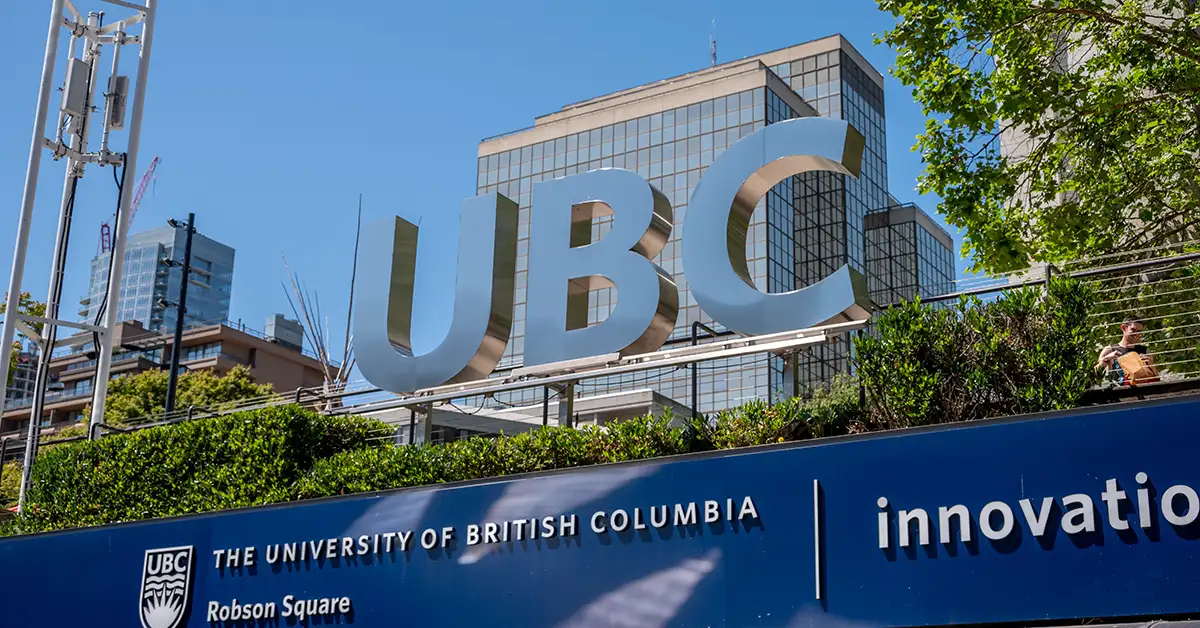
The University of British Columbia
- Website: https://www.ubc.ca/
- The University of British Columbia has an international reputation for leading research and for academic programmes at every level, with 14 faculties offering more than 200 programmes across undergraduate, postgraduate and continuing education. It is also British Columbia’s only medical school.
- Notable programmes: commerce, science, medicine, film, law
- Location: Vancouver
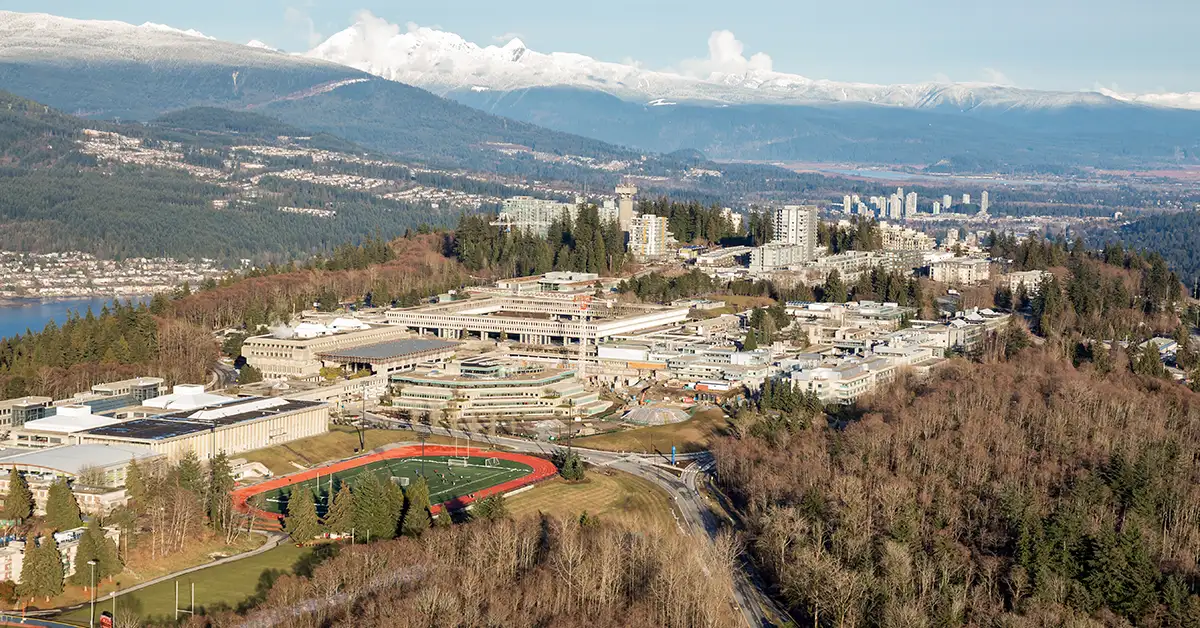
Simon Fraser University
- Website: https://www.sfu.ca/
- Simon Fraser University has been ranked by the Times Higher Education list among the world’s top 100 universities under 50 years old. Founded in 1965, the university was no longer on this list in 2017.
- Notable programmes: kinesiology, criminology, computer science, business
- Location: Burnaby
The University of Victoria
- Website: https://www.uvic.ca/
- Ranked among the world’s top 200 universities, the University of Victoria has a reputation for pioneering research that has spread worldwide.
- Notable programmes: biomedical engineering, economics, social and political thought, health information science
- Location: Victoria
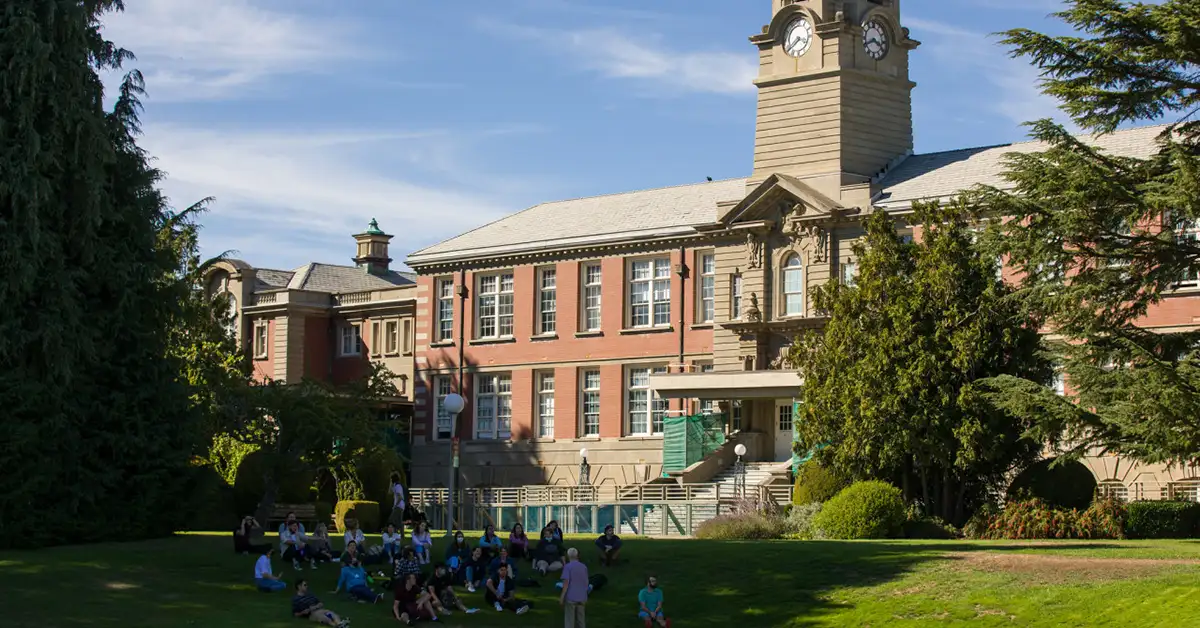
Camosun College
- Website: https://camosun.ca/
- Camosun College genuinely cares about its international students, having welcomed people from around the world since 1983. Camosun College is also one of the leading employers in Victoria, and its qualifications are highly regarded by the wider community.
- Notable programmes: trades and technology, engineering
- Location: Victoria
Other institutions in British Columbia
The selected institutions are those Prosperous Living Investment has assessed for quality, value and capability with international students studying in British Columbia. These institutions are accredited by Colleges and Institutes Canada (formerly the Association of Canadian Community Colleges) or have been selected for their proven pathway programmes and excellent student services.
- Alexander College
- British Columbia Institute of Technology (BCIT)
- Capilano University
- College of the Rockies
- Columbia College
- Douglas College
- Emily Carr University of Art + Design
- Justice Institute of British Columbia
- Kwantlen Polytechnic University
- Langara College
- North Island College
- Coast Mountain College
- Okanagan College
- Royal Roads University
- Selkirk College
- Thompson Rivers University
- Trinity Western University
- University of Northern British Columbia
- University of the Fraser Valley
- Vancouver Community College (VCC)
- Vancouver Island University
Frequently asked questions (FAQ) about studying in British Columbia
To apply for a Canadianstudy permit, a prospective international student must first receive aLetter of Acceptance (LOA)from aDesignated Learning Institution in Canada (DLI). As each institution may have different admission requirements and application processes, interested applicants may contact their chosen institution directly.
- The University of British Columbia: usually known as UBC, this is one of the most highly regarded universities in Canada, with a strong international reputation for research and scholarship. Although research is its main focus, the university has recently developed programmes in partnership with community groups, and students have the opportunity to take part in many co-op placements and community engagement opportunities. UBC offers more than 200 undergraduate programmes across 14 faculties, including the province’s only medical school. Notable programmes: commerce, science, medicine, film, law.
- Simon Fraser University: with its interdisciplinary approach and three-semester system, Simon Fraser University has several distinctive features worth noting. It is regularly ranked among the leading universities in Canada and worldwide. Notable programmes: kinesiology, criminology, computer science, business and the humanities.
- The University of Victoria: with a low student-to-staff ratio and a small-town community setting, this university has an intimate feel while retaining large ambitions. Ranked among the world’s top 200 universities, the University of Victoria — or “UVic” — is highly regarded abroad for its research. International tuition fees at UVic are among the lowest in the province for undergraduate education. Notable programmes: biomedical engineering, economics, earth and ocean sciences, health information science.
- Okanagan College: Okanagan College is located in one of the warmest regions of Canada. It offers language training as well as vocational and trades programmes to more than 350 international students from over 30 different countries. International students receive support from cultural liaison officers who are native speakers of a range of languages. Many courses at Okanagan College can be transferred to universities in British Columbia and across Canada. Notable programmes: Bachelor of Science, Criminal and Social Justice Diploma, Writing and Publishing Diploma, Automotive Collision Repair, and Carpentry.
- The British Columbia Institute of Technology (BCIT): high-technology and engineering courses dominate the timetable at this forward-thinking college. BCIT focuses on hands-on experience, and students can benefit from facilities such as a new aerospace technology campus, with a fleet of aircraft for practical work. Some programmes lead to professional certification, helping graduates move into the workplace smoothly. Notable programmes: business & media, applied & natural sciences, engineering & engineering studies, computing & information technology, and health sciences.
- Camosun College: over the past three decades, Camosun College has built a solid reputation for welcoming international students. Its courses focus on hands-on teamwork and experimentation. The programmes on offer include a wide range of transfer programmes, and several academic upgrading options for more advanced programmes at institutions such as the University of Victoria. Notable programmes: trades and technology, engineering, upgrading, and university transfer programmes.
- Because of the province’s thriving natural resources industry, many students come to British Columbia for programmes in forestry, mining and engineering.
- The diversity of natural environments and ecosystems in British Columbia also attracts many students interested in marine and animal biology, geography and the natural sciences. The University of British Columbia is the best university in Canada for environmental science, according to Maclean’s.
- Arts students are not left behind either. With a thriving counter-culture and many artistic communities, institutions in British Columbia host many popular arts and humanities programmes. Emily Carr University of Art and Design in Vancouver is the only Canadian institution ranked among the world’s top 50 universities for art and design.
- Beyond the programmes above, institutions across British Columbia offer a wide range of programmes.
Tuition fees for international students vary considerably, depending on the institution and the programme. As a rough estimate, international students in British Columbia may pay around CAD 14,000 a year at a college. At undergraduate level, international students may pay between CAD 18,000 and CAD 25,000 a year at a university, depending on the programme (some specialist postgraduate programmes may cost more). Language school and postgraduate fees may differ considerably.
International students studying in Canada are required to purchase health insurance before arriving in Canada. This is usually arranged through the post-secondary institution.
International students may be eligible for British Columbia’s Medical Services Plan (MSP).
MSP is mandatory for anyone living in British Columbia for six months or more. International students are advised to apply for MSP as soon as they arrive in British Columbia, as it takes three months to become eligible for MSP. Individual institutions may offer health plans for students until they become eligible for MSP.
Where an international student is not eligible for MSP, they must enrol in another healthcare plan.
To apply for a study permit, a prospective international student must demonstrate that they have US$10,000 in addition to tuition fees to cover living costs in British Columbia, equivalent to US$833 a month. Actual figures may differ between urban and rural areas.
| Item | Per month | Per year |
|---|---|---|
| Accommodation (single, off campus) | $730 CAD | $8,760 CAD |
| Food | $300 CAD | $3,600 CAD |
| Health insurance (MSP) | $75 CAD | $900 CAD |
| Clothing and other costs | $150 CAD | $1,800 CAD |
| Leisure and activities | $150 CAD | $1,800 CAD |
| Transport (central Vancouver fare) | $91 CAD | $1,092 CAD |
| Phone bill | $60 CAD | $720 CAD |
| Internet | $50 CAD | $600 CAD |
| Utilities | $120 CAD | $1,440 CAD |
| Total living costs | $1.726 CAD | $20.712 CAD |
International students in British Columbia may access private loans on similar terms to Canadian citizens and permanent residents. Loans may be offered by banks, student organisations or other groups. It is important to research the loan options carefully, and to understand the interest rates and repayment plans, before committing to any agreement. Many organisations and institutions may offer scholarships or grants to international students studying in British Columbia.
For further information, students are encouraged to contact their institution’s international student services office. Postgraduate programmes in particular often have funding options for students pursuing a master’s or doctoral programme. It is important to contact the institution directly for further information.
- As a popular field of study across Canada, many universities and colleges in British Columbia offer engineering programmes.
- Simon Fraser University, the University of Victoria and the University of British Columbia are all ranked by Maclean’s among the top 10 Canadian universities for engineering.
- As a popular field of study across Canada, many universities and colleges in British Columbia offer computer science and technology programmes.
- Simon Fraser University, the University of Victoria and the University of British Columbia are all ranked by Maclean’s among the top 10 Canadian universities for computer science.
- As a popular field of study across Canada, many universities and colleges in British Columbia offer nursing and health programmes.
- Maclean’s ranks the University of British Columbia third in Canada for its nursing programme.
- Many colleges, including Camosun College (in partnership with the University of Victoria), the British Columbia Institute of Technology and Okanagan College (in partnership with UBC), offer accredited Bachelor of Nursing programmes.
STEM stands for Science, Technology, Engineering and Mathematics. Although careers in STEM fields are very popular, there is no specific programme called “STEM” at a college or university in British Columbia. Prospective students are encouraged to research programmes in their particular field of interest.
Employment in British Columbia is growing rapidly, and 80% of jobs are in service-producing industries. The sectors that have recently seen the greatest employment growth are finance, insurance, real estate, rental and leasing; professional, scientific and technical services; and business, building and other support services. British Columbia’s leading industries by employment, as at September 2016, were:
- Wholesale and retail trade
- Construction
- Health care and social assistance
Graduates of a Designated Learning Institution (DLI) in British Columbia may apply for aPost-Graduation Work Permit (PGWP)after graduating from an eligible programme of study.
The British Columbia Provincial Nominee Program (BC PNP)has 2 streams:Skilled immigrationandExpress Entry: the Express Entry stream is linked to the federal Express Entry System, allowing eligible candidates priority processing of both their BC PNP application and, if nominated, their permanent residence application. Individuals who may not be eligible for the Express Entry pool may still qualify for another BC PNP category, namely:
- The British Columbia Express Entry Stream — International Graduate
- The British Columbia Express Entry Stream — International Post-Graduate
- The Skilled Immigration Stream — International Graduate
- The Skilled Immigration Stream — International Post-Graduate
International students graduating from an institution in British Columbia may be eligible to immigrate through the federal Express Entry system. Graduates may be awarded a significant number of additional points for their higher level of education. International students graduating from Canadian institutions may also already have Canadian work experience, a factor highly valued in the Express Entry system.
Lying between the Pacific Ocean and the Canadian Rockies, the more populated areas of British Columbia have a mild, pleasant climate. Summers are warm at around 20°C or higher, and winters in coastal areas are the mildest in Canada. Unlike most of Canada, winter temperatures rarely fall below freezing and snowfall is light — but rainfall is usually high.
- The BC Transfer System allows students to study at one institution and then transfer seamlessly to another, making entry into the second or third year at some of the country’s most competitive universities easier. Many international students make use of academic upgrading programmes at colleges such as Columbia College and Douglas College before transferring to another university.
- The British Columbia government is the only provincial government to endorse certain institutions under the “Education Quality Assurance” designation. This helps international students choose institutions they may not have visited before, and gives them a measure of consumer protection.
- British Columbia’s best-known and largest city is Vancouver, recognised worldwide for its quality of life. It is one of Canada’s largest and most ethnically diverse cities, and many immigrant communities are well established across it.
- British Columbia’s provincial capital, Victoria, is on Vancouver Island, off Canada’s mainland coast. Several universities and colleges are located in Victoria, so the city has a large student population. Tourism and the high-technology sector are both strong industries in Victoria.
- Kelowna, Abbotsford and Kamloops are the next most populous cities after Vancouver and Victoria.
Accompanying you on your journey in residency investment
The Prosperous Living Investment team advises on pathways, assesses profiles and manages investments transparently for every residency, citizenship and international property objective.
Free profile assessmentWhere life gets prosperous