

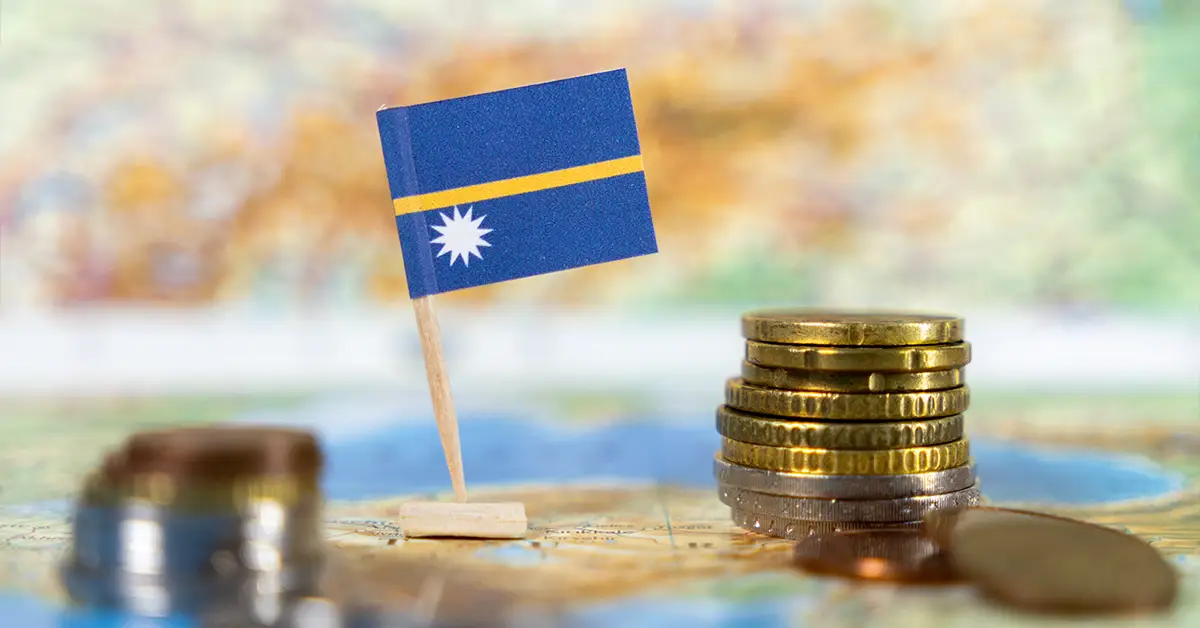
The country of Nauru is one of the smallest and least-known nations in the world, but it is gradually attracting the attention of international investors thanks to its newly launched citizenship by investment programme. Located in the heart of the Pacific Ocean, this tiny coral island possesses a history full of ups and downs linked to phosphate mining and a transformation towards sustainable development. This article provides a comprehensive introduction to this unique nation, from its geography, history, and economy to the passport programme currently of interest to many Vietnamese investors.
Message
Overview of the country of Nauru
The Republic of Nauru is an island nation located in the Micronesia region of the central Pacific Ocean, northeast of Australia. With a land area of only about 21 km², it is the world’s smallest independent republic and one of the least populous countries, with a population of only about 12,000 people.
This nation has no official capital in the traditional sense; administrative offices are concentrated in the Yaren district. Nauru gained independence in 1968 and is currently a member of the United Nations and the Commonwealth.
Despite its small scale, the country of Nauru holds an interesting geopolitical position and a distinct cultural identity, combining Micronesian and Polynesian heritage. Local people primarily speak Nauruan and English, with English being widely used in administration and commerce.
Considering a residency programme? The Prosperous Living Investment team assesses your profile free of charge and advises on the pathway that fits your goals.
Geography and natural environment
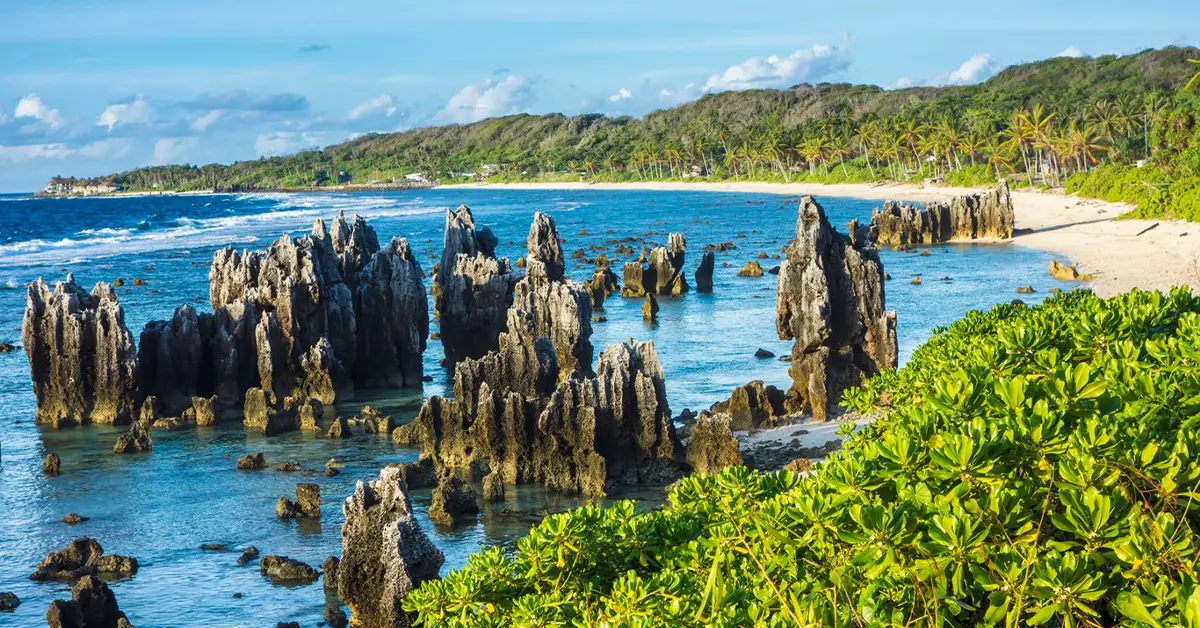
Nauru is a single coral island, surrounded by a fringing coral reef. The terrain consists of a low-lying coastal belt where most of the population is concentrated, and a central plateau that was once rich in phosphate reserves.
The climate here is tropical with high temperatures year-round and high humidity. The rainy season usually lasts from November to February, bringing heavy rainfall. As a low-lying island nation, Nauru is particularly vulnerable to climate change and rising sea levels.
A serious environmental challenge is the consequence of decades of phosphate mining. Mining has devastated much of the interior, leaving behind barren land that is difficult to cultivate. This is also the driving force behind the government’s search for new revenue sources and environmental restoration, including a citizenship programme linked to climate goals.
History of formation and development
The history of the country of Nauru is tied to the story of phosphate resources. The island has been inhabited by Micronesian and Polynesian people for thousands of years. By the end of the 19th century, the arrival of colonial powers changed the nation’s destiny.
In the early 20th century, massive phosphate reserves were discovered, turning the island into a vital source of fertiliser for the world. During its peak after gaining independence in 1968, Nauru once had one of the highest per capita incomes in the world thanks to mineral exports.
However, over-reliance on a single resource led to serious consequences. When phosphate reserves were depleted in the late 20th century, the national economy fell into a prolonged crisis. The lesson of unsustainable development from Nauru is often cited by researchers as a classic example.
The current economy of Nauru
After the golden age of phosphate, Nauru’s economy went through a difficult period and was forced to diversify its revenue sources. Currently, the nation relies on various resources to maintain its budget and social welfare.
Main revenue sources include international aid, activities related to the asylum seeker processing centre under an agreement with Australia, and small-scale phosphate mining. Additionally, fishing and the licensing of the exclusive economic zone contribute to the economy.
In recent years, the government has sought new, more sustainable revenue sources. One of the most prominent initiatives is the citizenship by investment programme, designed to fund climate adaptation and environmental restoration projects. This is seen as a strategic direction to reduce reliance on depleting resources.
Nauru’s citizenship by investment programme
The biggest attraction of the country of Nauru to the international investment community is its citizenship by investment programme. The nation officially launched the programme on 01/01/2025, joining the group of countries that issue passports to investors, similar to many Caribbean nations.
The official name of the programme is the Nauru Economic and Climate Resilience Citizenship Program, highlighting the dual goal of increasing the national budget while funding climate resilience. The investment is made in the form of a non-refundable contribution to the national development fund.
Investment levels and process
The standard contribution for the main applicant is US$115,000. However, during the promotional period lasting until 30/06/2026, this amount is reduced to approximately US$90,000 to celebrate the first year of the programme.
The application processing time is fast, usually within 3 to 4 months, ranking among the fastest in the world. The entire procedure is carried out remotely; applicants do not need to visit or reside in Nauru at any stage.
The programme allows for the inclusion of family members in a single application, ranging from spouses and children to parents, grandparents, and siblings. Following recent updates, the country has significantly relaxed its criteria for dependents, removing age limits for both children and parents.
Benefits of a Nauru passport
A Nauru passport allows for visa-free or visa-on-arrival travel to approximately 85 countries and territories, including financial hubs such as Hong Kong, Singapore, and the United Arab Emirates. The country also recognises dual citizenship, meaning investors do not need to renounce their current nationality.
It should be noted that this passport does not provide visa-free access to the Schengen Area, the United Kingdom, the United States, or Canada. Therefore, its value lies more in its role as a backup citizenship, a diversification tool, and a contingency plan for international investors, rather than as a means for European travel.
According to data from United Nations (UN), Nauru is one of the smallest member states, which further highlights the uniqueness of the passport this country offers.
To better understand this opportunity, readers should refer to the service details Nauru citizenship by investment along with specific options.
Culture and life of the Nauruan people
Despite being a small nation, Nauru possesses a unique cultural identity formed over many centuries. Traditional society is organised by tribes, and this element still influences community life today.
The local population is predominantly Christian, a faith introduced during the missionary era. Community activities, festivals, and sports play an important role in spiritual life. Australian Rules football and weightlifting are popular sports, with weightlifting having brought the country many international achievements.
Daily life in Nauru moves at a slow pace, closely tied to the sea. However, due to the consequences of phosphate mining and a reliance on imports, the population faces many health and environmental challenges. This is the reality that investors should understand when researching the country, even though they are under no obligation to reside there.
Comparing the Nauru citizenship programme with other options
When considering a second citizenship, investors often compare the Nauru programme with long-standing programmes in the Caribbean such as Saint Kitts and Nevis, Dominica, or Grenada. Each programme has its own characteristics regarding cost, speed, and passport benefits.
The standout advantage of Nauru is its low investment level and fast processing time, especially during the promotional period. However, a Nauru passport has a narrower range of visa-free access compared to some Caribbean programmes, which allow access to the Schengen Area and the United Kingdom.
Therefore, the choice between programmes depends on specific goals. If low cost and speed are the priorities, Nauru is a competitive option. If broad travel rights to Europe are required, Caribbean programmes or other European routes may be more suitable. A comprehensive assessment with expert support will help investors make an optimal decision.
Demographics and international relations
With a population of only about 12,000, Nauru has a unique demographic structure. The majority of residents are indigenous Nauruans, alongside small communities of people from other Pacific islands, Chinese, and Europeans.
Population density is concentrated mainly in the coastal belt, where living conditions are more favourable than in the interior, which has been devastated by mineral extraction. Urbanisation is high due to the small land area, with almost the entire population living in an urban-like environment.
Regarding international relations, despite its small size, Nauru maintains an active role in Pacific regional and international forums. The country is a member of the Pacific Islands Forum and often speaks strongly on climate change, which directly threatens the survival of low-lying island nations.
The relationship with Australia plays a particularly important role in Nauru’s economy and foreign policy. In addition, the country is expanding cooperation with many other partners to diversify its resources. The citizenship by investment programme is part of a strategy to enhance the island nation’s standing and financial autonomy.
Is the country of Nauru suitable for Vietnamese investors?
For Vietnamese investors, Nauru offers a second citizenship option with low costs and fast processing times. This is a suitable option for those who prioritise speed, discretion, and wish to have a backup citizenship without the need to relocate or reside.
However, investors need to clearly define their goals. If the desire is for freedom of movement in Europe or residency in developed countries, a Nauru passport is not the optimal choice due to limitations on visa-free rights. Conversely, if the goal is citizenship diversification, contingency planning, or convenience in international financial transactions, this is a solution worth considering.
Practical advice is for investors to consider the promotional period until mid-2026 if they decide to participate, while carefully comparing it with other citizenship programmes to choose the optimal option. Consulting an expert helps ensure the choice aligns with the specific needs and budget of each family.
Accompanying you on your journey in residency investment
The Prosperous Living Investment team advises on pathways, assesses profiles and manages investments transparently for every residency, citizenship and international property objective.
Free profile assessmentWhere life gets prosperous