

New Zealand passport

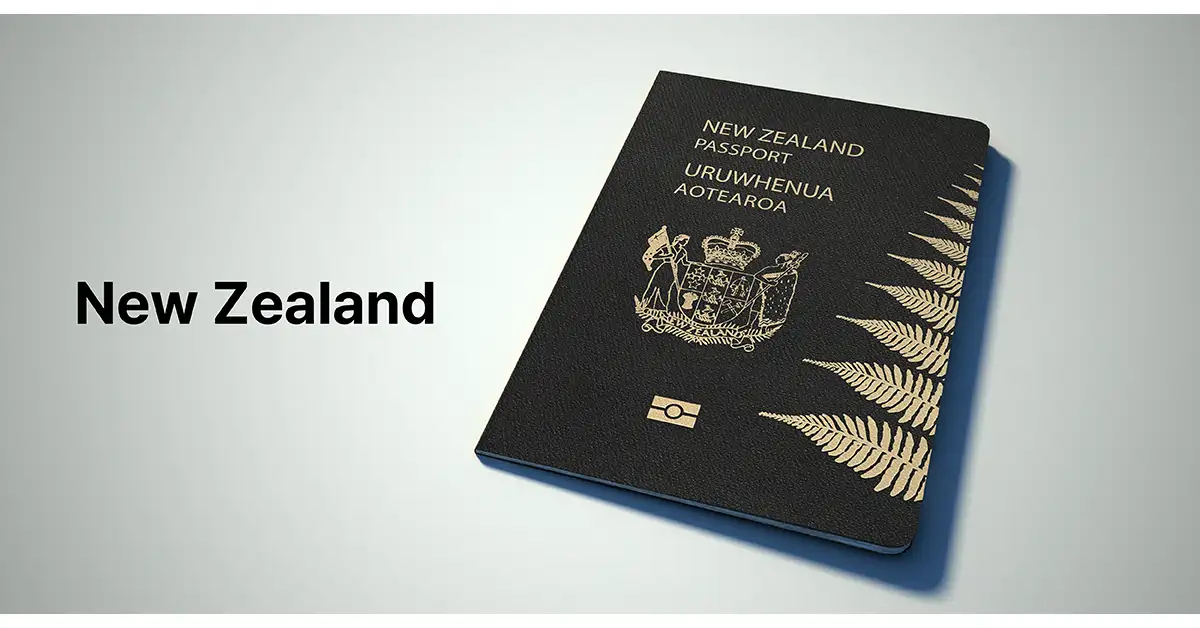
The New Zealand passport (Māori: uruwhenua o Aotearoa) is the passport issued to New Zealand citizens for international travel by the Department of Internal Affairs. New Zealand has a passport ownership rate of around 70% of the population, and there are approximately 2.9 million New Zealand passports in circulation.
Message
Overview
| Type | Passport |
|---|---|
| Issued by | Department of Internal Affairs |
| First issued | – 1915 (first version) – 1992 (machine-readable passport) – 04/11/2005 (biometric passport) – 03/05/2021 (current version) |
| Purpose | Identification & travel |
| Valid in | All countries |
| Eligibility | New Zealand citizens |
| Validity | – Under 16: 5 years from the date of issue – 16 and over: 10 years from the date of issue |
| Expense | Adults – Standard: $247 NZD – Urgent: $494 NZD – Immediate: $1001 NZD Children under 16) – Standard: $144 NZD – Urgent: $391 NZD – Immediate: $898 NZD |
Considering a residency programme? The Prosperous Living Investment team assesses your profile free of charge and advises on the pathway that fits your goals.
History
Few countries required passports before the First World War, and they were generally not compulsory for overseas travel. By 1900 there were occasional requests for New Zealand passports, which were signed personally by the Governor. A single passport covered a man together with his wife and children, but did not include a photograph or personal details such as age, height or eye colour. In 1909 a passport was issued to Victor Reeves Packham, an agricultural chemist; see the file online.
During the First World War the British government required passports from 1915, and New Zealand followed from November 1915.
With the creation of modern New Zealand citizenship through the passage of the British Nationality and New Zealand Citizenship Act 1948 (in force from 01/01/1949), residence in New Zealand no longer entitled British or Commonwealth citizens to obtain a New Zealand passport, and they had to apply for New Zealand citizenship and then a passport.
In 1992, the Department of Internal Affairs began issuing machine-readable passports in New Zealand, while New Zealand’s overseas posts continued to issue handwritten passports. From 24/02/1992, children’s names were no longer endorsed in their parents’ passports. In February 1997, the New Zealand High Commission in London began issuing machine-readable passports.
In December 2000, French was removed from the biodata page of the New Zealand passport and replaced with Māori – a change made by the Department of Internal Affairs.
In 2001, the Department of Internal Affairs took over responsibility for the London Passport Office from the Ministry of Foreign Affairs and Trade.
On 04/11/2005, the Department of Internal Affairs began issuing New Zealand biometric passports (the EA series). To offset the higher production cost of biometric passports (compared with the earlier machine-readable passports), the application fee rose from $71 NZD to $150 NZD for adults and from $36 NZD to $80 NZD for children.
All passports issued between 24/04/2005 and 29/11/2015 – for both adults and children – had a maximum validity of five years under the Passports Amendment Act (2005). Passports issued before 24/04/2005 remained valid until the expiry date shown on the biodata page. From 24/04/2005, New Zealand passports no longer endorsed changes of name, meaning that, for example, taking a married name required an application for a new passport.
On 23/11/2009, the Department of Internal Affairs launched a new version of the biometric passport (the LA series), supplied under a contract with the Canadian Bank Note Company at a cost of under $100 million NZD over five years. One driver of the new passport design was to make New Zealand passports harder to forge. Unlike the earlier biometric passports, the photograph on the biodata page is now laser-engraved in black and white for greater security.
On 03/05/2021, the Department of Internal Affairs launched an updated version of the biometric passport (the RA series). RA series passports contain new and improved security features; in addition, te reo Māori appears first on the cover and throughout the passport booklet.
Passport issuance statistics
The numbers of New Zealand passports and travel documents issued by year are as follows:
| Year | Passports (standard service) | Passports (urgent service) | Emergency travel documents, refugee travel documents and certificates of identity |
|---|---|---|---|
| 2013–14 | 591,051 | 47,939 | Not known |
| 2012–13 | 570,506 | 45,078 | 1,367 |
| 2011–12 | 557,473 | 45,898 | 1,385 |
| 2010–11 | 512,017 | 45,073 | 1,469 |
| 2009–10 | 396,048 | 36,841 | 1,255 |
| 2008–09 | 352,246 | 34,659 | 1,173 |
| 2007–08 | 375,585 | 35,812 | 1,239 |
| 2006–07 | 398,040 | ||
| 2005–06 | 385,966 | ||
| 2004–05 | 411,986 | ||
| 2003–04 | 390,419 | ||
| 2002–03 | 279,810 | 29,741 | 6,212 |
| 2001–02 | 289,695 | 28,513 | 6,120 |
| 2000–01 | 308,399 | 32,674 | 6,570 |
| 1999–00 | 308,691 | 28,733 | 6,823 |
| 1998–99 | 303,316 | 26,526 | 7,664 |
Passport entitlements
Only New Zealand citizens are eligible to be issued a New Zealand passport; however, other travel documents are available from the Department of Internal Affairs for refugees or New Zealand residents who cannot obtain a passport from their home country but need to travel; see the New Zealand Refugee Travel Document and the New Zealand Certificate of Identity.
Types
| Type | Purpose of use | Front cover image |
|---|---|---|
| Ordinary | Issued to New Zealand citizens for ordinary travel, such as holidays and business trips. | 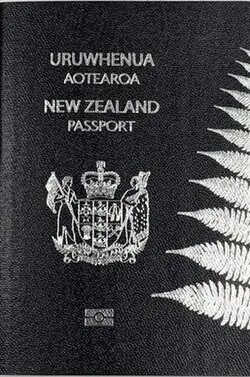 |
| Diplomatic | Issued to New Zealand diplomats, senior government officials (such as the Prime Minister) and diplomatic courier staff. Note: Holders of diplomatic / official passports must use an ordinary passport when travelling on non-official / non-diplomatic business. |
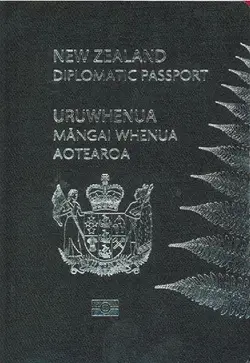 |
| Official | Issued to individuals representing the New Zealand government on official business. Officials are encouraged to use a standard passport where possible and to apply for an official passport only where there is a potential conflict or a visa issue. Note: Holders of diplomatic / official passports must use an ordinary passport when travelling on non-official / non-diplomatic business. |
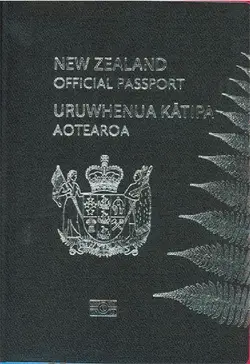 |
| Emergency passport | Issued for emergency travel only. | 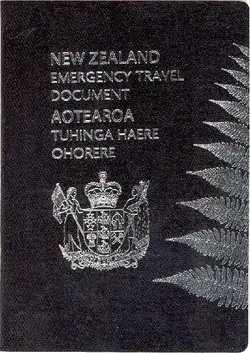 |
| Certificate of Identity | Issued to foreign residents of New Zealand who cannot obtain a passport from their own country. | 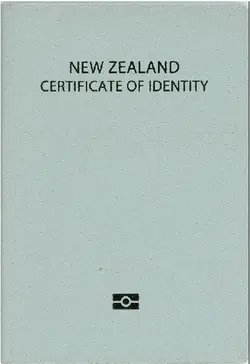 |
| Refugee Travel Document | Issued to persons recognised as refugees in New Zealand. | 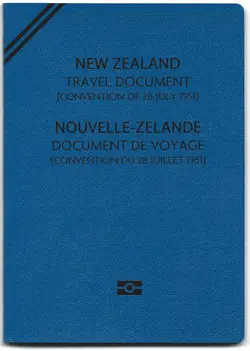 |
Applying for a passport
The application process
The Department of Internal Affairs is responsible for issuing New Zealand passports. It issues passports from offices in Auckland, Christchurch and Wellington in New Zealand, as well as from overseas offices in Sydney and London. New Zealand embassies, high commissions and consulates other than those in Sydney and London cannot issue passports, although diplomatic staff can provide application forms and help with contacting an issuing office.
Adult passports can now be applied for online, both for first-time applications and for renewals. Standard processing takes up to 10 working days plus delivery, unless an urgent or call-in service is requested. Online fees apply for Australia and the United Kingdom as well as New Zealand.
As of September 2024, a standard passport costs $220 NZD for adults and $130 NZD for children, including delivery within New Zealand.
Emergency travel
In an emergency, certain New Zealand embassies, high commissions and consulates can issue an Emergency Travel Document valid for one year only, to assist New Zealand citizens who do not have time to obtain a passport before travelling. An application for a New Zealand Emergency Travel Document (ETD) costs $596 NZD and includes the fee for a full replacement passport before the ETD expires.
In countries where there is no New Zealand diplomatic post, New Zealand citizens who need to travel urgently and whose passport has expired, been lost or been stolen may be issued an Emergency Travel Document costing $95 GBP by a British diplomatic mission, provided this has been approved by New Zealand.
As an alternative to applying for a New Zealand passport, New Zealand citizens who hold another nationality and a foreign passport or travel document may apply for an endorsement of New Zealand citizenship from Immigration New Zealand (INZ).
The endorsement may be affixed physically in the foreign passport or travel document, or linked electronically in the INZ database to the foreign passport or travel document. An endorsement of New Zealand citizenship is valid for the period of validity of the foreign passport or travel document it is endorsed in or electronically linked to.
Returning to New Zealand without a passport
In general, to establish their right to enter New Zealand, New Zealand citizens are required to present a valid New Zealand passport or a passport issued by another country that is electronically linked to, or physically bears, an endorsement of New Zealand citizenship.
However, a New Zealand embassy, high commission or consulate, or a branch of Immigration New Zealand, may request that immigration officers at the New Zealand border not require sight of a passport from a New Zealand citizen in emergency or compassionate circumstances (for example a death or serious illness) where there is not enough time to issue a New Zealand passport.
Design
Cover
The current version of the New Zealand passport, issued since May 2021[46], is black, with the New Zealand coat of arms embossed in silver in the centre of the front cover. The words “URUWHENUA AOTEAROA” and “NEW ZEALAND PASSPORT” are engraved above the coat of arms in silver. The standard biometric symbol appears at the bottom of the front cover. Both the front and back covers carry an embossed silver fern along the outer edge.
Before May 2021, English appeared first, followed by Māori.
Passport note
A passport contains a note from the issuing country addressed to the authorities of all other countries, identifying the bearer as a national of that country and requesting that they be allowed to pass and be treated in accordance with international standards. The note in the New Zealand passport reads:
The Governor-General in and over the Realm of New Zealand requests in the name of His Majesty the King all whom it may concern to allow the holder to pass without delay or hindrance and in case of need to afford all lawful assistance and protection.
and in Māori:
He tono tēnei nā te Kāwana Tianara o te Whenua o Aotearoa, i raro i te mana o Te Arikinui Kīngi Tiāre te Tuatoru, ki te hunga e whaipānga ana, kia kaua e akutōia, e whakakōpekatia rānei te kaipupuri i te uruwhenua nei i āna haere, ā, i te wā e hiahiatia ana, me āwhina ā-ture, me manaaki anō hoki.
Following the death of Queen Elizabeth II, New Zealand passports continued to carry the words “Her Majesty” in the passport note until the stock of blank passports was exhausted. Newly issued New Zealand passports now carry the above wording in the passport note.[47]
Language
The textual sections of the New Zealand passport are printed in both Māori and English. (Previously in English and French.)
Biodata page
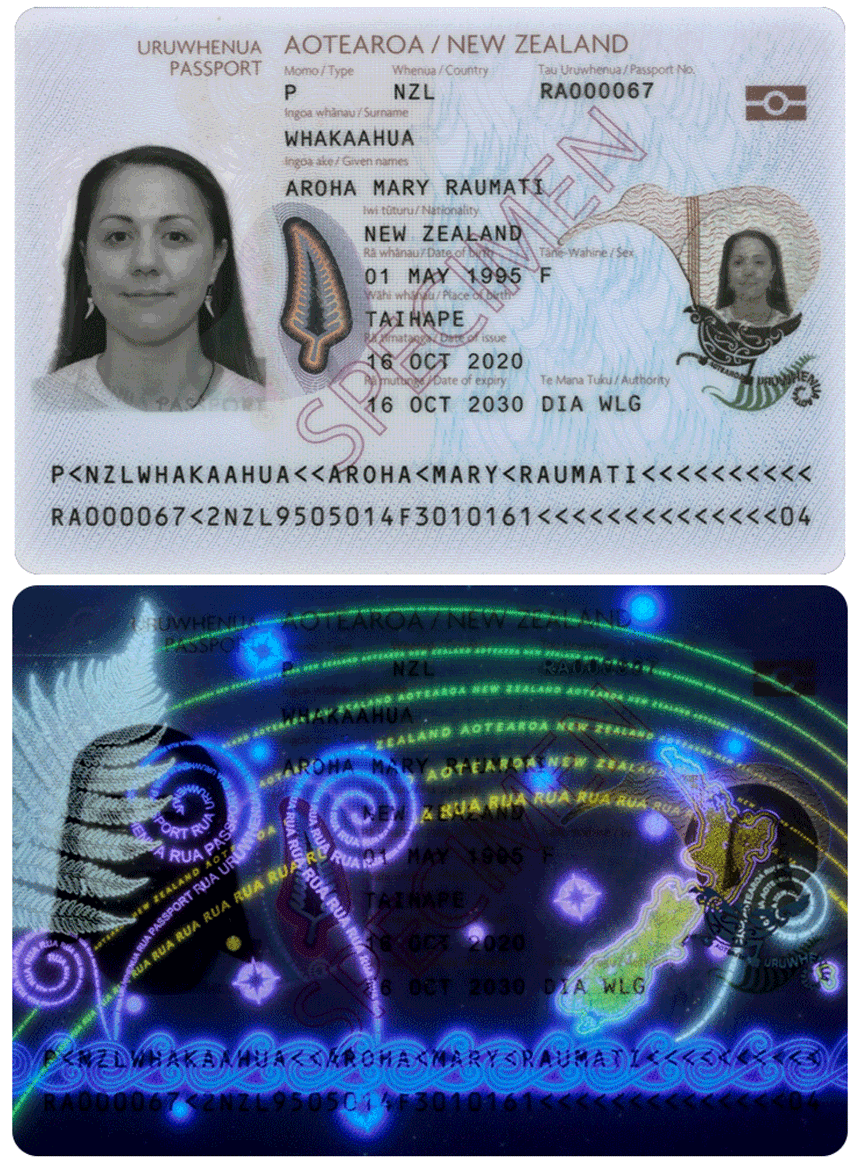
The biodata page of the current version of the New Zealand passport contains the following data:
- Photograph of the passport holder (black and white)
- Type (Momo): P
- Country (Whenua): NZL
- Passport number (Tau Uruwhenua)
- Surname (Ingoa whānau)
- Given names (Ingoa ake)
- Nationality (Iwi tūturu): NEW ZEALAND
- Date of birth (Rā whānau)
- Sex (Tāne-Wahine)
- Place of birth (Wāhi whānau) (Passports issued after December 2005 show only the city of birth)
- Date of issue (Rā tīmatanga)
- Date of expiry (Rā mutunga)
- Authority (Te Mana Tuku)
The information page ends with the Machine-Readable Zone.
Legal issues
Under the Passports Act 1992, the Minister of Internal Affairs has the power to refuse a passport, for example on national security grounds.
The Minister also has the discretion to issue a passport for a period shorter than the current 10 years.
Five Nations Passport Group
Detailed article onFive Nations Passport Group
New Zealand takes part in the Five Nations Passport Group, an international forum for cooperation between the passport issuing authorities of Australia, Canada, the United Kingdom and the United States to “share best practice and discuss innovation relating to the development of passport policy, products and practice”.
Visa requirements
As of November 2025, New Zealand citizens had visa-free or visa-on-arrival access to 172 countries and territories, ranking the New Zealand passport 5th for travel freedom according to the Arton Passport Index.
Accompanying you on your journey in residency investment
The Prosperous Living Investment team advises on pathways, assesses profiles and manages investments transparently for every residency, citizenship and international property objective.
Free profile assessmentWhere life gets prosperous